By Lily Horton
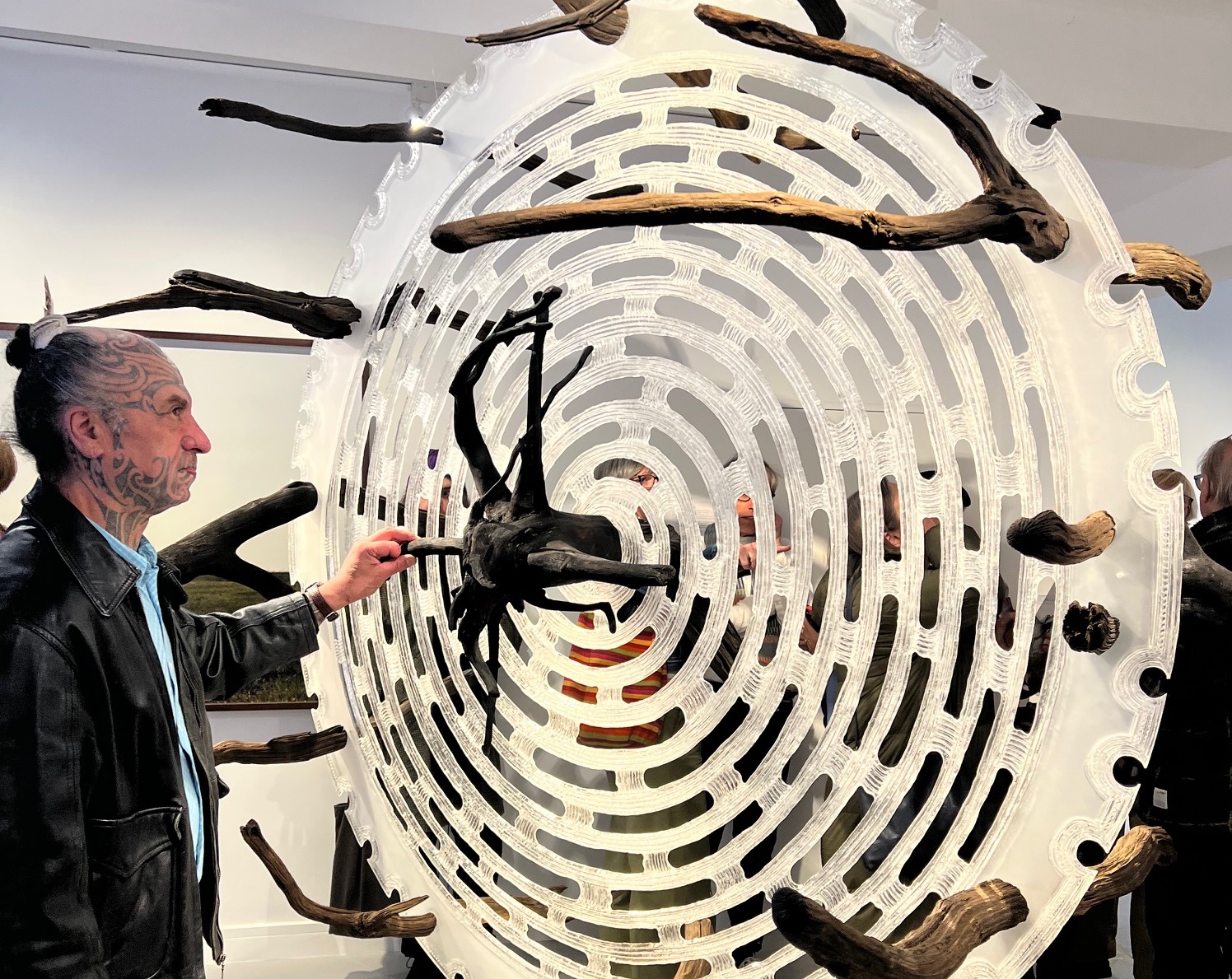
Out of the Depths, showing at GroundWork from March to June 2026, is an exhibition which juxtaposes heritage, old and new, reframing plastic along the way. It concerns the artifact and the present. Old wood, collected objects and historic origins meet newly-made structures, recent tragedies and contemporary rituals. Showcasing new works by artists George Nuku and Frances Kearney, plastic is reframed through acts of spirituality. A delicate balance of troubled beauty permeates GroundWork Gallery.
Reframing plastic
Out of the Depths forces us to question how we think about plastic. Plastic is central to George Nuku’s contemporary art practice where he uses the material to respond to a profound kinship with the environment. Rooted in his Maori heritage, Nuku regards plastic as a sacred material as it ultimately descends from the earth – to him, plastic is simultaneously new and ancient much like his bond with the natural world. Yet the use of plastic is unusual even to the Maori, where traditionally materials such as wood and bone are much more common. Although Nuku does use wood, bone and shell in his work, his focus on plastic as his main sculptural material within this Maori context deliberately places a substance that is normally viewed as ‘unnatural’ in the same space as those traditional, naturally occurring materials.
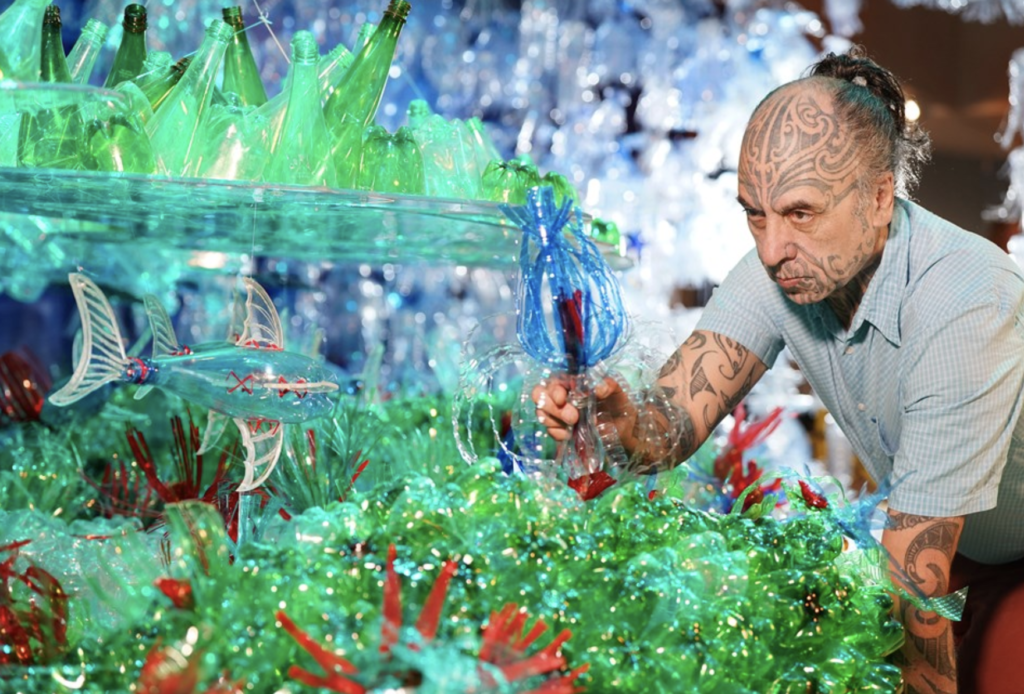
Nuku believes that if we can reframe the way we currently consider plastic – if we embrace it, learn from it and treat it as a sacred material – we could perhaps come to a balance with it. Ultimately, as he says, it comes from the earth. Finding that balance could be the way that we can exist with plastic and with our environment harmoniously. Even so, is this something that is possible beyond this exhibition? Here, plastic has been specifically selected, transformed and displayed intentionally. What about the overabundance of plastic globally that is not so nice to look at?
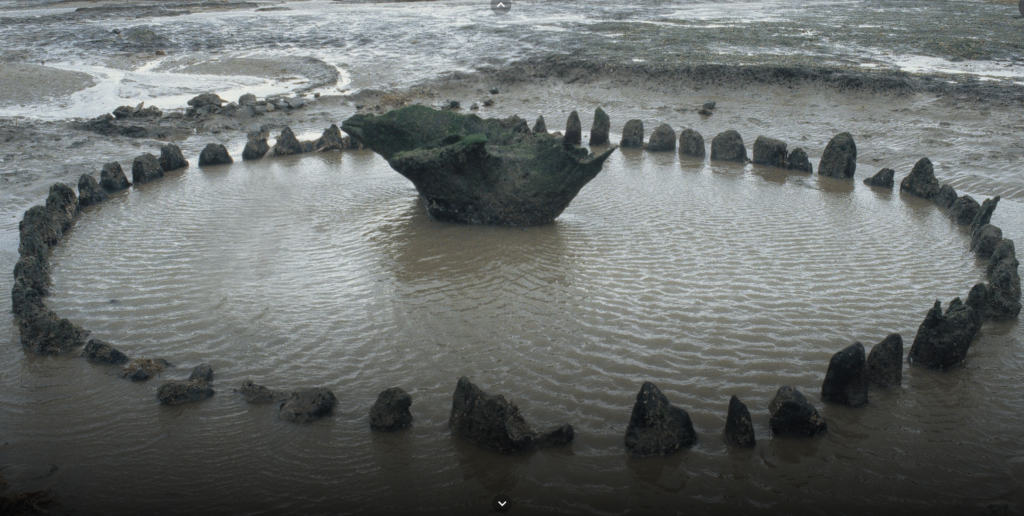
Seahenge Axis Mundi
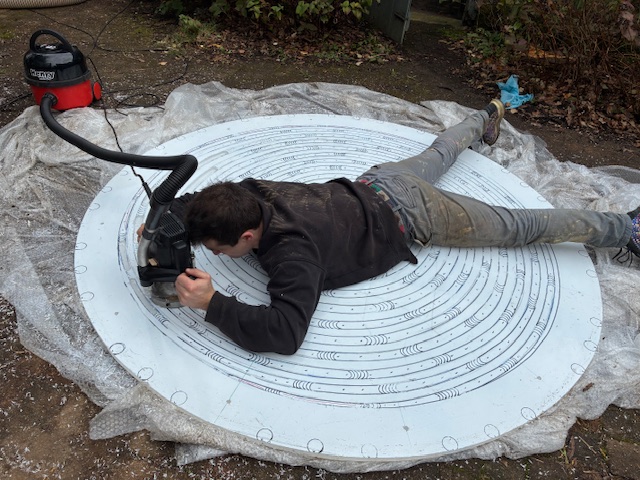
Following a discovery and resulting fascination with the Norfolk-based Bronze Age timber circle Seahenge (above), Nuku’s exhibited work Seahenge Axis Mundi explores notions of balance, ritual and religion through its circular helix structure. This structure, which reflects the position of wood and the orientation of the central tree of Seahenge, is a Takarangi spiral echoing deeply woven Maori beliefs of the creation of life, of light and darkness, of new beginnings. The Takarangi depicts the story of the first act of Tane (the son of heaven) separating Rangnui (Father Sky) from Papatuanuku (Mother Earth) to bring light and creation to the world. For Nuku, Seahenge’s circle of wood is reminiscent of the trees planted as pillars by Tane to hold the sky and the earth apart – without these pillars and their balance, the world would end.
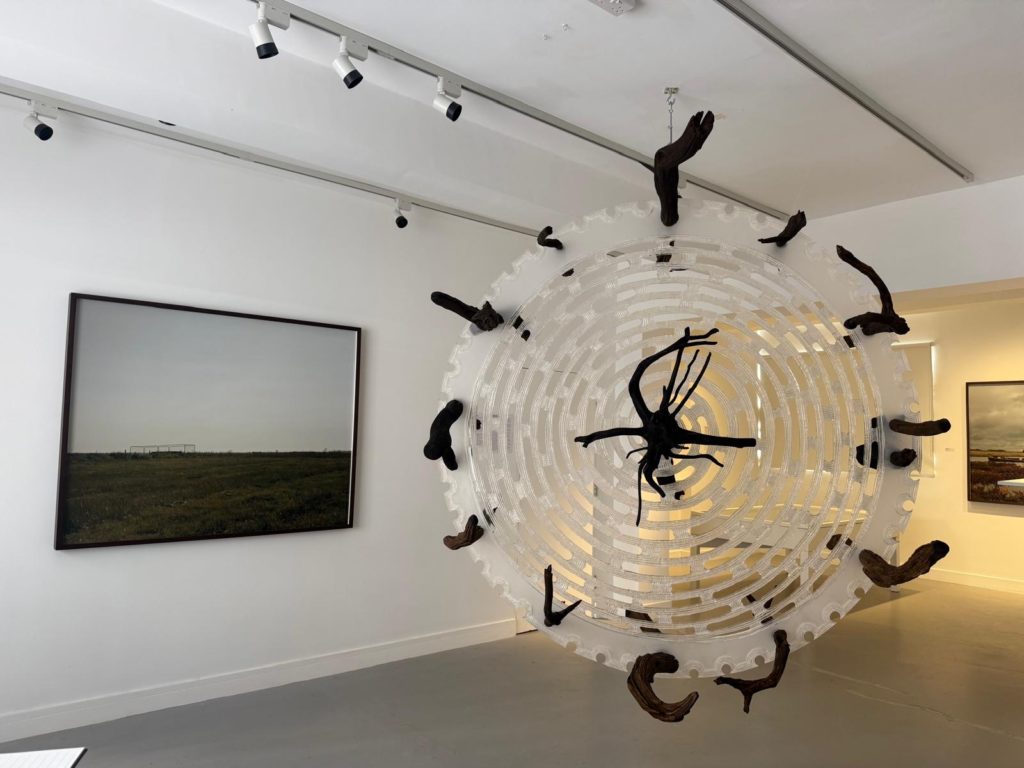
These themes of balance and ritual extended into the formation and installation of the work in the gallery. Working in circles, side by side, following the spirals carved into the plastic, round and round… the making of the work became performative and collaborative; ritual. As with much of Nuku’s practice, the creation of Seahenge Axis Mundi involved multiple people working together, including Jack Heslop, Esther Boehm, Mary Naylor, and myself, Lily Horton – bodies moving with plastic, following its flow transforming its raw surface into a beautiful sculptural piece. Glistening like ice; gleaming like glass, the light dances with Nuku’s work, refracting off intricate carvings and casting twisting shadows about the gallery.
Stillness and storytelling in Frances Kearney’s photography and found objects
Meanwhile, Frances Kearney’s installation of atmospheric photography, totemic sculpture and found objects exude a quiet beauty in their stillness and their storytelling. Kearney’s practice considers how we as humans exist in and with the natural environment. Her work, like Nuku’s, is grounded by ritual – the constant momentum of living in the contemporary world is managed by personal belief systems of stillness and of protection.
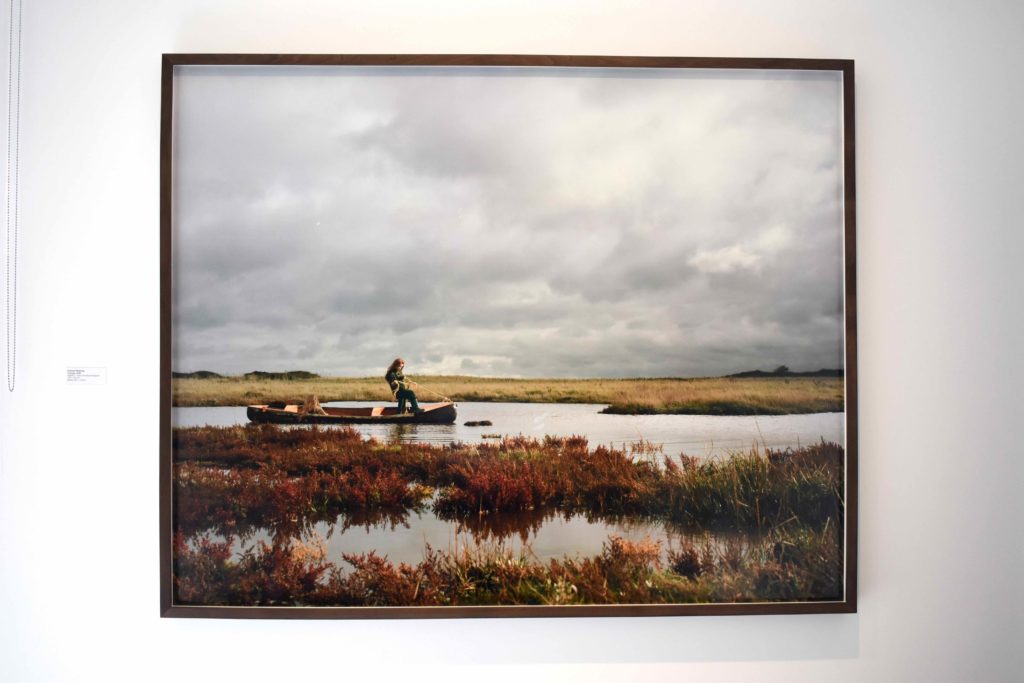
Living and working along the North Norfolk coastline, two of Kearney’s exhibited photographs, Passage and Solong Immaculate, exquisitely capture the stretching flatness and boundless skies of our vast landscape. Kraken, however, portrays a nurdle, a lump of fused plastic pellets washed ashore from the tragic 2025 collision of the container ship Solong and the oil tanker Stena Immaculate in the North Sea and collected by the artist. By presenting the nurdle as artifact, isolated and magnified, Kearney highlights its unexpected beauty; the narrative through her work for Out of the Depths explores an uneasy relationship with plastic.
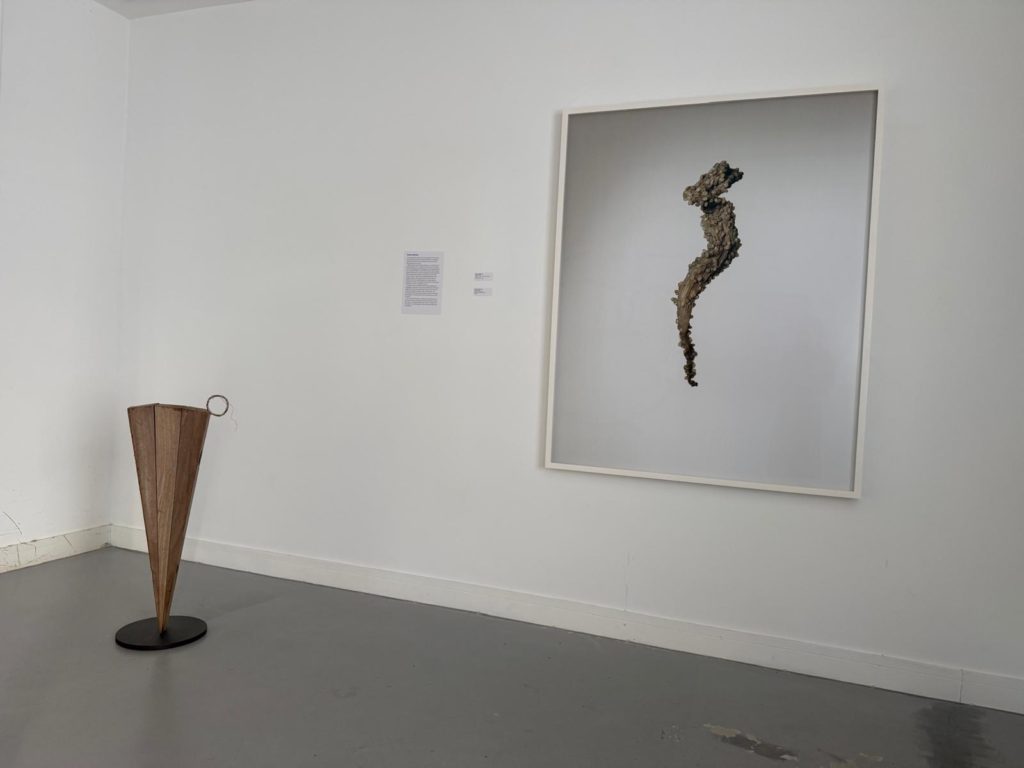
This sense of beauty throughout the exhibition is conflicting. How can plastic – a material that is polluting our planet, endangering life and destroying ecosystems – how can that be beautiful? What is it that makes these particular pieces of plastic beautiful when it is usually thought of as an ugly reminder of humanity’s wasteful impact on the environment? Do these artworks retain their sense of beauty once you’ve found out what they’re made of?
Nuku’s work still draws the eye; it still plays with light and shadow and movement; it still glitters like sunlight on water. Kearney’s photographs are still intensely stunning; they are still mesmerising; her sculptures and found collection still hold a quiet attractiveness. These things are still beautiful but they carry an additional context which weighs heavily on the observer. The installation becomes shrouded in an uncomfortable tension – are we allowed to find plastic beautiful in this way? Is that a bad thing?
Shifting pespectives from rock to nurdle
What makes one nurdle more attractive than another? The shape? The size? The colour? Fundamentally – on objective, surface-level observation – we judge the beauty of all things in a similar way. For example, what about rocks on a beach? Are we not attracted to particular rocks because of their shape? Their size? Their colour? The difference is that rocks are seen as natural while plastic is other. Rocks have a sense of belonging to the earth where plastic has been manufactured by humans into a pollutant and continuously discarded. Rocks have our reverence even if we don’t find every single one beautiful – they are earthly and they have our instinctual respect because of that. Plastic does not have this underlying reverence despite it ultimately being a product of the earth. This is what Nuku is attempting to change.
That is not to say that plastic belongs in the sea and the rivers, littering the coastline and the streets. It has its own space and its own belonging which needs to be found. Now, in some instances plastic has already found a belonging – for medical equipment in hospitals; for hygiene in kitchens; for construction and transport and more. However, single-use plastics do not have a belonging beyond their one-time use. Humanity’s obsession with convenience combined with our wasteful ways and a tendency to prioritise economy over sustainability has led to our ongoing problem with plastic pollution. These habits do not recognise the value of plastic, and without changing our attitude towards it, we cannot hope to find balance with it.
Out of the Depths stimulates a reconsideration of our relationship with plastic and our environment. By situating plastic at the forefront of this exhibition and highlighting its beauty, Nuku and Kearney open up a somewhat uncomfortable but wholly necessary conversation surrounding how we think about plastic. This shift of perspective could be a crucial step towards finding a balance between plastic, ourselves, and the earth.
Postscript: Andrew Mayes on plastics
We asked microplastics expert, Emeritus Professor of Chemistry at UEA, Andrew Mayes for his opinion, and his words are printed as part of the exhibition text linked here.
.