
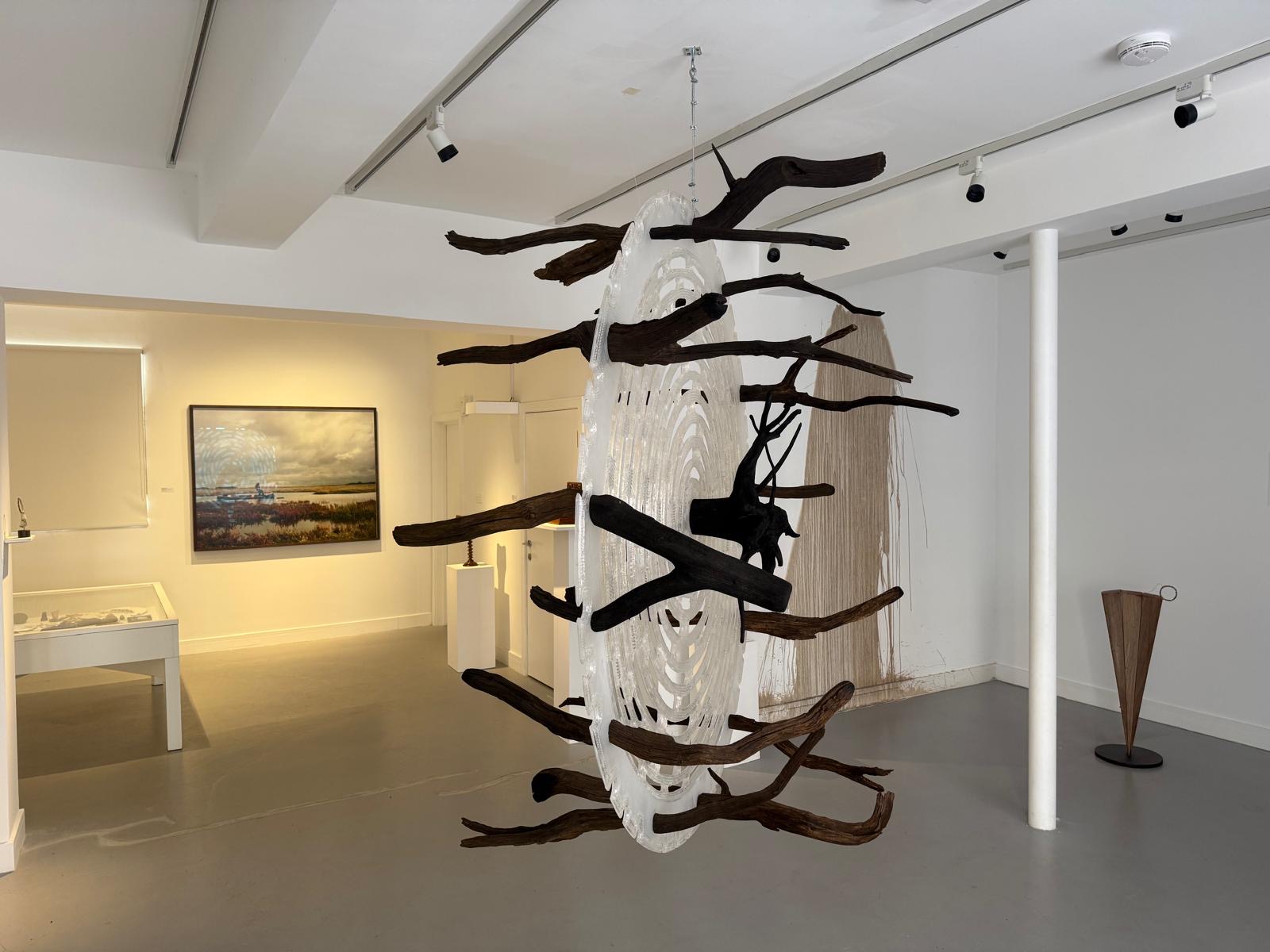
This exhibition begins from a series of insights and conversations. Firstly, George Nuku has become fascinated with the extraordinary bronze age timber circle known as Seahenge. As a Maori, he is very attuned to connecting ceremonial with spirituality. For most of his professional life as an artist he has engaged with museums all over the world, making his own precious modern Maori artefacts to speak to their more ancient ones, giving them a new context and contemporary relevance. These always result in spectacular displays, featuring the clear translucent plastics that he loves to use. For George, plastic is precious, even sacred, as a material ultimately bound to the earth.
Then came Frances Kearney to join in the conversation. In some ways this comes as a big surprise, for the work she has become famous for, is from a very different world, or so it seems. Frances Kearney is well known for her very large staged photographs. Featuring young girls sometimes balancing precariously in extraordinary remote or derelict locations, they invariably feel mysterious, engrossed in private rituals in nature, and thoughtful. A series of these works has been shown at Norwich Castle Museum, where she had a solo exhibition ‘Running Wild’, in 2015.
Out of the Depths
Following initial introductions, the conversations became the foundation for a variety of collaborations, between George Nuku, Frances Kearney, King’s Lynn Museum and GroundWork Gallery.
Together we are thinking about the ancient origins and deep history of ideas and sacred practices, about spirituality. But we are also thinking about the materials and technologies that lie behind it all, the old and new wood, the old and new plastic – and how plastic, vilified as a waste material needs to be reconsidered and valued as a precious resource.
George Nuku
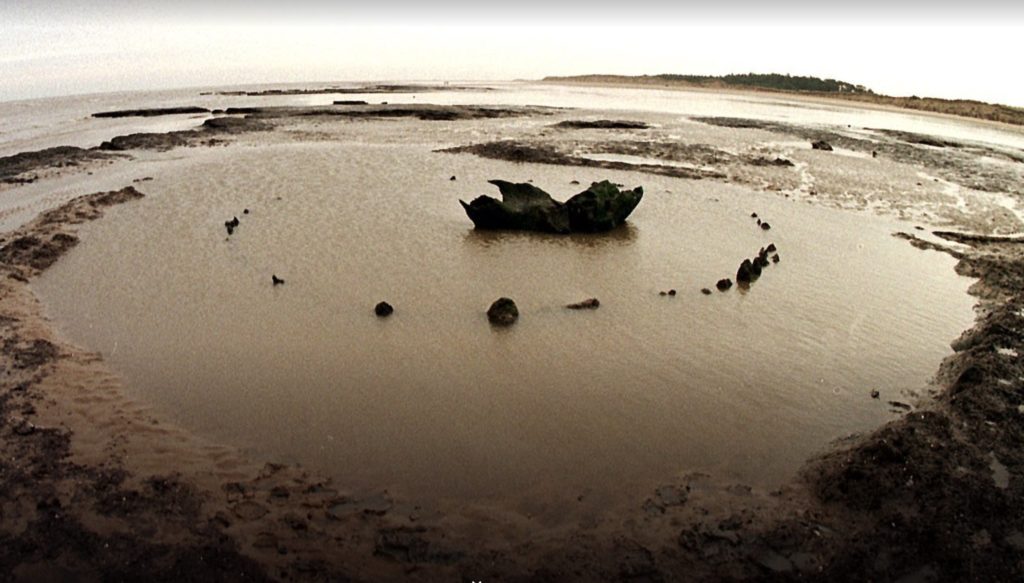
George Nuku’s relationship with the past is a very close one. So, for him, Seahenge is not a remnant from the remote past, but feels very familiar. He sees it as a portal to another world. So our initial conversation broadened to include the King’s Lynn Museum where part of Seahenge is displayed.
I
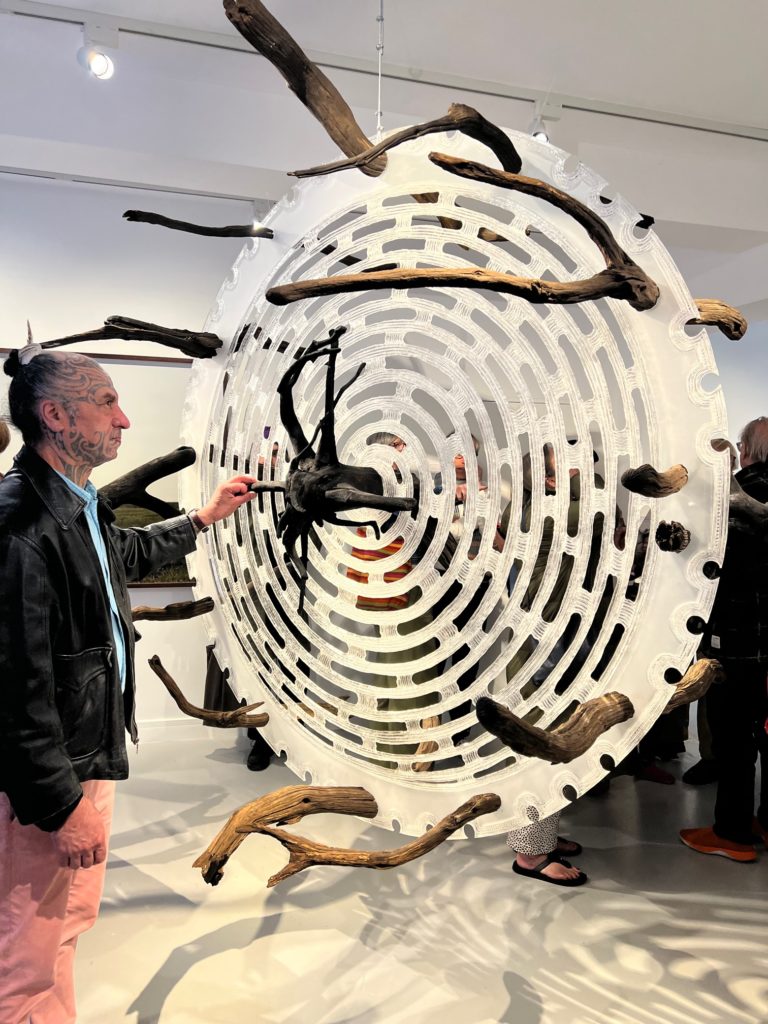
chose to represent the Seahenge as a vast Takarangi – a type of double helix spiral, Takarangi depicts the creation of the world, the moment when light penetrates the darkness in the micro-second. Pure uncontaminated light, this process occurs every morning directly after the darkest part of the night. The dawning light of the new day, a new world, a new beginning is sacred.
Tane nui aa Rangi is the son of heaven – his parents Rangnui/Father sky & Papatuanuku/Mother earth set the context for the creation of the world. It was Tane, the oldest son who separated his parents by pushing his father up into the sky, allowing the light to enter and as mentioned, the creation of the world.
The first act Tane performed was to take the trees and plant them as pillars, to hold heavaen and earth in the correct position and if the trees are all removed, the world will end.
The trees in the Seahenge reminded me of this.’
Plastic is sacred
‘To me the plastic is sacred as are the pieces of locally found wood in the Seahenge installation. Like us they are all from our mother as everything in our world ultimately descends from. Like the wood/trees, the plastic is as ancient as time itself yet so new also – between this contradiction lies a space of great discovery, the plastic is able to tell us many things if we can understand by getting closer to it – perhaps the plastic can save us…’
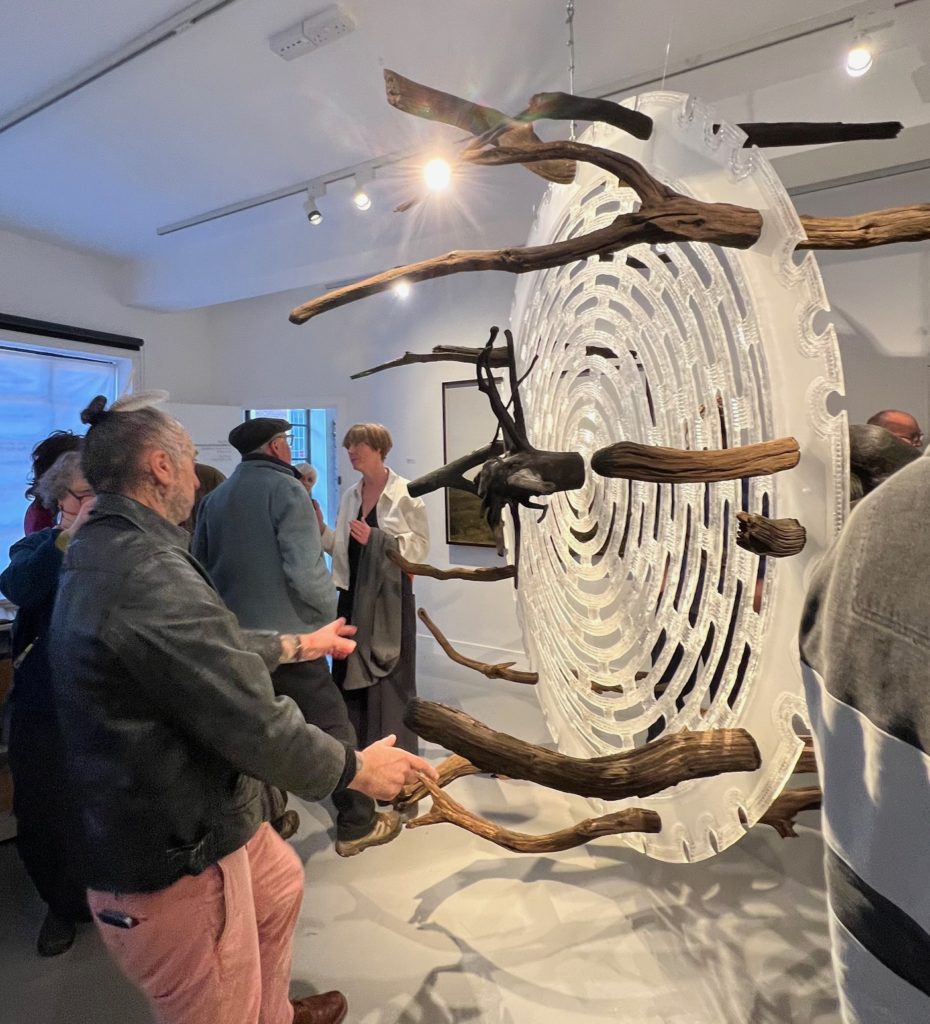
The artwork itself is titled ‘Seahenge Axis Mundi’ – the world turns, the cycles continue in their turning and we perform the act of balancing between directing & being directed by the changes – I believe that the key to this balance is that we must never stop moving.
The turning aspect of the artwork evidents the binding action, we bind ourselves to each other and to everything, my Maori culture reminds me of this also as it we lived in a world without nails -everything therefore was bound – canoes, houses, weapons, people everything…
Frances Kearney
Frances Kearney has always lived right by the sea, and alongside her highly sophisticated gallery practice, has had a much more private obsession with collecting and saving materials, bones, shells, fossils and objects from the beach. All her life, she has maintained a very close relationship with the environment that engulphs her. The daughter of an artist, her eye and her sensibility to the bounty of nature was trained from her earliest days.
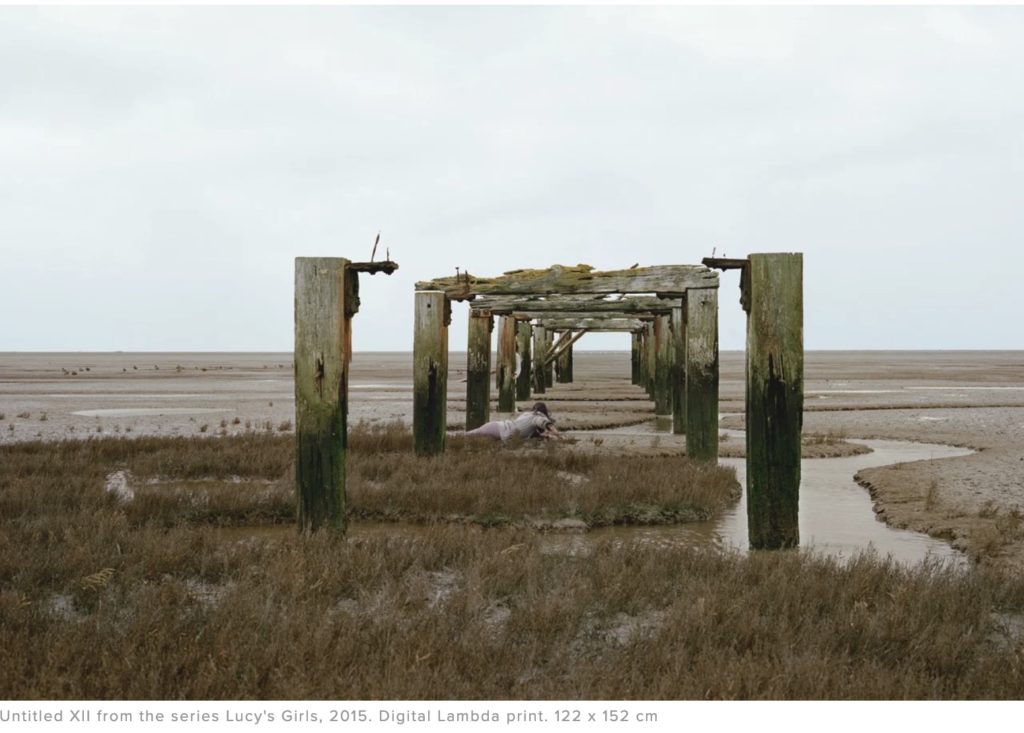
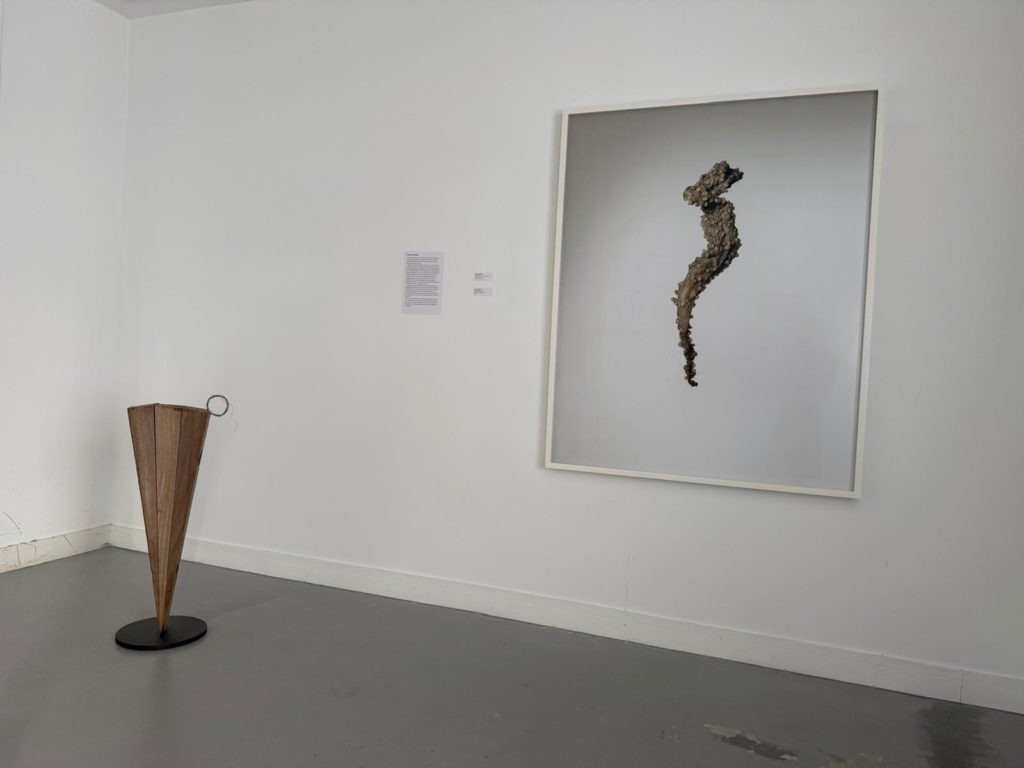
However, increasingly, the treasures thrown up by the sea have become more disturbing. Animals sick from pollution, waste and trash discarded by careless humans. But most of all, in March 2025, as a result of a boat collision and fire at sea, the shore was inundated with nurdles: fused clumps of plastic which were being imported in a raw state for manufacturing. Frances collected many of these for their accidental beauty, their extraordinary sculptural forms. Now these have joined her vast collected trove of natural beach finds to form the basis of a whole new body of work.
The landscape of Doggerland
Kearney’s work is rooted in the former landscape of Doggerland, the site of early human settlement on the Norfolk coast, where she was born and raised. Walking this coastline daily is crucial to her practice. Over more than fifty years she has come to know this terrain intimately, returning to it as a place where inner and outer landscapes meet.
Kearney’s recent works extend her longstanding interest in ritual and environment by combining photography with three‑dimensional objects made from materials gathered along the shoreline near her North Norfolk home and studio. Her collection of found coastal fragments – flint, bone, claw, wood – began in the 1970s. She refers to these objects as her “friends”: small, potent forms that carry deep time within them, some originating more than 4,000 years ago, from the era in which early communities created monuments such as Seahenge.
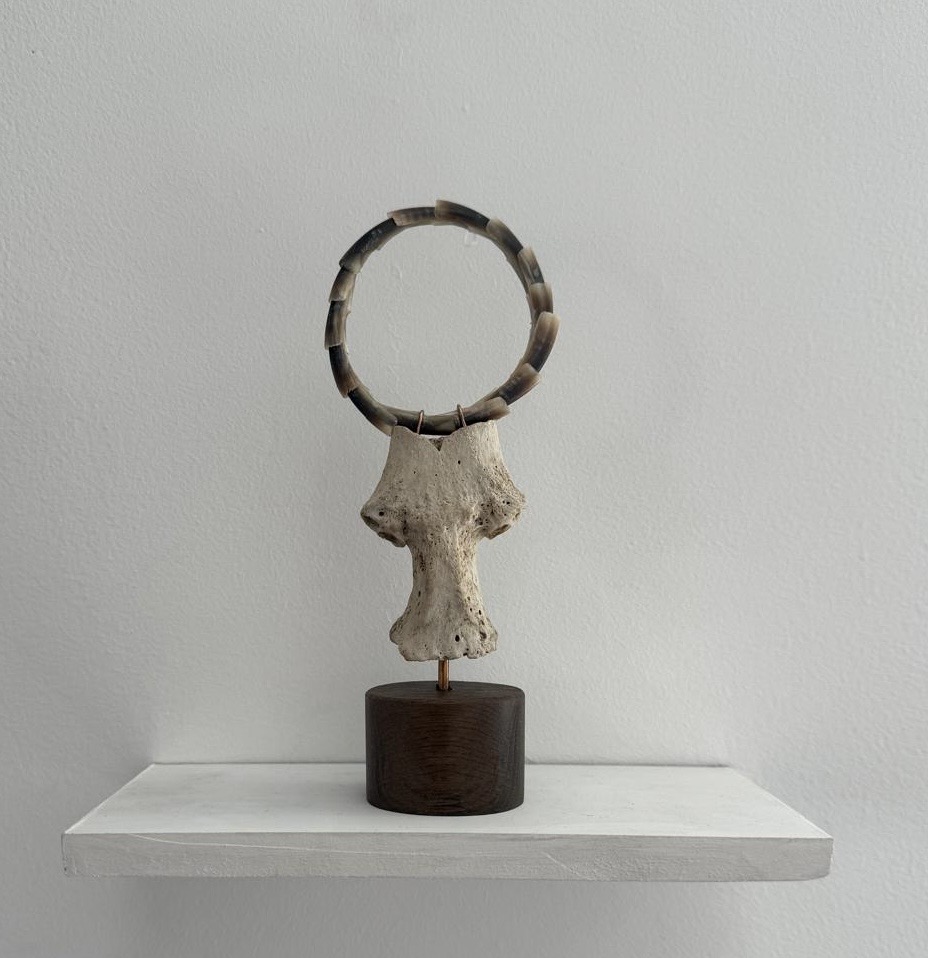
These “friend‑finds” have become catalysts for new ideas, inspiring works that explore the found object as both totem and protective charm. Adawn (2026) consists of a found piece of mahogany driftwood with a bracelet constructed from natural finds from the beach. The form of an inverted triangle suggests the alchemical sign of water as well as a symbol of femininity.
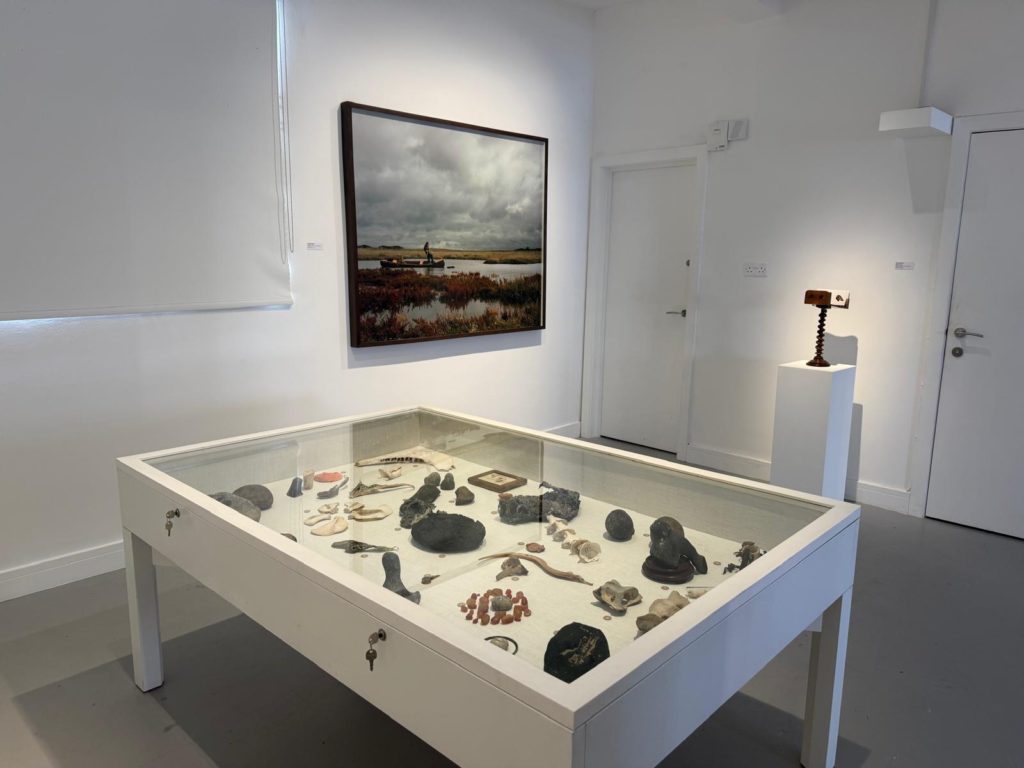
In the new photograph Passage (2026), a girl balances at the prow of a canoe, wearing the same circular bracelet-totem around her neck. The object, made by Kearney, is protective, layered with meaning, drawing on the myth of ‘selkies’, in which a seal sheds its skin to live as a woman on land before returning to the sea. Kearney uses this myth to reflect on women’s lives and the fluid, interdependent relationship between human and animal worlds.
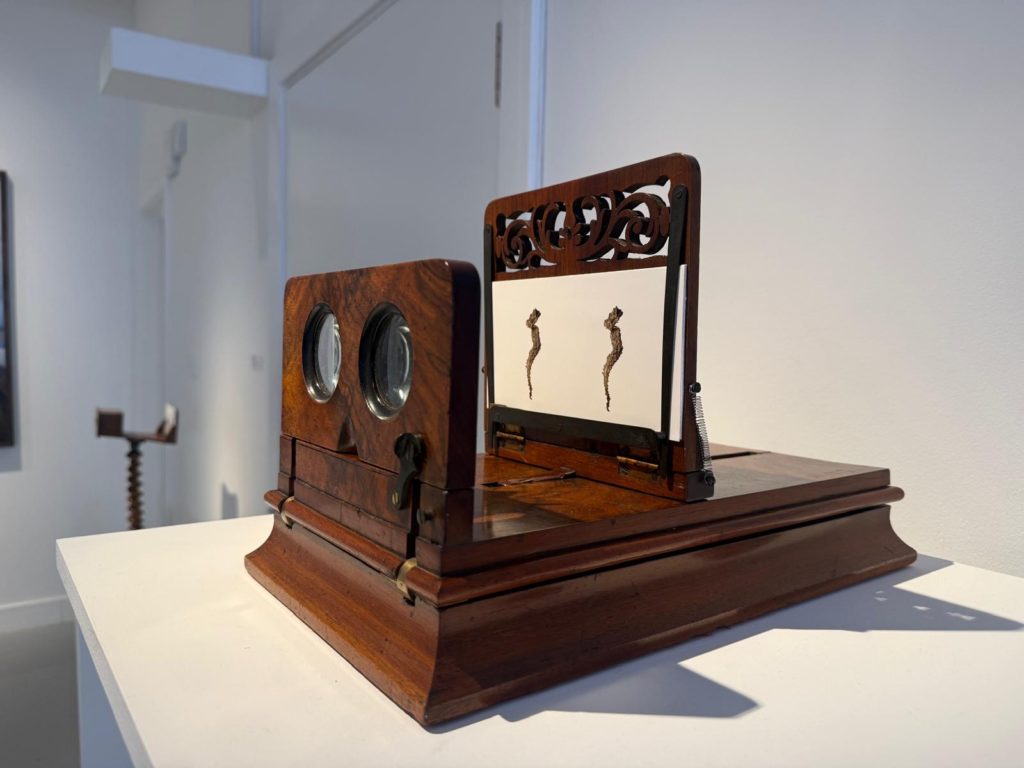
Kraken II, 2026 shown in vintage stereo viewer
A deeper conversation
George Nuku has spoken about the deeper meanings underlying the works:
As we all know, when we want to express in the language of words that speak about inter- connectiveness, feelings, emotions, deep inner sources of hurt, pain and even humiliation, that we arrive at healing through sheer love, for each other, compassion, empathy, all of this…….the increasing response to this is met with dismissal, ridicule, an inability to take seriously, and even indifference……..
Perhaps our art enables us to skirt or even transcend the words and language that describes our massive feeling, that seem to cause embarrassment.
It is clear that the new art forms that the artists have created start us off on a whole new conversation, much wider and deeper than before. They will transport us back and forth in time to reconsider the deeper meanings of our heritage then and now.
Postscript
Andrew Mayes on Plastic
‘In terms of where I stand, I am broadly in agreement with George Nuku. Plastic is a fantastic material for all kinds of reasons and our problem (and by extension the ecological problem) is that we treat it as an unlimited, cheap and endlessly disposable resource, which is often handled casually and carelessly. Used wisely and thoughtfully for the appropriate purposes (and I would absolutely include art in that) it is a practical and often beautiful material, so I see no objection to selecting it, especially when it is additionally provoking response or sending a message. Most other materials also have environmental costs and consequences (think mines, quarries, deforested hillsides, the energetic of melting and forming glass or metal etc etc.). I would only hope that the waste and microplastics created in the artistic process are mindfully managed and disposed of in the best way possible. I often wonder about this when I watch videos of the latest epoxy and wood objects made by many woodturners and furniture makers, many of whom probably think little about microplastics…
Ultimately, it is mostly a matter of opinion. One could also argue we shouldn’t make art out of plastic waste, since it reduces its recycling potential, but since most of it won’t be recycled anyway, is it really a big problem? Won’t highlighting the issue and educating people be a greater gain in the bigger picture? You can have endless heated debates about such things, but there are few hard facts or “right” answers…
There are rather few undisputed facts to stand behind, but this is how I square it in my own mind, speaking as a craftsman and a scientist.’
Andrew Mayes is an Emeritus Professor, School of Chemistry, Pharmacy and Pharmacology, University of East Anglia.
