
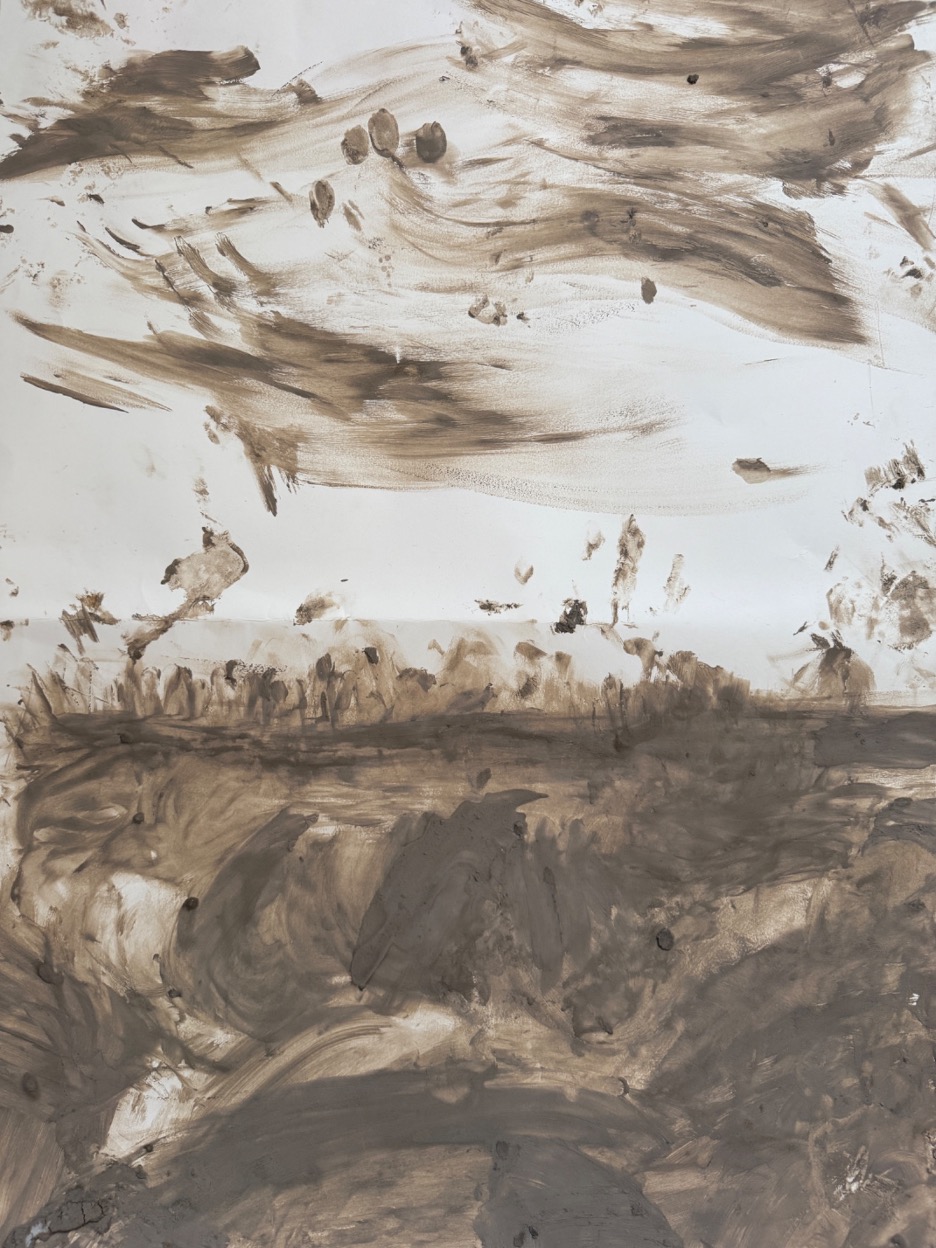
The Wash: Remember Nature is a tribute to this extraordinary coastal region of Eastern England. Resulting from the GroundWork Residency for 2026, it is culminating in one exhibition at GroundWork Gallery itself in King’s Lynn and another seven exhibitions in Norfolk and in Lincolnshire.
Artists:
Michal Bernasiak Katie Bliss Emily Bowers Steven Follen Anna Harding Anna Hart Sara Heywood Petri Huurinainen Jacqui Jones Carol Wilhide Justin Liz Kelleher Mary Naylor Andrew Olley & Ellen Sampson Jane Prophet Rosy Prue Sarah Rooms Heaphy Jane Sarre Nicholas Simpson Louise Frances Smith Martins Strals Harriet Tarlo Adrian Tissier Luke Walker & Rita Rosa Monteiro James Murray White
The title is also a small dedication to Gustav Metzger, sometime King’s Lynn resident, artist and environmental activist. On November 4, 2015, Metzger initiated the Remember Nature project which invited all artists to address the crisis within nature. He intended to bring awareness to the damages that continue to devastate our natural world. It has become an annual event and falls within the timescale of these Wash projects, which are in themselves drawing attention to the threats to the natural world, as well as to its special qualities.
All the artists will be represented at GroundWork, but see below under the listings for who is showing a major work where as we are widely distributed
Private View 10 October 4.30 – 7.30 (contact us for an invitation) Public opening from 14 October until 19 December, Wed – Sat, 11-4
Cover image: Emily Bowers, Wash drawing, work in progress
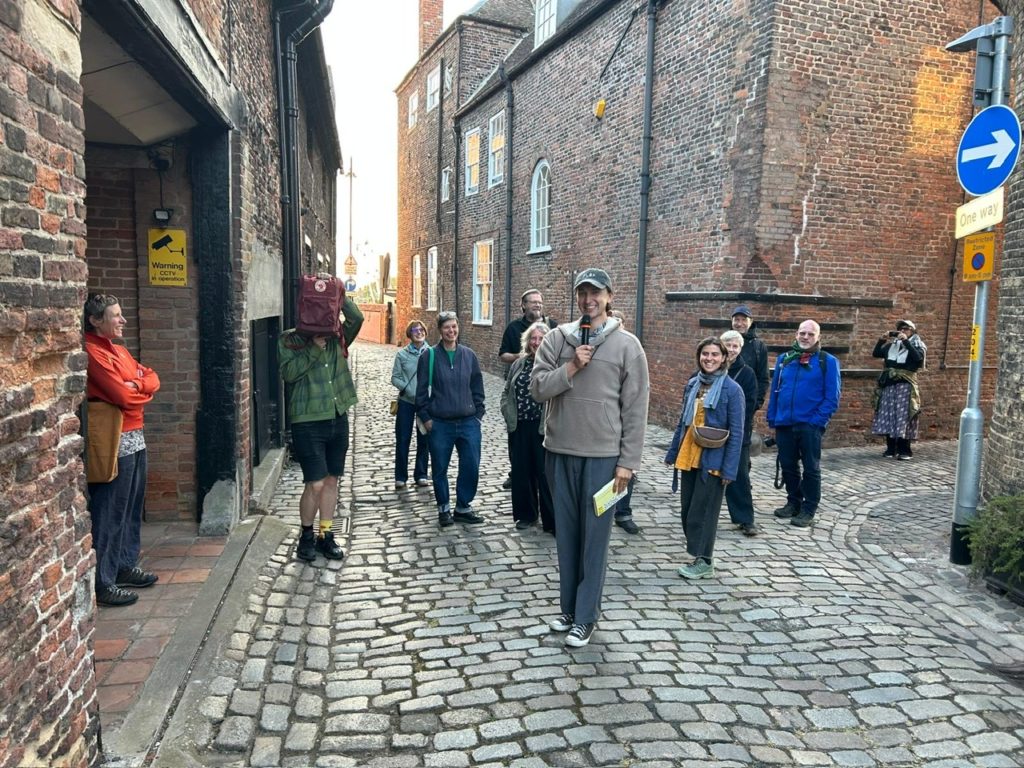
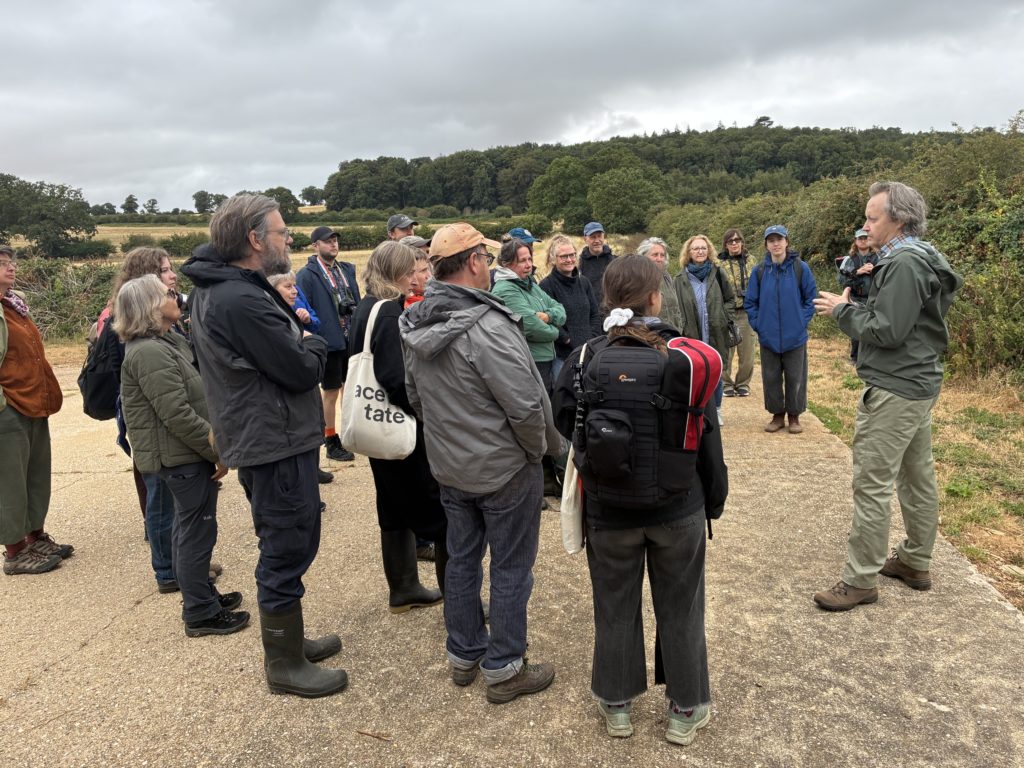
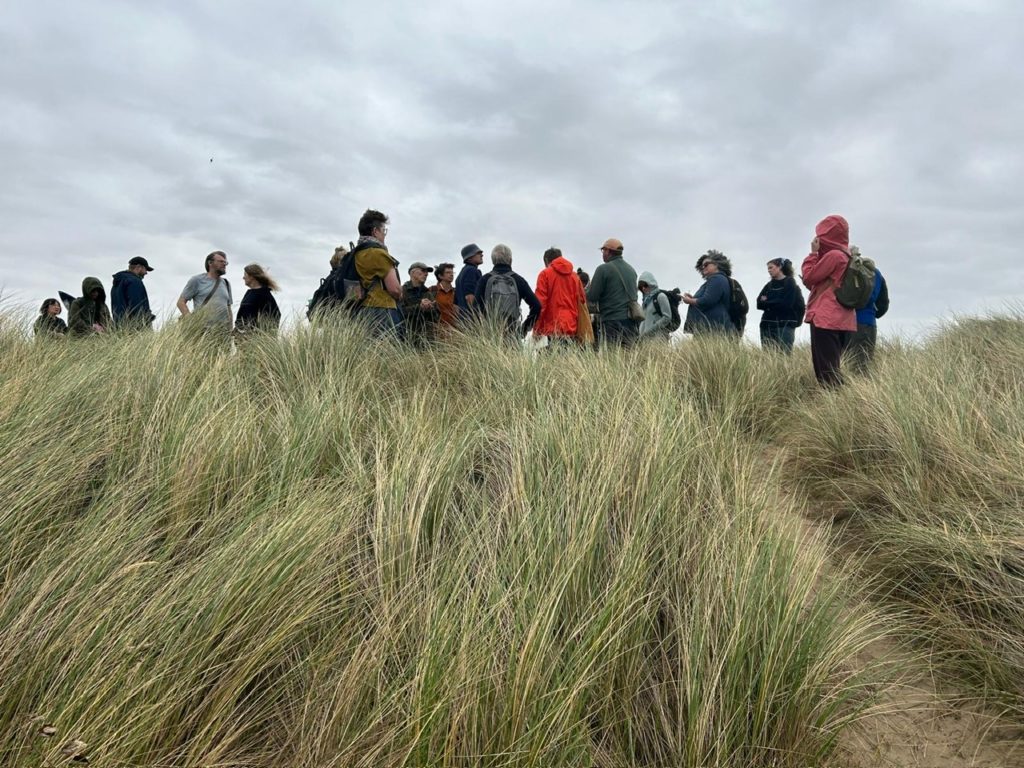
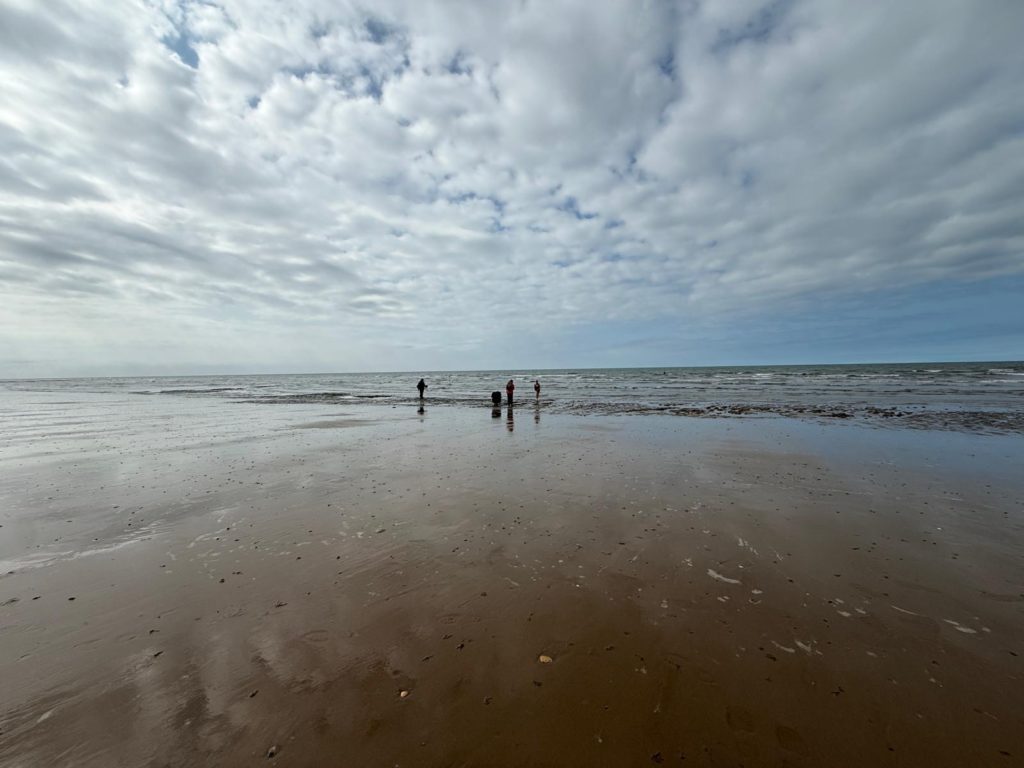
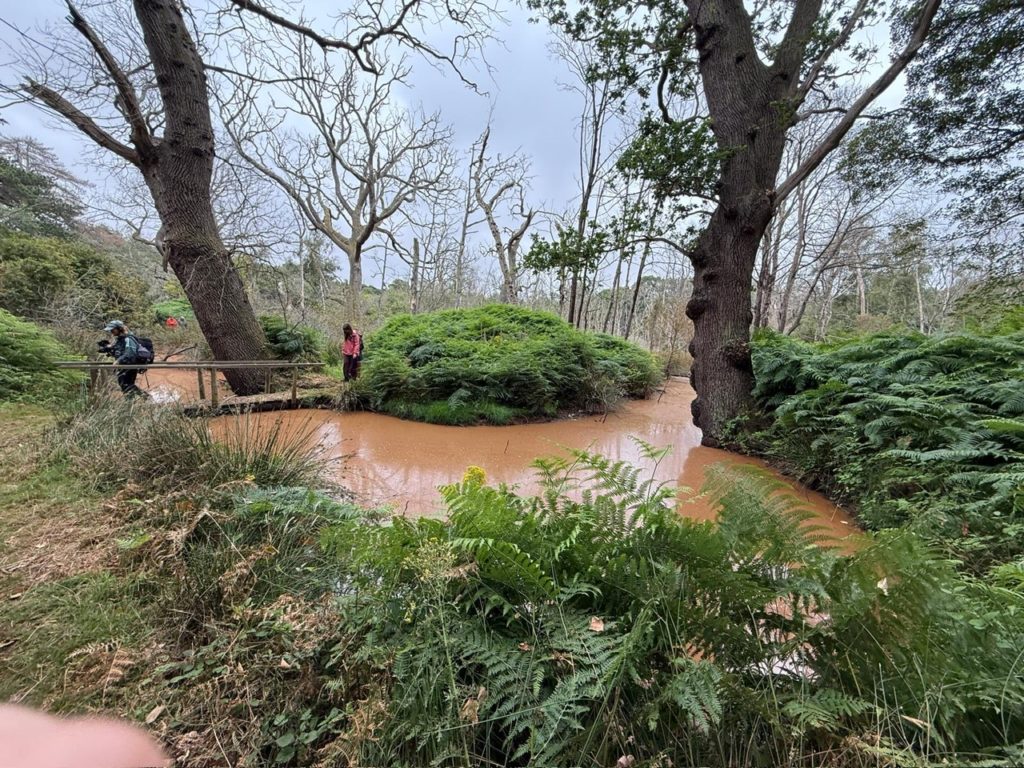
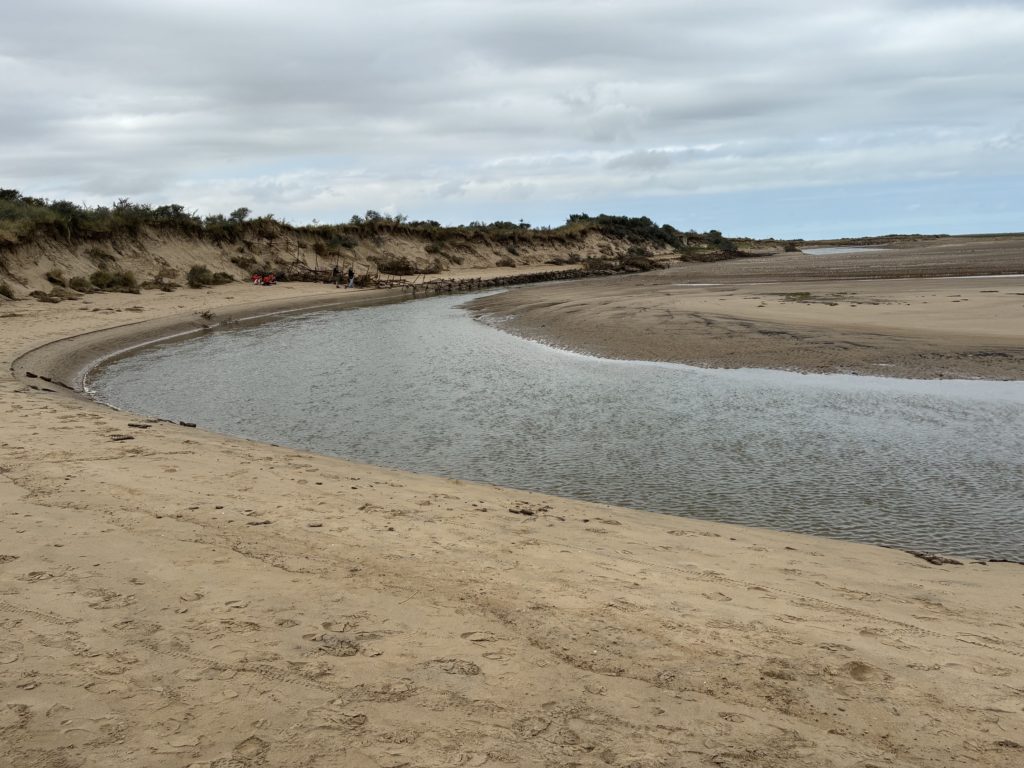
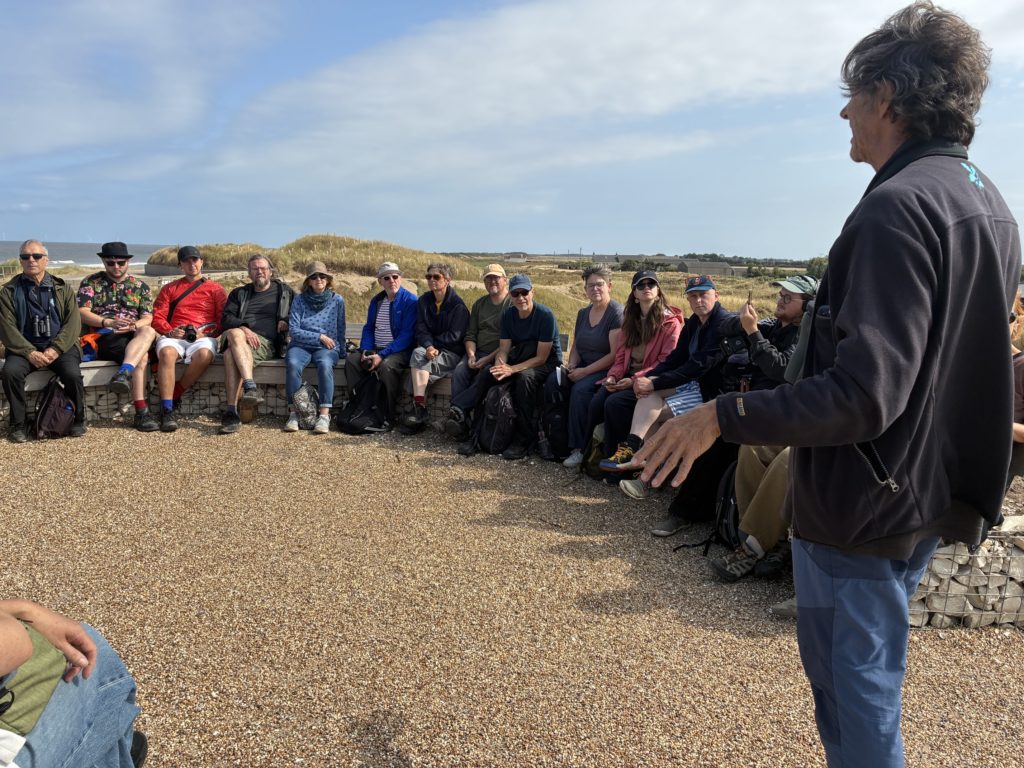
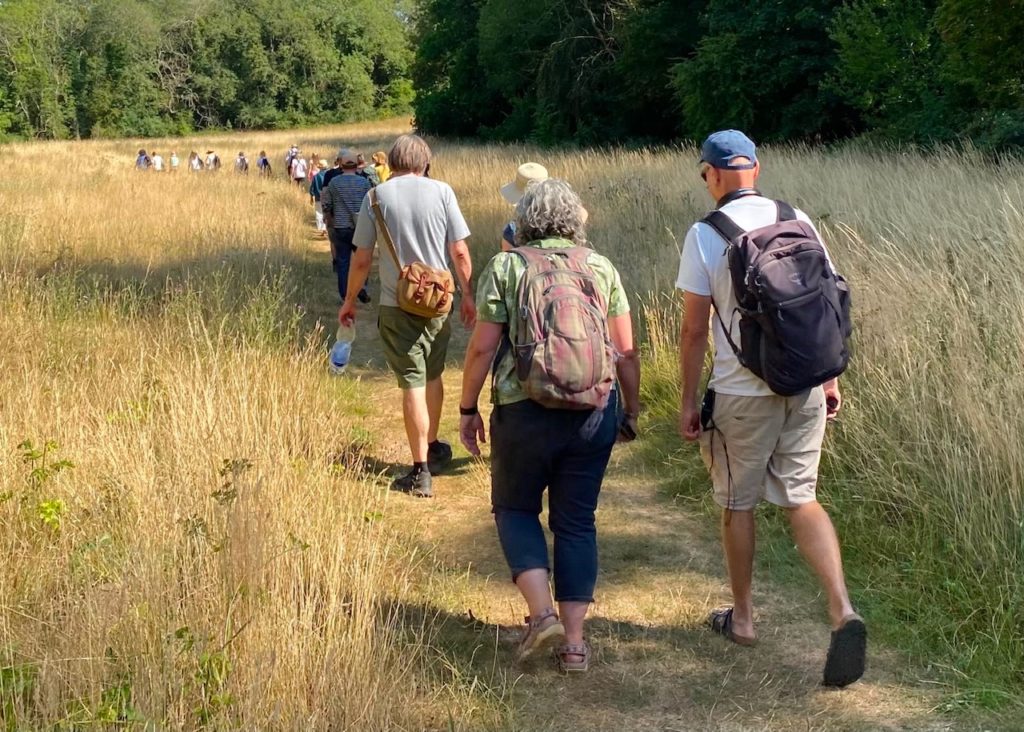
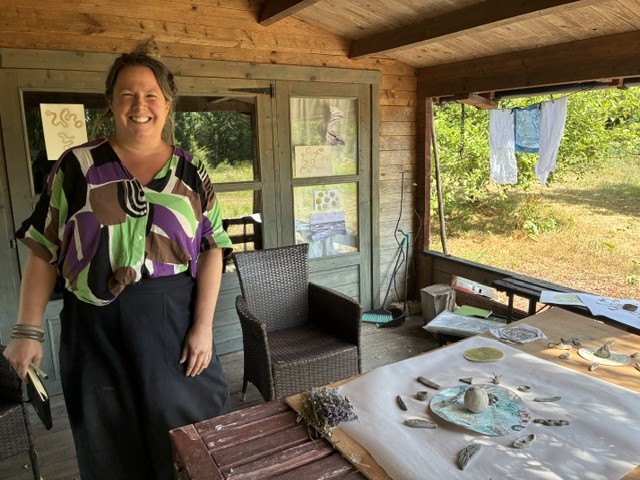
Scenes from the residency research week above
The brief to artists for the Groundwork Residency 2026 was to consider the culture and environments of the Wash Estuary. Having begun the season together as a group of 27, with intense scrutiny of the region via talks, discussions and field trips, each artist was then left to think about their own individual response. The hope was that the new impetus would stimulate further reflections and would lead to a range of different interpretations. Remarkably, while there were a number of shared interests, everyone came up with completely different idea. Each one was utterly true to their own practice.
Among the 27 artists, there were two pairs, so in effect there have been overall 25 working practices.
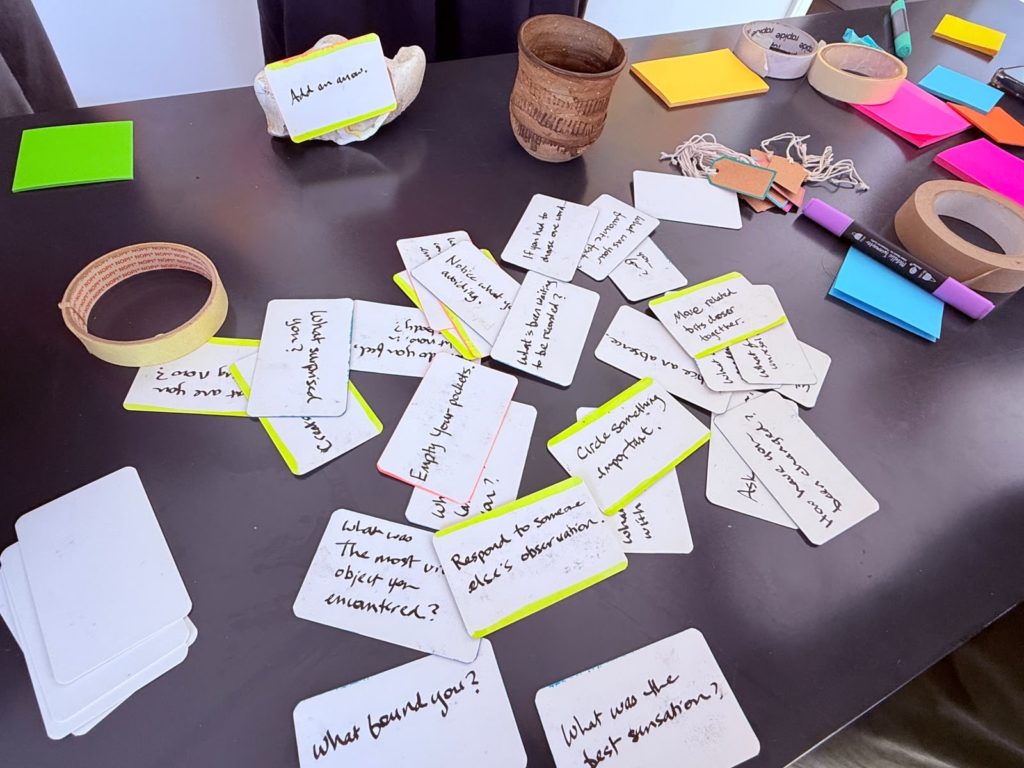
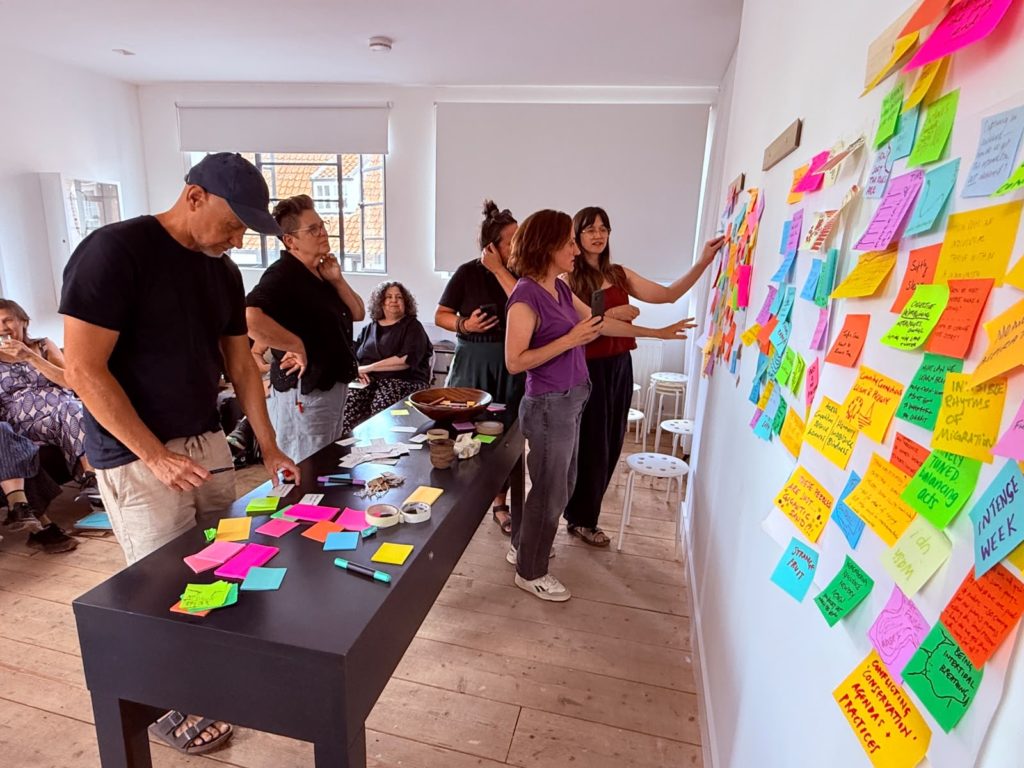
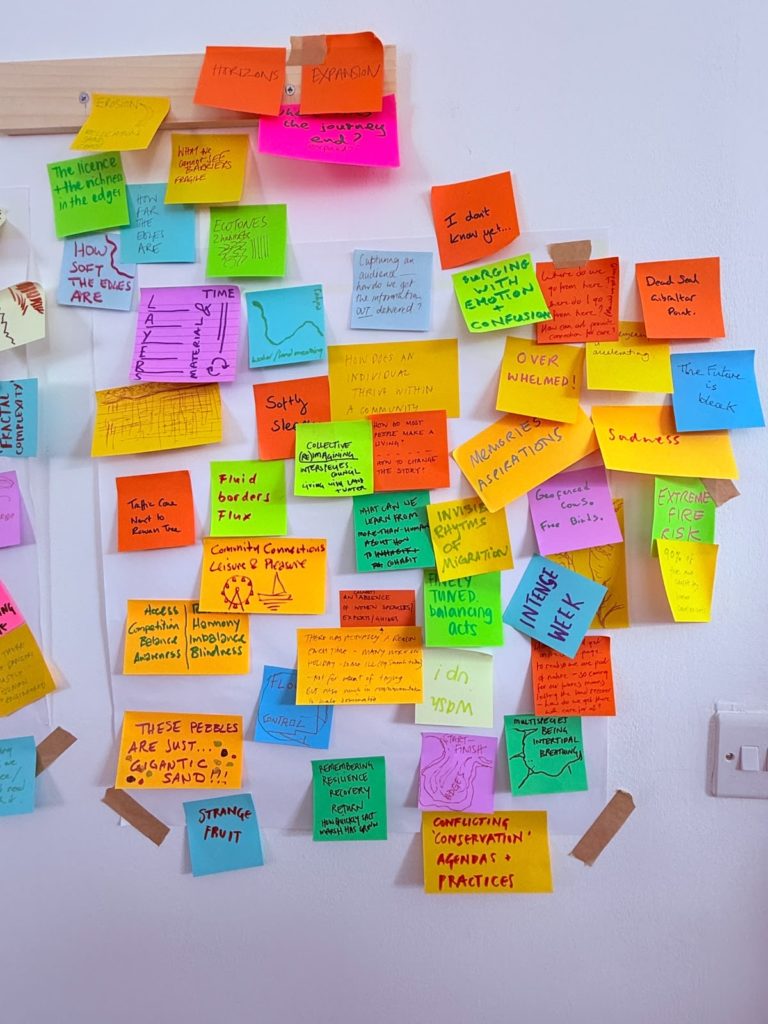
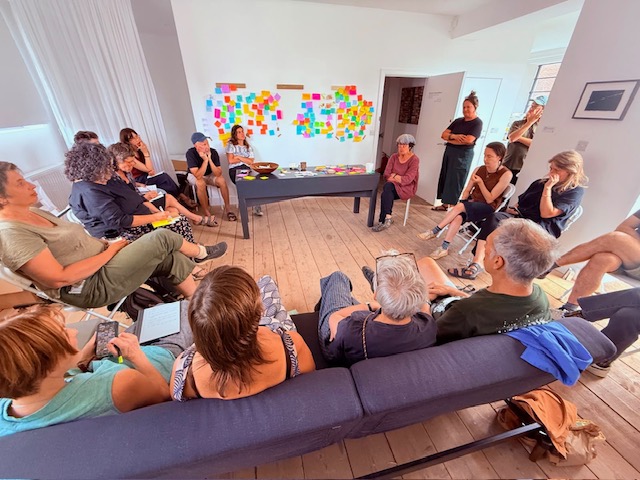
Above: Karen Eng’s reflective workshop at the end of the residency research week
All the artists
Each name is accompanied by a tiny summary of their theme / idea. Fuller details of what and where they are showing work are included with each exhibition listing
Michal Bernasiak designs resourcefully with Wash waste; Katy Bliss considers living with the Wash as a timeless water-land, experienced through its interdependent species and ecology; Emily Bowers is using hands, feet and mud to make a large painting exploring ‘how does it feel to fly?; Karen Eng considered edges between environments: the ecotone, and made friends with an infant seagull, inspiring an installation; Steven Follen researched pilgrim badges and made new designs for contemporary journeys; Anna Harding sought to represent the New Vancouvers – young professionals who are creating a strong Wash identity now; Anna Hart is making performative responses to the muddy edges between land and sea, with bodies, human and more than human; Sarah Rooms Heaphy considered biogenic reef ross worms habitats, creating precariously balanced, fragile environmental ceramics;
Sara Heywood is exploring how to represent interpenetrating environments of salt and freshwaters, experimenting with pinhole photography and vegetal developers; Petri Huurinainen listens with the land and water from where he composes reflectively with text and sound; Jacqui Jones mapped fragile and threatened changing landscapes of the Wash through drought, flood and fire.; Carol Wilhide Justin made woodcuts using local pigments and a Japanese scroll recalling long days at Holme beach; Liz Kelleher collected and layered Wash earths, stones and wastes and responses to birds, land and sky to make paintings and sculpture; James Murray-White’s film with composer Stevie Wishart and poet Harriet Tarlo considers salt marsh and sand dunes;
Mary Naylor painted rare Fen violets in memory of the early 19th Century female botanist who discovered them; Andrew Olley and Ellen Sampson made field recordings along waterways, juxtaposing water-drainage and engineering networks; Jane Prophet made sounds and visions from river to sea; explored mud as non-Newtonian fluid and an installation of seaweeds plotting her walks; Rosy Prue layers imagery of plant habitats, juxtaposing hand and digital skills and materials; Jane Sarre brought her permaculture knowledge to make a papier-maché tribute to the watery landscape; Nick Simpson made filmic insights from watery Wash glimpses
Louise Frances Smith thinking about movement and fluidity, made salt-marsh mud installations with references from glacial melt to over-fishing and farming; Martins Strals is creating Ooze-La La for each exhibition opening – a theatrical take on the culinary specialties of the Wash; Harriet Tarlo writes poetry combining insights from plants, landscape, ecology and culture; Adrian Tissier writes and performs out of sensitivity to birds, sky and land; Luke Walker and Rita Rosa Monteiro are making a film referencing layers of cultural attitudes to the Wash
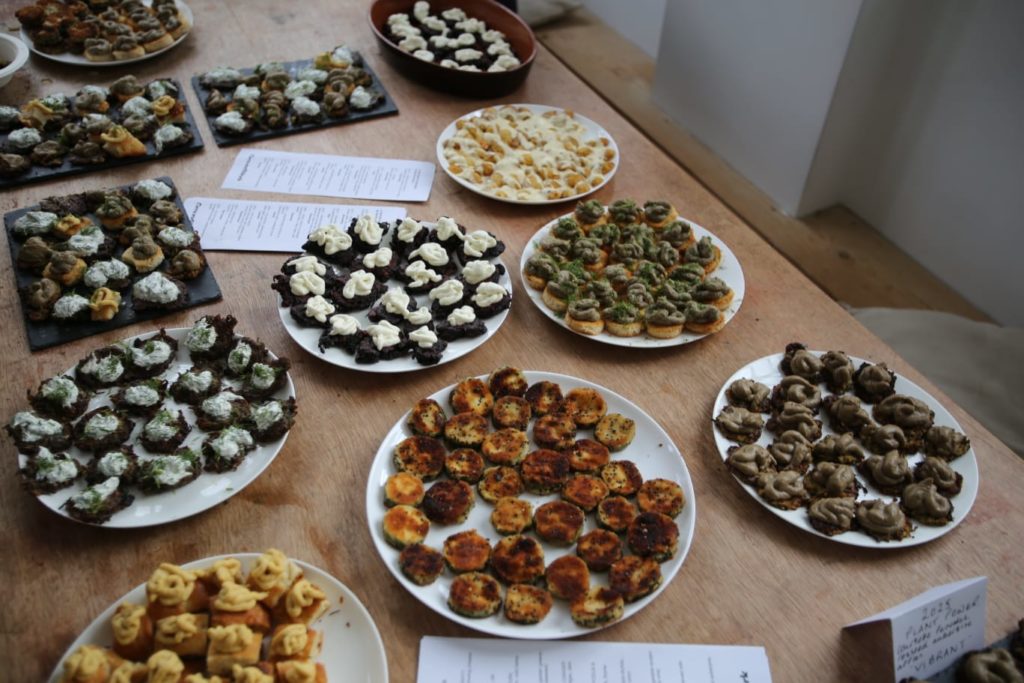
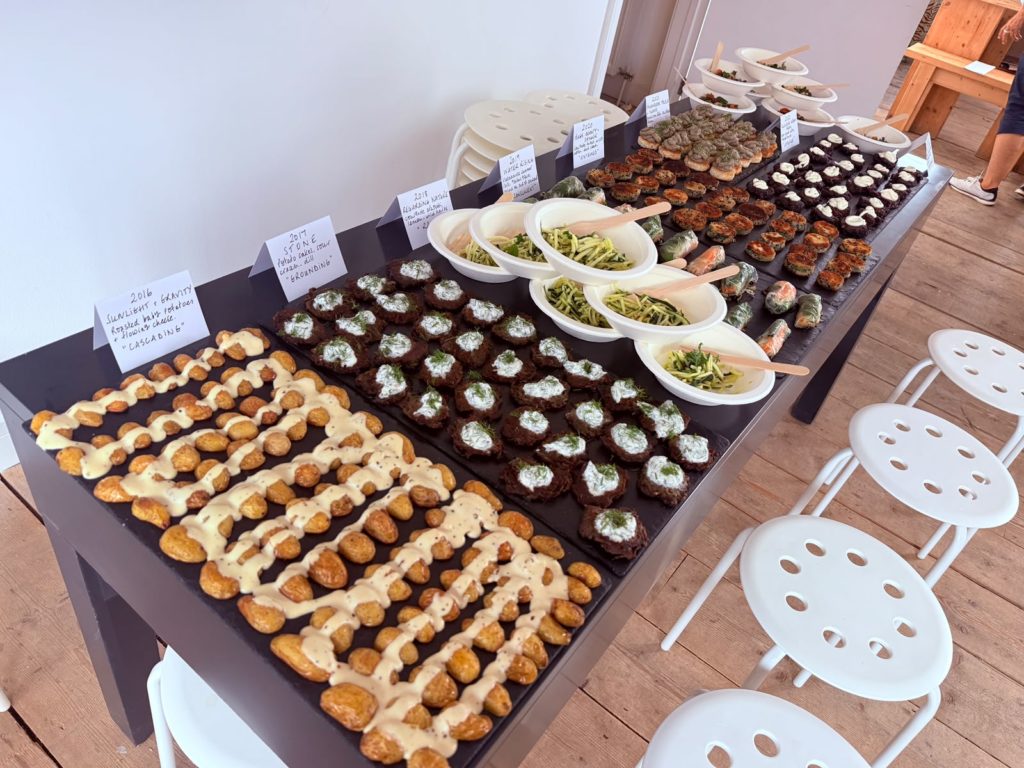
Martins Strals: Ooze La La for GroundWork 10th Birthday
The exhibitions
This year, owing to a rich series of partnerships around the Wash, we have a total of 8 exhibitions and a number of performances. Who is showing where is listed below. Each exhibition will get its own event page.
Groundwork Gallery, King’s Lynn, 10 October – 19 December
How can different ecosystems co-exist in the Wash to preserve its natural diversity and engineer its survival?
People to be featured here are: Michal Bernasiak; Anrew Olley and Ellen Sampson, Carol Wilhide Justin, Jane Prophet, Mary Naylor, Sara Heywood, Steven Follen, Louise Frances Smith, Nicholas Simpson, Karen Eng, Sarah Rooms Heaphy, Liz Kelleher, Jacqui Jones, Luke Walker and Rita Rosa Monteiro, Michal Bernasiak,
Plus performances, readings by Adrian Tissier, Harriet Tarlo, Petri Huurinainen
Also, each artist will be represented by a small piece of work to be shown in our large display case .
The Old Worker’s Club, King’s Lynn, 10 – 11 October
Wash Cultures
Anna Harding installation
The Hub, Sleaford, 12 September – 1 November
How do we interpret different cultures and ecosystems of the Wash ?
Katie Bliss, Liz Kelleher, Sara Heywood, Anna Harding, Michal Bernasiak, Louise Frances Smith, Nicholas Simpson, Carol Wilhide Justin, Jacqui Jones, Harriet Tarlo
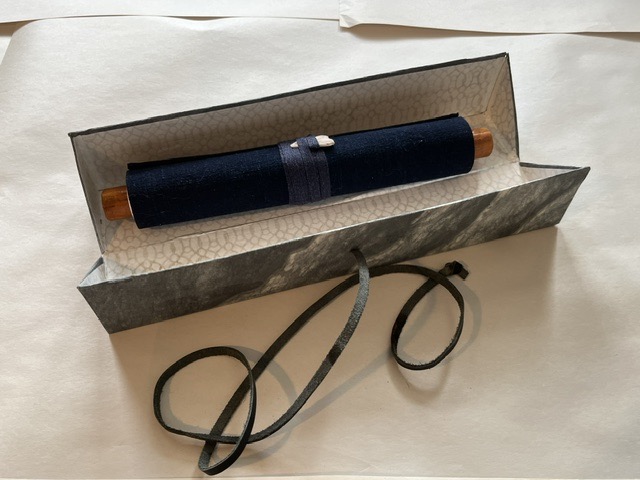
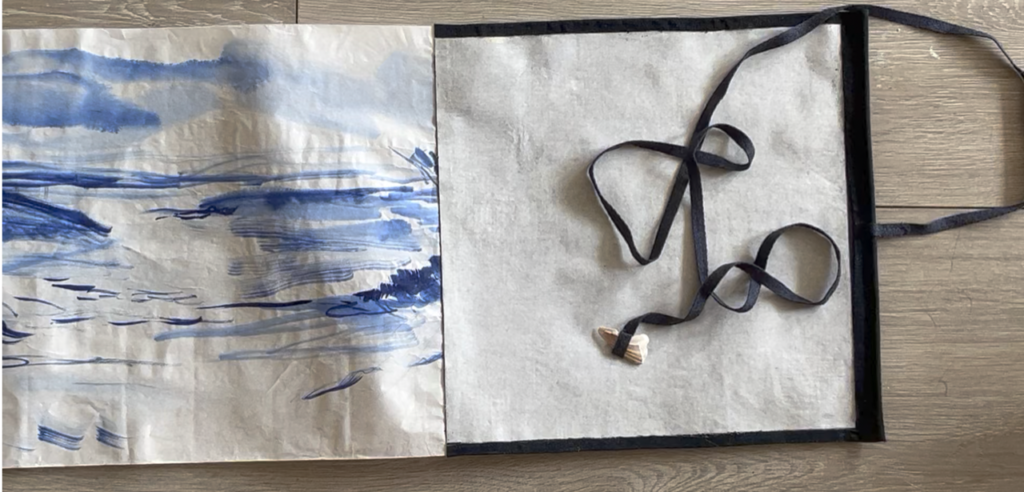
Carol Wilhide Justin, Japanese Scroll re Holme Beach
See further detail on its own page here: https://www.groundworkgallery.com/events/the-wash-estuary-a-groundwork-exhibition-at-the-hub-sleaford-12-september-1-november/
And on the Hub Sleaford website here: https://hub-sleaford.org.uk/exhibitions/groundwork-the-wash-estuary
The Old Coastguard Station, Gibraltar Point, Lincs Wildlife Trust, 17 – 25 Oct
How can we find new ways to honour the Living Wash?
Sara Heywood, Rosy Prue, Jane Sarre, Katie Bliss, Liz Kelleher
Frampton Marsh, RSPB Reserve Gallery, 26 Oct – 8 Nov
How can we map human life in harmony with birds?
Liz Kelleher, Karen Eng
North Sea Observatory 13 – 22 Nov
Made out of mud and sea: How can we live in the soft edges?
Anna Hart, Emily Bowers, Sarah Rooms Heaphy, Michal Bernasiak, Louise Frances Smith
Joseph Banks Centre, Horncastle, 1 – 30 November.
How can we find poetry with plants?
Jane Prophet, Mary Naylor, Harriet Tarlo
Greenland Fishery, King’s Lynn, performances, dates tbc
How can we listen with the Wash?
Petri Huurinainen
James Murray-White, Harriet Tarlo, Stevie Wishart
On Display at GroundWork Gallery: exhibiting artists and contents
The Wash: Remember Nature
Exhibits in detail
Michal Bernasiak
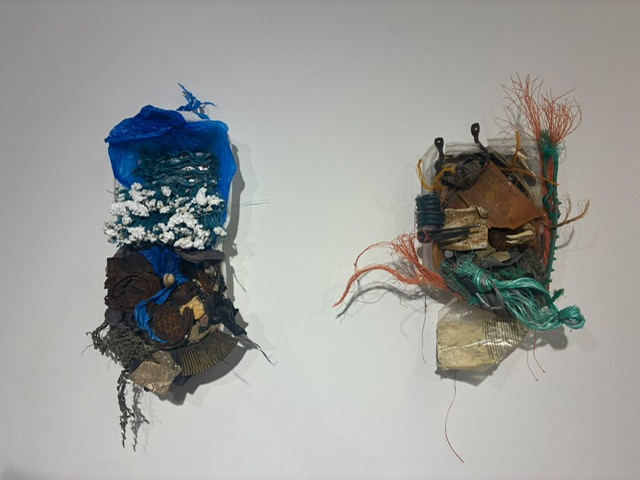
Michal Bernasiak’s developing body of work for the GroundWork Artist Residency responds to The Wash as a shifting landscape of mud, tides, migration, human activity and ecological pressure. Working with found materials, sculpture, image-making and installation, he is interested in the relationships between objects, people and the natural world, particularly where traces of human consumption begin to merge visually with natural processes of weathering and decay.
The emerging Icons series takes loose inspiration from the form and visual intensity of Orthodox icons while remaining entirely secular. Bernasiak is developing an imagined pantheon of patron saints for The Wash: figures associated with mud, seals, wind, tides, migrating birds, wetlands and other characteristics of the estuary. Made partly from discarded and weathered materials collected around King’s Lynn, the works explore how rubbish can be transformed through time, sunlight, abrasion and artistic intervention.
Humour, beauty and absurdity sit alongside concerns about littering, overfishing, habitat loss, drainage and the increasing pressure humans place on other species. Accompanying texts, conceived as small prayers or spells, invite both reflection and participation. Rather than offering fixed answers, the work asks what we choose to value, protect and perhaps even treat as sacred within an increasingly depleted natural world.
Karen Eng
A Theory of Distributed Kevinness
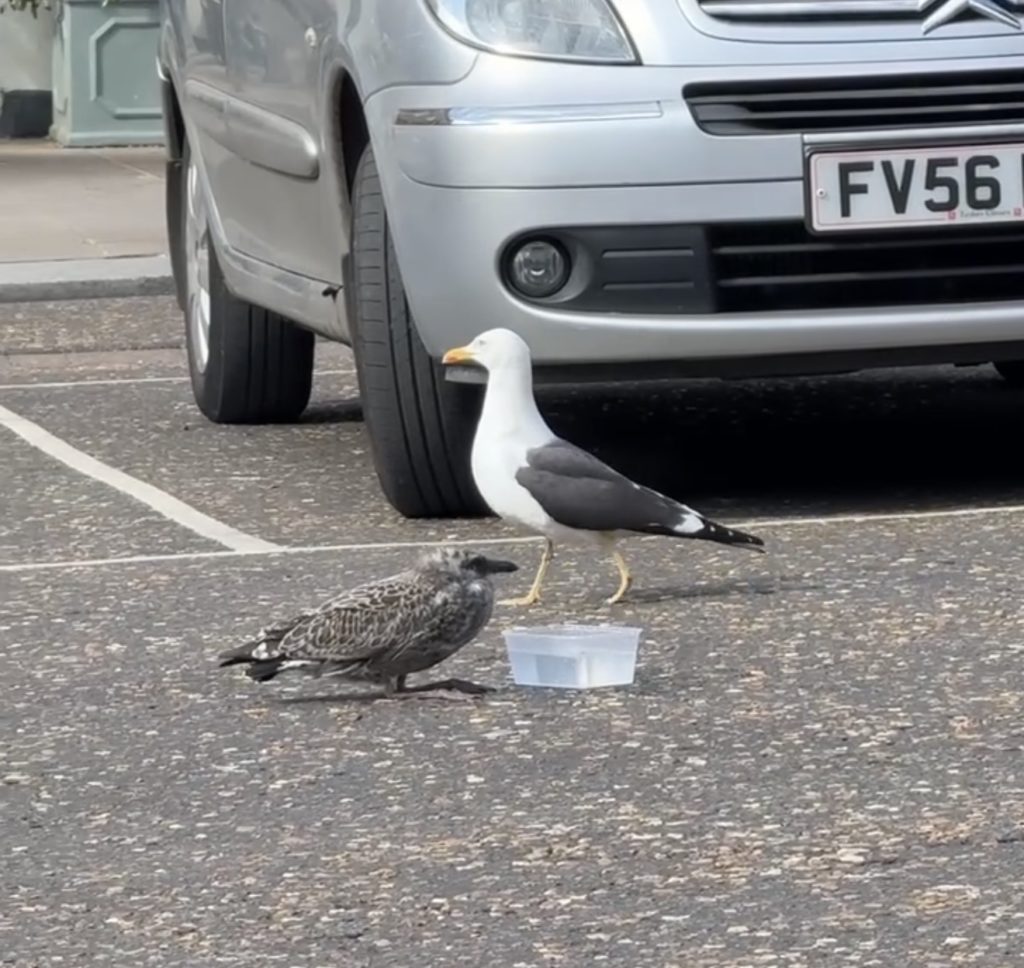
During the GroundWork residency, Karen Frances Eng began observing a fuzzy juvenile gull inexplicably standing exposed for days in a hot church car park in King’s Lynn. She named him Kevin, brought him water, and returned regularly to document his transformation from parking-lot potato to magnificent winged creature.
Discovering Kevin during the research week reframed her understanding of the Wash as a shared habitat: the gulls are equally its residents, held by the same tides, wind and salt-crumbling walls.
A Theory of Distributed Kevinness explores how sustained attention to one individual can alter perception of an entire species. Once the original Kevin could no longer be identified with certainty, Kevinness dispersed across every plausible juvenile gull, sighting, recording and memory: aka Schrödinger’s Kevin.
The installation centres on a wooden doll’s house containing objects and a looping moving-image work. Field recordings, voiceover, photographs, maps, and texts extend from physical into digital space. It becomes part observation post, part shrine, and an attempt to honour a relationship that too quickly exceeded containment.
Moving between documentary practice, affectionate absurdity and assemblage, the work considers attachment without proof or possession: Kevin as individual gull, transferable identity, and distributed ontology.
Karen Frances Eng
is a multidisciplinary artist exploring how meaning accretes through interactions among place, culture, nature, imagination and technology. Her associative, process-led practice begins with close observation and chance encounters, charting unexpected connections as they emerge. Through the Department of Ontological Cartography – an imaginary institution and evolving framework for her practice – she creates protocols for noticing, naming and mapping extraordinary realities layered within the apparently ordinary, using embodied observation, speculative systems, and traditional and emerging media. She resides within the ever-shifting overlay of air, land, water and light at the edge of the Wash.
Steven Follen
Mementos
In medieval times people undertook pilgrimages to visit shrines and religious places. The Wash carried pilgrims to Kings Lynn as they made their journey to the shrine at Walsingham. Pilgrim badges were produced as souvenirs and mementos. Worn on hats or scarves, they commemorated an individual’s journey to a special location and demonstrated faith and devotion. The badges often depicted imagery related to the place visited and were produced in quantity but were fragile, and when pilgrims disembarked from ships, the badges were sometimes lost to the water. Kings Lynn Museum holds a significant collection of these, retrieved from The Purfleet.
In the villages around the Wash there are small roadside stalls selling goods gathered from its fringes or grown on the local, fertile soil. The stalls are improvised structures, assembled intuitively with care and ingenuity as a means to display and sell local produce.
‘Mementos’ brings together these two aspects of The Wash, celebrating the roadside stalls, their inventive construction and resourceful use of available materials and presenting new badges highlighting some of the unique features, history, folklore and culture of the Wash, each a souvenir, telling a story of what makes this such a special place.
Steven Follen
is a designer, maker, artist and educator with a broad subject knowledge and specialist skills in 3D Design, Applied Arts, Metalwork, Drawing, Visual Research, Community Engagement,Ideas and Design development. His practice combines analogue and digital processes, industrial and traditional craft skills with creative and inventive use of materials to produce outcomes that are intelligent and engage audiences on multiple levels, from the tacit and practical to the thoughtful.
His studio practice includes: Making metal vessels and artefacts, Producing design solutions for site specific, client-focussed commissions,Working in educational contexts with the public across all ages, students, educators and industry professionals, researching and interpreting heritage sites, landscapes and museum or gallery collections. running creative workshops and developing ideas to produce outcomes that help to engage communities and make places, spaces and collections accessible to wider audiences.
He has worked on projects across the UK as well as in India, Bangladesh, Australia, Italy and Finland.
His work is included in The Contemporary Arts Society’s Special Collection of Metalwork at Birmingham City Museum and Art Gallery; The Crafts Council’s National Collection in London; Manchester Metropolitan University – Contemporary Craft Collection; Aberdeen Museum and Art Gallery, South East Arts Collection at Hove Museum and in the Swan Theatre at the RSC, Stratford upon Avon.
Sarah Rooms Heaphy
Connecting with the unseen, inaccessible Wash habitats
Suspended within tidal waters sit eroded coastal sand & mud/ running through rivulets, waterways, marshland / agricultural lowlands, irrigating fenland drainage waterways / home to heritage fishing industry for cockles, mussels, shrimp / migrating bird feeding grounds / constant land-water movement / connections of The Wash water.
Within its intertidal waters Ross worm (Sabelleria Spinulosa), have created rare colonies of biogenic reefs, using resources of sand, mud, mucous and shell to form rigid tube reef habitats, on hard shell substrata, intertwined 30cm tall, covering large areas now protected by Marine Conservation, creating new habitats for intertidal bottom dwellers to feed and live, breaking down and recreated within the Wash embayment.
Nettles of the North Sea is an interpretation of the regenerative biogenic reef ross worms, including its fragility and balance, a precarious interdependency of industry, nature and conservation – to ensure sustainability for birds on their migration routes, heritage fishing industry, and maintaining its wild beauty.
Ground Truthing-visibility low is tubular sculpture using the Ross worm habitat and references to Fenland irrigational water management, whilst viewing from afar, wetland barriers, elements of inaccessibility and visibility.
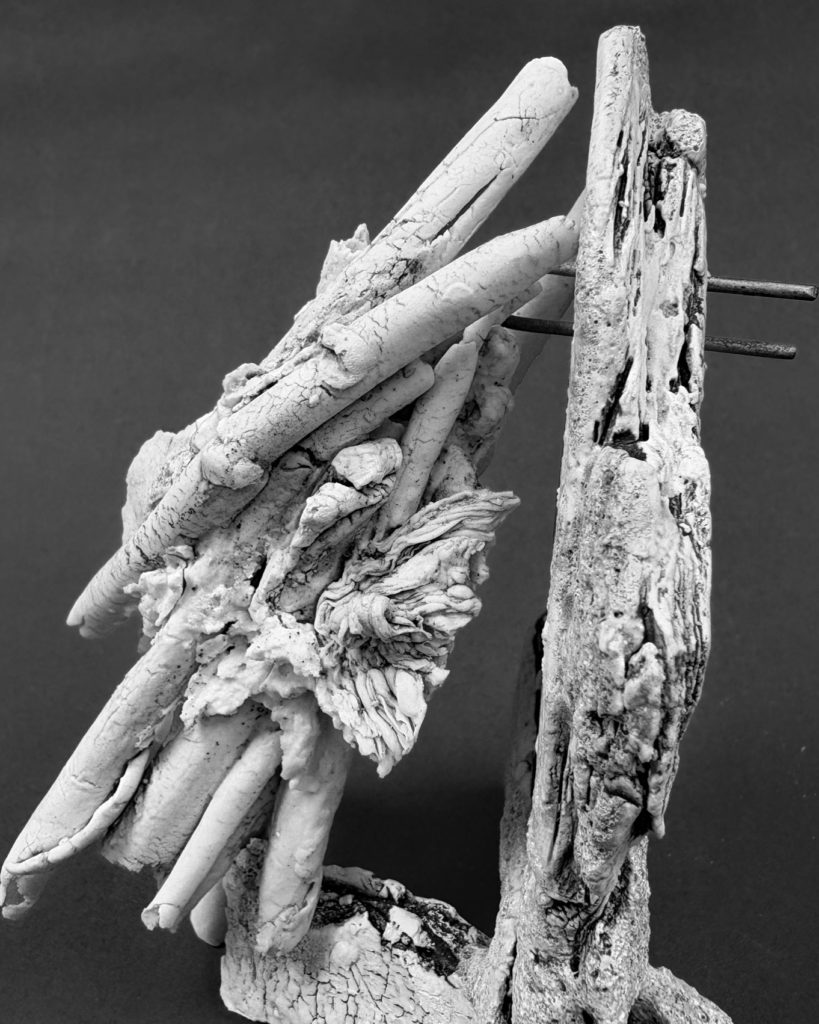
Sarah Rooms Heaphy
has always loved the inter-tidal coastline, an area of part land / part sea, with ever changing tides that ebbing & flowing, with nature’s weather patterns revealing ‘“treasure’” on every walk. Whilst spending time in the Jurassic coast, North Devon, Cornwall and Scottish Highlands, she has gathered a chaotic muddle of images, found forms, and distressed surfaces. Her ceramics, mark making paintings draws on these memories, reimagining, layering distressing to form new structures evoking coastal remnants lost at sea, weathered, fused & recreated.
Increasingly influenced by historical land defences, sea salt corrosion, wild weather dereliction, extremities, from the wilds of Scotland to her nearest coastal trips of soft sands and chalky clayscapes on the Eastern coast, Sarah’s sculpture draws on the constant battle between nature and our manmade environment. The works reference balance through interlocking structure, with textures fused with fragility, strength and power found through longevity and survival. www.sarahroomsheaphyceramics.com
Sara Heywood
Sara Heywood is a British multidisciplinary artist. Her practice focuses on site responsive, process driven interventions where natural and manmade environments and materials collide. Intrinsic to the work is an urgent dialogue between humans, heritage and environmental land legacy.
Over Flow, 2026
For over 400 years, humans have attempted to control the flow and distribution of water that moves in and out of The Wash Estuary, its surrounding river systems, and low lying land. As a result the ground has subsided. But sea levels are also rising. In a complex landscape at risk of repeated flooding, questions arise about how best to future manage this unique environment. Do we continue to attempt to control through ever increased drainage management and sea defences? Left to its own devices, within only one year The Wash could reclaim over 1,300 square miles of surrounding fertile land.
Through a series of alternative photographic processes, Over Flow responds to this landscape at a key point in its history. Where fragile, intertidal ecosystems and man exist in precarious balance. Working with locally sourced materials, The Estuary has also become co-author of the artwork. Over Flow records an environment that is constantly shifting, releasing and reconstituting itself.
“The act of making in a darkroom or in situ forces me to flood and wash the paper repeatedly, rhythmically, mindfully. It’s also a fragile environment – part control, part letting go and allowing the processes and materials to dictate the outcome.”
Jacqui Jones
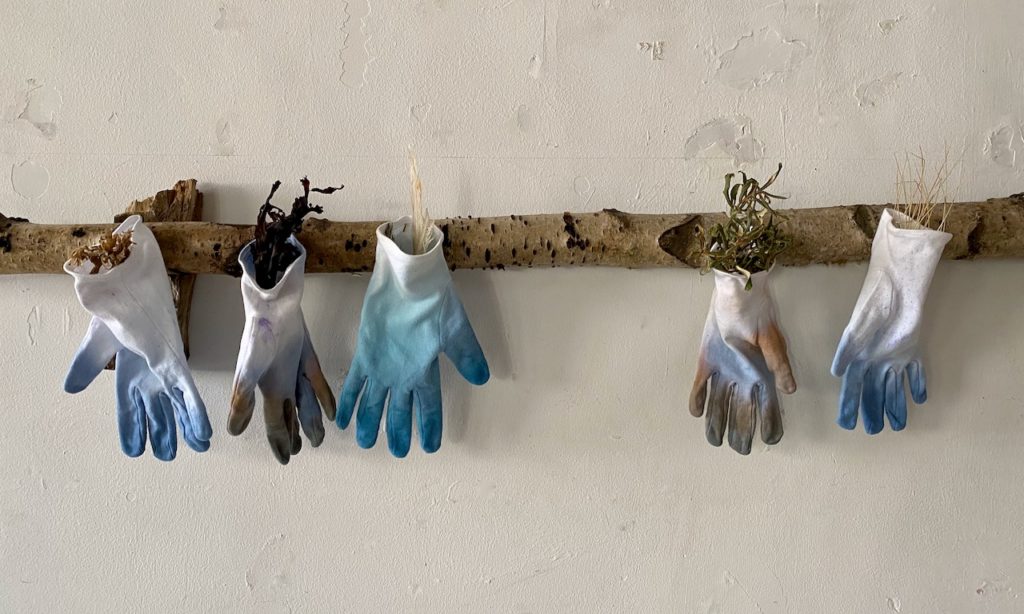
dyed with Wash natural pigments
Gentle Touch
The Wash is known as one of the UK’s most critical coastal ecosystems, characterized by its vast expansive mudflats, sweeping salt marshes, and rich diversity of intertidal wildlife. Capturing the essence of this unique landscape, Gentle Touch features hand-dyed document handling gloves, each containing organic items gathered from various nature reserves visited throughout the Groundwork Residency.
The choice of white cotton archival gloves serves as a powerful symbol, reflecting both the extreme fragility of these precious wildlife environments and the dedicated care provided by the conservationists who work to protect them. Accompanying each glove, is a map fragment wrapped around the wooden support, grounding the artwork by pinpointing the precise geographic location explored.
Jacqui Jones
is a Norfolk based interdisciplinary environmental artist whose work focuses on raising awareness about the climate crisis, coastal vulnerability, and single- use plastics. She uses art as a vehicle for public engagement, framing her output around current scientific, political and social discussions.
Carol Wilhide Justin
Two Days at Holme
It seems that the way we think about particular landscapes and the way we decide which things about them we most value are often derived from how they have been positively represented in art and literature. The Wash is a landscape that has often been negatively described as flat and monotonous. In Graham Swift’s novel Waterland he called it ‘of all landscapes one that approximates most closely to nothing.’ Yet its beauty is astounding; vast skyscapes and seemingly endless seascapes with sea patterned mudflats and unique salt marshes providing habitats of global importance for a huge diversity of migratory birds. This residency has coincided with The Wash and much of England declared an area of drought. Climate change is unbelievably still a question of debate.
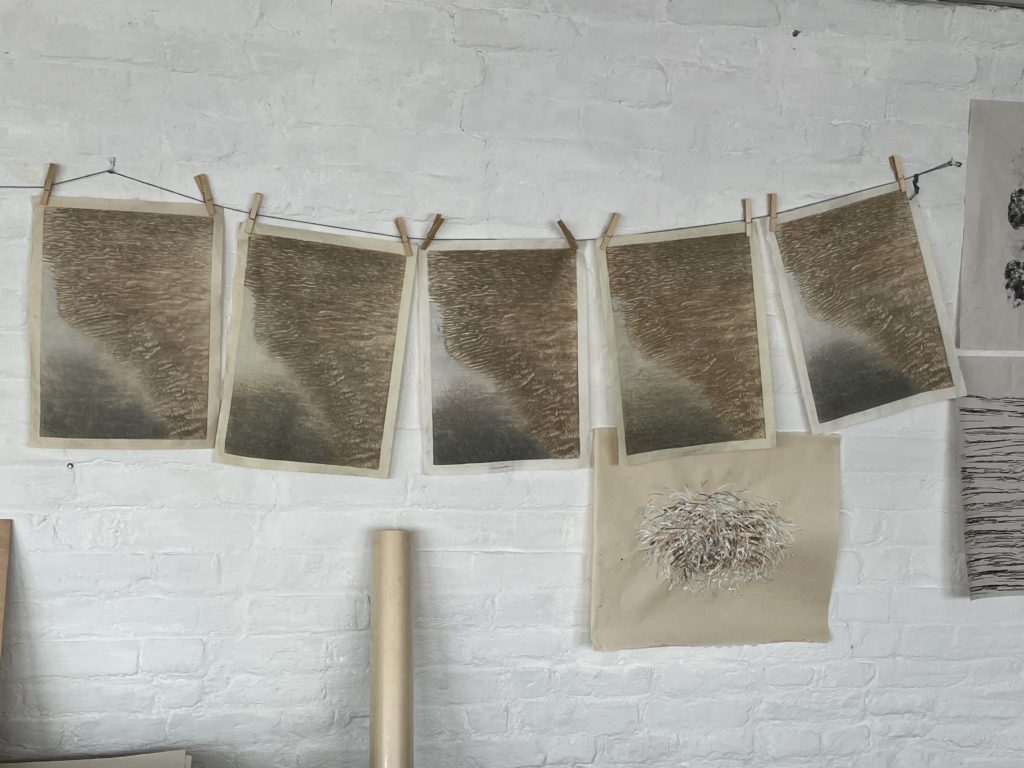
Carol’s work has concentrated on showcasing the beauty of the beach at Holme-next-the -sea on the North Norfolk coast near where the 4000 year old timber circle Seahenge was discovered and at the end of the Peddar’s way. Her prints depict the vast cloudscape (where no rain falls), the interplay of light where water meets mudflat and the reflection of sky and wet sand. Ink drawings show the joyous exhilaration experienced over two days at Holme.
Her process of reduction woodcut is built up over time transparent layer by layer using sumi ink and brown pigment sourced locally at Ling Common. Process and subject matter merge, water is an essential element in mokuhanga and pigment layers deposit ink literally made from the colour of the landscape.
Carol Wilhide Justin
is a printmaker specialising in Japanese woodcut or mokuhanga prints. She trained in Japan at MI-Lab in Fujikawaguchiko and at the RCA.
She exhibits her work widely in the UK and internationally and teaches the technique to adult students at The Slade, Morley College, City Lit and The Art Academy. Since 2023 she has been delivering lectures on the subject around the UK and abroad for The Arts Society. She has also written a book “Japanese Woodcut: Traditional Techniques and Contemporary Practice” published by the Crowood Press in 2024.
Japanese woodcut is an entirely environmentally friendly print process, using sustainable wood, non-toxic watercolour pigments, nori (cooked rice flour) and is hand printed with a baren. Carol’s prints centre around the natural world, specifically, clouds, water, trees and reflections.
Liz Kelleher
Strata and Strata (Graphic Score)
are works made in response to Kelleher’s continued research of the Wash Estuary and surrounding land.
Strata explores the interplay of ecological forces that are inherent in the Wash, as materials collected from the landscape are reimagined into dense yet precarious structures.The sculptural columns of stacked components are a nod towards the complexities of navigating the threats posed to the fragile ecosystem. This work also becomes intertwined with Kellehers’ own experiences as sedimented depths of her own psyche.
Oil painting Strata (Graphic Score) is on show at Frampton Marsh
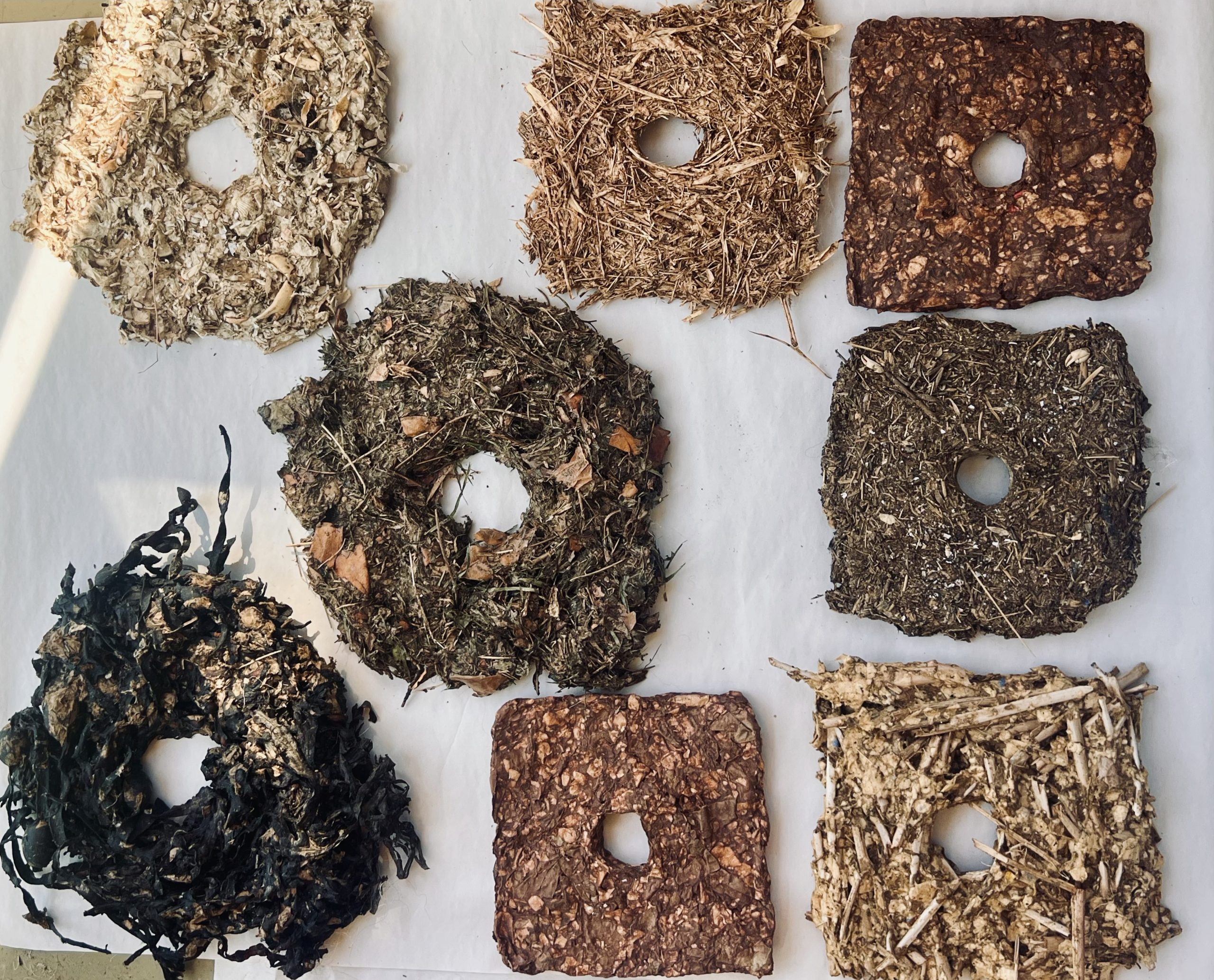
Liz Kelleher
Her artistic practice is rooted in the narrative potential of the South Lincolnshire Fens, with a central concern being historical and current threats to the area’s natural ecologies, exploring and reinterpreting both historical and contemporary narratives and objects.
She experiments directly with the ‘material’ of her research such as agricultural paraphernalia, organic objects and matter and mock archaeological remnants which coalesce into large scale, process driven sculptures. Her ongoing body of work ‘A Fenland Archive’ interweaves large scale metal/mixed media sculptures, casts, prints and an archive of found, salvaged and collected objects from the area, working with communities to question the value and significance of found objects and the current threats we face.
Mary Naylor
Violet to Well, Well to Violet
presents the indigenous, Fen Violet, Viola Stagnina, as a metaphor for heroism, resistance, and loss in relation to the past and future of The Wash landscape. The Fen Violet was first discovered by Lincolnshire based botanist Maria Cautley during the 1800s. Her scientific specimen sheets covered with poems and folklore are now held between The Natural History Museum, London and Sir Joseph Banks Centre, Horncastle.
The seeds of a violet will lay dormant in the ground for what can be decades waiting for disturbance in the ground, once they flower they become a symbol of resistance against habitat destruction, land drainage, a warning to those at fault. In Roman traditions the violet was a sign of mourning originating from the myth and tragedy of Cybele and Attis, similar to Medieval Christians that believed the stems and flowers once stood straight, but became bowed and deeper purple when the shadow of the crucified cross fell upon them. The themes of love, loss, fragility and resistance resonate with this intertidal, saltmarsh landscape. Within The Wash’s complicated past and landscape, it is difficult to not mourn the loss of a land without human intervention, but to also accept our dependence on this past in order to live as we do today. However, the Violet can present the need for a balanced, transformed future.
Mary Naylor
uses painting to explore transformations within nature. Influenced by poetry, myths from Ovid’s Metamorphoses and folklore, the paintings investigate reincarnation and metamorphosis within natural cycles of loss and renewal. Broken shells, figures and flora become vessels of mythological narratives, bodies or landscapes personified.
Andrew Olley and Ellen Sampson
Reclaimed #2
Digital, 8 & 16mm film and sound projection
“There’s this thing called progress. But it doesn’t progress. It doesn’t go anywhere. Because as progress progresses, the world can slip away. It’s progress if you can stop the world slipping away. My humble model for progress is the reclamation of land. Which is repeatedly, never-ending retrieving what is lost…” Graham Swift, Waterland
The fenland of the Wash is liminal and productive, overlooked and vast. The man-made landscape is the lowest point in the UK, a vast agricultural area maintained only through continuous drainage, a centuries old task which will never be complete.
Against the backdrop of rising sea levels and shrinking land, wetter winters and hotter summers, Reclaimed explores the immense network of interconnected drainage systems that bisect the wash area, marking boundaries and maintaining a landscape that would, if the pumps were turned off, be largely underwater within a year.
Amidst this expanse of agricultural and marshland, water is in perpetual motion – moving from one place to another. The network of drains, sluices, and pumping stations is the dominant feature of this reclaimed landscape: interconnected contemporary and historic structures which bisect the land, necessitating a never-ending, largely unnoticed, cycle of labour and repair.
Andrew Olley (cinegrafik)
is an experimental visual/sound artist and creative technologist interested in generative processes, hybrid digital/analogue methodologies and expanded forms of field recording. Working across media, he is particularly drawn to revealing the unseen within landscape, and the coincidences and affects born in the collision of human and environment. https://cinegrafik.com/
Ellen Sampson
is an artist and material culture researcher whose work explores the impacts of bodies on objects and environments: the ways that the material world shapes and is shaped by human experience. As a research-led artist, her work has focused on two themes, clothing bodies and traces and human intervention on landscape, using analogue film and photography, object making, performance, and writing to explore the emotional and sensory relationships people have with the material world. Her work has been displayed at institutions including, Somerset House (UK), Z33 (Belgium) Bard Graduate Centre (New York) and screened at festivals such Ann Arbor and Oberhausen. Recent projects include photo essay for the Barbican exhibition Dirty Looks (2025) and Exhibition Liquid Bodies with dawn Wolley at Gallery North (2025). https://www.ellensampson.com/
Jane Prophet
Walks in The Wash
These new works emerge from slow walks through different landscapes around The Wash. They ask what we might understand about the estuary’s ecosystems when we slow down and pause to look, feel and listen.
Each work responds to materials and characteristics of The Wash. The estuary mud, a non-Newtonian fluid that can feel firm under rapid movement but gives way when movement slows, inspired a bubbling surface that responds to the vibrations of voices. A tilting drum echoes the sound of the sea, containing rolling beads made from local clay gathered at Gibraltar Point and formed and fired by artist Sarah Rooms Heaphy.
Across these works, the artist moves between walking, collecting, listening, making and magnification, using simple and digital technologies to explore The Wash at different scales.
Jane Prophet
is an interdisciplinary visual artist based in East Anglia. She combines traditional and computational techniques to produce photographs, objects, and installations. A central theme in her practice is the technical, socio-cultural, and ecological forces that shape landscapes and plant species, resulting in site-specific works that investigate history, economy, and community. Prophet’s artworks have been exhibited globally and are part of collections, including the Arts Council of England’s National Collection. She co-edited the free downloadable anthology Plants By Numbers (Bloomsbury Academic, 2023) that brings artists and curators together to explore plant ecologies, art and design practices, and computation.
Nicholas Simpson
Nicholas Simpson’s work developed through time spent in and around The Wash, looking closely at a landscape that is vast in scale, but continually shaped by small, often imperceptible movements. The elements that make up this environment became the focus: sand and sediment, moving water, shifting light, changing ground, tides, and the traces of people who have travelled through and worked within this landscape over generations.
Using video footage gathered during the residency, Nicholas began developing a series of sculptural projection screens that project out from the gallery wall. Small portal-like openings offer concentrated glimpses into particular moments and details within the footage, playing with the relationship between the immense scale of The Wash and the minute processes that continually remake it.
Nicholas Simpson
explores relationships between people, place and the environment through moving images, projection, installation and participatory work. Looking closely at landscapes and the processes, histories and human activities that shape them over time. Alongside gallery-based work, engagement is an important part his practice. Using creative workshops and playful approaches to open conversations with people of different generations, creating space to explore environmental questions without becoming didactic or prescriptive.
Louise Frances Smith
During the GroundWork Residency Louise Frances Smith was drawn to the hidden rivulets, creases and the wondrous vastness of the Wash saltmarshes, the bodily forms shaped in the mud along the soft edges of land and water. In a constant state of change, sediment is moved by the tide from one place to another. This ‘highly productive’ wilderness is mostly out of reach to humans, but a vitally important place of biodiversity for migrating birds and multispecies communities.
Multiple tensions put these wild places at risk as they are squeezed into ever smaller spaces due to the climate crisis and the human need to scrape, dredge, drain, tidy, protect and build hard surfaces to live on. How can we invite softness in? To create more space for this inaccessible land? How can we come to an understanding that we are part of nature and not separate from it?
Louise explores these questions through drawing, using small amounts of mud gathered from the Wash’s edges and through tactile objects – some formed by pressing clay into her own body, imprinting the textures and sense of being in these places. Made to be held / rearranged / interacted with – the objects invite touch as a way of connecting to these wild and inaccessible places.
Louise Frances Smith MRSS
lives and works in Ramsgate, Kent (UK). Louise’s practice spans sculpture, installation and works on paper. Working with an array of materials including clay, seaweed bioplastic and oyster shell biomaterial, Louise creates highly textured surfaces to bring attention to the patterns and textures created by nature, magnifying micro details alongside human-made interventions. Louise is a member of the Royal Society of Sculptors and recent exhibitions include – ‘Anchor Points’, Das Schaufenster, Seattle (USA); ‘Entangled’ by Liminal Gallery, Saatchi Gallery, London; ‘Living Materials’, Aspex, Portsmouth; ‘Meant to Fade’, Laneway Gallery, Cork (Ireland); ‘2023 Ingram Prize’, Pavilion Gallery, London & ‘Collect Open 2023’, Somerset House, London.
Harriet Tarlo
Harriet Tarlo works against socio-political division of land, in favour of a bioregional approach to The Wash and the ‘behind land’ of the Fens asking how to change habitual ways of thought and action by moving towards more-than-human and water, rather than land-based, perspectives – these are questions she explores, but the poetry is the poetry – a celebration in and of language and place.
In her longer work, Harriet Tarlo, writes in response to fieldwork with fellow-artists around the Wash, and to the language of and about the Wash. Components include:
EMBAYMENT/SEAS/SANDS/ FLATS/THE ROARING MIDDLE/MARSH/ DUNES/RIVERS/FENS
This is a macro piece in which Tarlo attempts to hold the multiple forces of The Wash, alongside the extensive historical and contemporary threats to these, in inter-relation. Curators/fellow-artists are invited to detach words to complement and/or engage their work.
Tarlo’s shorter lyrics are individual plant portraits particular to the saltmarsh and dune systems of the area – a more micro approach extended by her developing collaboration with composer and musician, Stevie Wishart, and with film-makers, James Murray-White, Rita Rosa Monteiro and Luke Walker. Together they explore this plant-based approach to place in film-work featuring soundscapes of violin, poetry and the Wash edges themselves.
Harriet Tarlo
Tarlo’s poetry is published with Shearsman, Etruscan, Guillemot and Wild Pansy, most recently Cut Flowers 1 & 2 (2021/2024) and, with Judith Tucker, Saltwort (2022). Her work has appeared on gallery walls and community venues in collaboration with artists at home and abroad. Tarlo edited the influential anthology The Ground Aslant: An Anthology of Radical Landscape Poetry (Shearsman, 2011). She is the author of numerous essays on poetics, gender, place, walking, collaboration and environment, and is Professor of Ecopoetry and Poetics at Sheffield Hallam University.
Adrian Tissier
Tidal
is a fusion of writing and performance that explores the environmental and cultural impact of the power of nature coming up against the controlling demands of people, in the dynamic landscape of The Wash.
Adrian has created poems that express the ephemeral nature of a landscape that is multi-layered, temporally and imaginatively, as well as being composed of multiple physical layers of sand, silt, peat and chalk. This is a landscape which continues to change, affecting the lives of the communities and the wildlife that have grown up around it, and which continue to depend on its harvests, both on land and at sea.
The poems reflect the context of continuing social change, climate urgency and nature depletion while celebrating the potential of an inspiring landscape to bring benefit to everyone who finds connection with it.
An accompanying collaborative and inter-active performance will invite audiences to take a moment to reflect on their own experience of the sights and sounds of The Wash.
Adrian Tissier
is an educator, writer and performer living in Norwich. For the Groundwork residency he is exploring the physical and imaginative meeting points of sea and land around The Wash; a place where the dynamic power of nature comes up against the changing needs of humans. Adrian has created poems that express the ephemeral nature of a landscape that is multi-layered, temporally and imaginatively, as well as being composed of multiple physical layers of sand, silt, peat and chalk. The poems reflect the context of continuing social change, climate urgency and nature depletion while celebrating the potential of an inspiring landscape to bring benefit to everyone who finds connection with it.
Luke Walker and Rita Rosa Monteiro
Floodland
is a film about The Wash Estuary: past, present and future. It journeys upriver and downriver, through freshwater and saltwater marsh, along coast and into bay, across the borders of Norfolk, Lincolnshire and Cambridgeshire, to the edges of the North Sea.
Exploring the region as a zone of constantly rising and falling water levels, it reflects on the essential movement of flows and tides, submergence and emergence, for the survival of a unique ecosystem.
It looks at humanity’s desire to live in, work on, and coexist with such a mutable space. From our first attraction to the rich pastures and abundant waters full of fish and birds, to our construction of vast agricultural farmland and industrial ports, it considers our attempts to control and manage the environment: channeling river; digging ditch, drain, dyke; and rewetting. Ultimately, with the constant threat of land sinking and sea rising, it meditates on our recurrent urge to build barrier or stilt; to halt the waters or let them move around us.
Using lightweight cameras and microphones, and through a series of interviews, Floodland aims to build a picture of how, through water, a million acres of low lying land is linked to England’s largest embayment.
Rita Rosa Monteiro and Luke Walker
are multimedia artists and filmmakers based in London who grew up in the estuaries of The Tejo and The Thames.
James Murray- White
For artist/filmmaker, James Murray-White, this year’s Groundwork Residency looking at the Washes is just the start of a process of looking at and feeling into this liminal, watery place.
His work is concerned with ongoing processes, the people and the ecology of all caught up within a local ecosystem: how the soil is constantly washed by the ebb and flow, silts and salt, how droughts and floods impact, how changing climates affect, how political systems and religious/spiritual beliefs affect. This is all deep terrain and silty terroir for exploration and interrogation, but not exclamation or pronunciation. Underneath all we see are the glorious shifting tectonic plates, ever keeping these processes in uncertain change.
With a 20 year background in documentary filmmaking, environmental journalism, and the theatre, JMW is shifting his narrative of enquiry from the human-centric structures of storytelling, over to the elements that shape the bigger picture. Water, and its flows and shape, absorbs him.
For the residency, he began a collaborative process with poet Harriet Tarlo and composer Stevie Wishart, and fellow filmmakers Rita Rosa Monteiro and Luke Walker, to respond to Harriet’s poem ‘Verges’ and Stevie’s musical composition she has developed.
At King’s Lynn The Old Worker’s Club
10 – 11 October, Open 11-4 daily, until 18 October open by appointment
Anna Harding
Future Wash: an installation
Anna Harding’s work responds to the past, present and future of locations which she feel strongly connected to. Through observation and speculation, she combines interests in modernist optimism, seasonality and climate change. Anna Harding is influenced by changing seasons, the ability of nature and memories to quietly take over, causing her to get submerged in them.
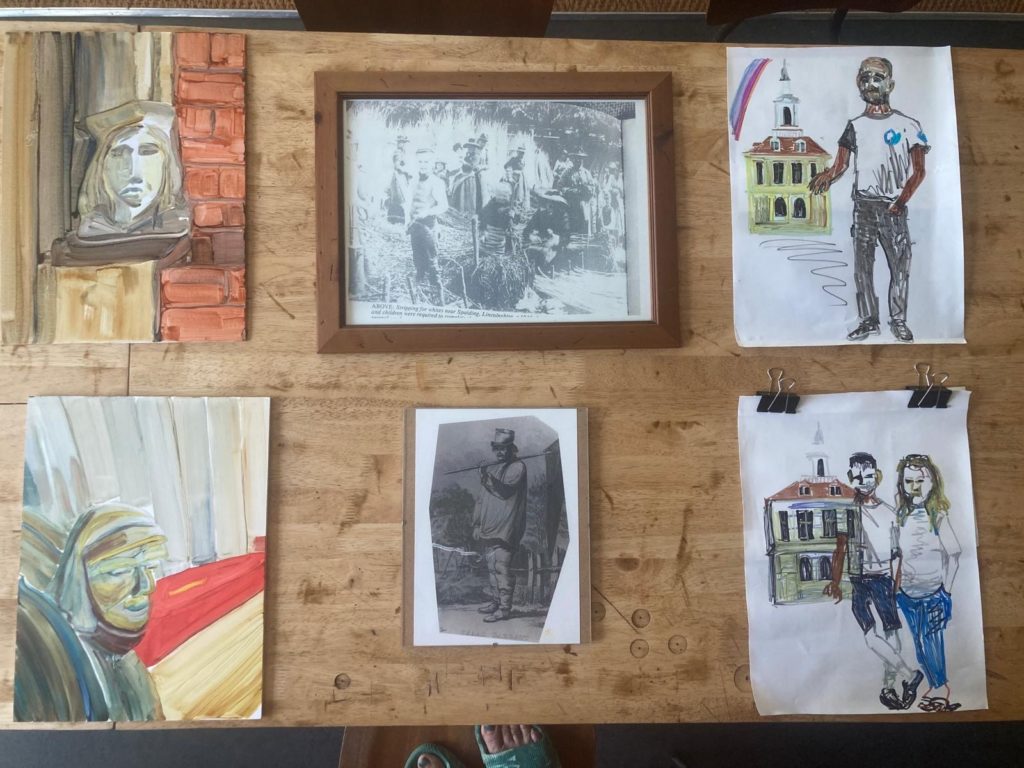
Anna Harding’s practice involves research, plein air painting and photographs, before further work in the studio. She uses oils, large watercolour, drawing and print.
The work is conceptual AND intuitive. Underlying this is an interest in places and their vibe, past visible in the present, futures which havent quite worked out according to the dream. She responds to sites, seasons and weather conditions, nature creeps in. Faced with urgent environmental and social challenges, she processes the power of nature to take over.
