
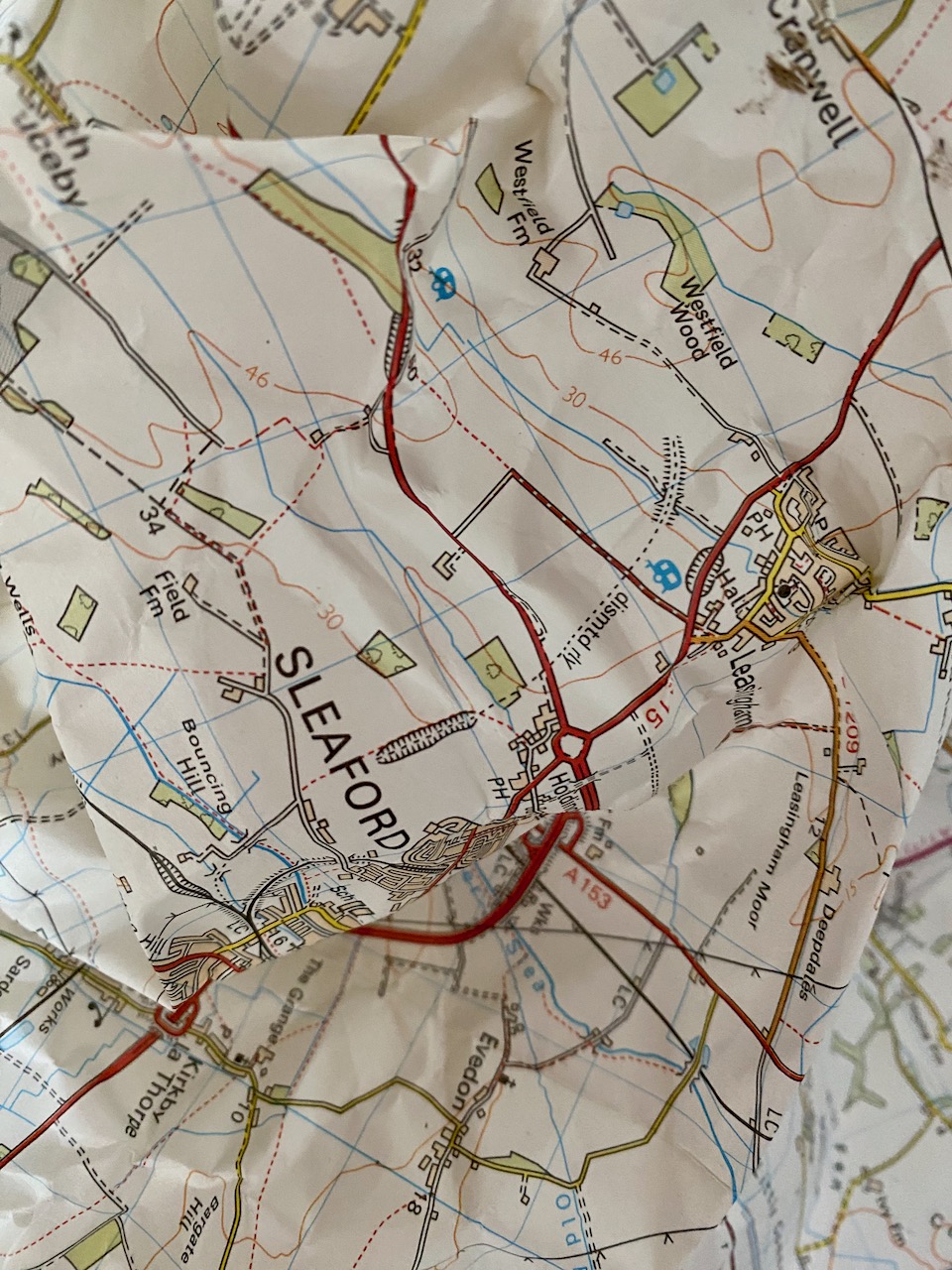
The Wash Estuary is an exhibition at the Hub, Sleaford, Lincolnshire. It is part of a programme of exhibitions and events that GroundWork Gallery is presenting this autumn, all around and about The Wash Estuary.
Altogether, twenty seven artists in residence have been involved, alongside a whole range of different subject experts contributing to their insights and knowledge.
Cover Image: detail from Jacqui Jones: Flow
Showing work at Sleaford are: Michal Bernasiak, Katie Bliss, Jacqui Jones, Anna Harding, Sara Heywood, Carol Wilhide-Justin, Liz Kelleher, Nicholas Simpson, Louise-Frances Smith, Harriet Tarlo, Adrian Tissier
Open Monday to Saturday 10-5; Sunday 10-4
How do we interpret the different cultures and ecosystems of the Wash?
What is emerging and continues to develop as our community of artists get to know the Wash better, is a remarkable series of interpretations These are being showcased through exhibitions, performances, writings, films, and sound works, all around this extraordinary subtle region.
The Wash Estuary is constantly changing and changeable,
The Wash full of fragile ecosystems and interpenetrations between water, land and sky,
What we have seen and strive to represent often arises from its contrasts, fluctuating between the need for control and desire for freedom. For a land which is largely below sea level, these range from imperatives to cultivate the land, limit access to it and control the flow of water, to the enjoyment of its wildness, rampant nature, free flowing water and the limitless flight of millions of birds.
Our aim has been to try to understand aspects of the many different characteristics and cultures of the Wash. What you will see, hear and watch is much that is unexpected, but also resourceful. Artists have found novel ingredients, new uses for materials, original expressions and visions, and affecting and playful performances. It is just a beginning.
Veronica Sekules
Director Groundwork Gallery
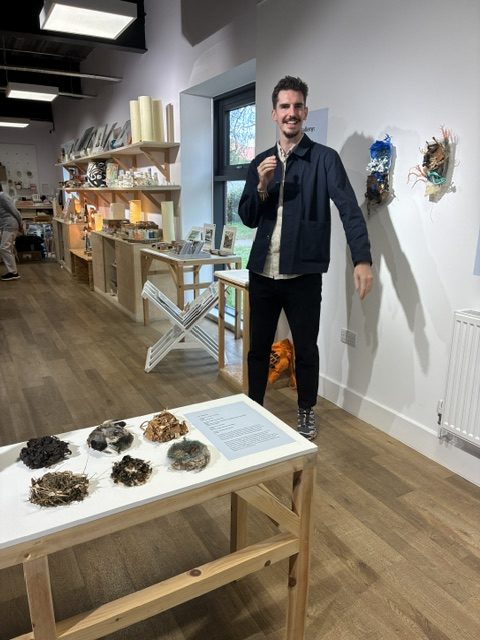
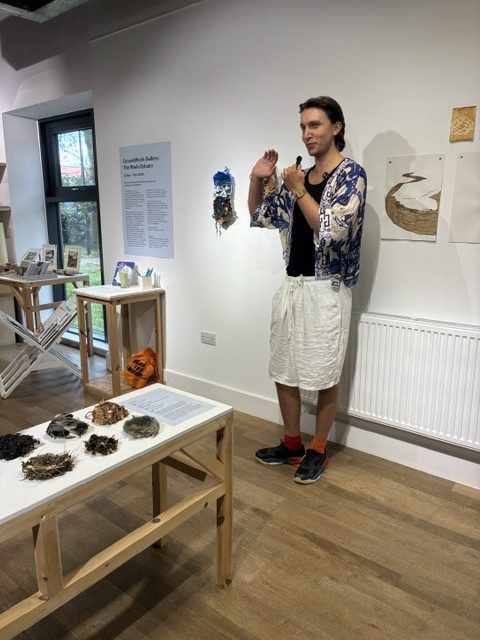
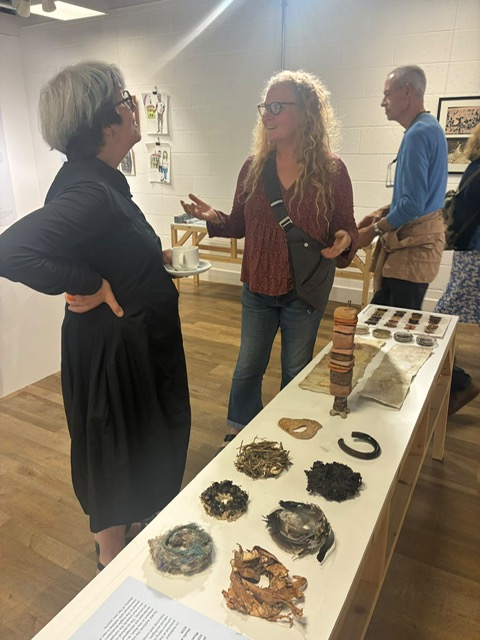
Above: Josh Lockwood, Michal Bernasiak, Veronica Sekules & Liz Kelleher at the opening in Sleaford
On display at Sleaford: exhibiting artists and content
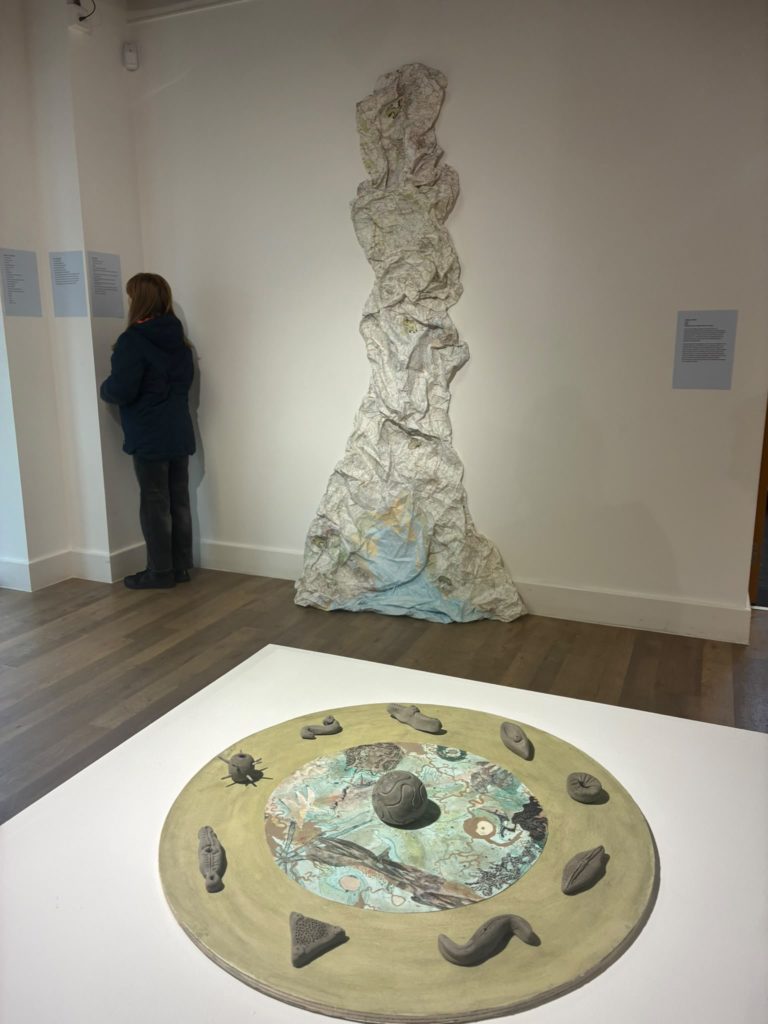
Katie Bliss
Ancestral Futures
envisions The Wash as a living being, macro to micro. A multispecies organism connecting past and future. An imagined ritual landscape revering its more-than-human wisdoms.
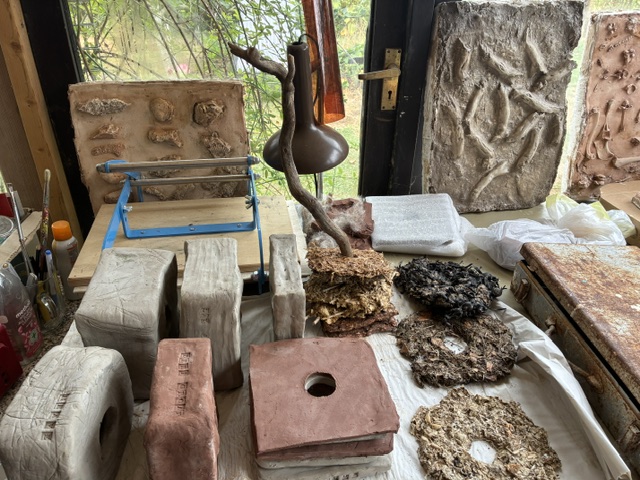
Formed from wild clay that was once an ancient saltmarsh, now lying deep under her family farm in the Fens.‘ Benthic Beings’ hold the memory of this watery land. The clay becomes playful ritual objects which revere the world-building of mud microbeings and their interspecies collaborations. Diatoms are single celled organisms which collectively create a photosynthetic skin on mudflats in the Wash.
Katie Bliss is creating mixed media works which combine wild clay, botanical inks and soil pigments, photographs and sound gathered from the Wash. Animating the language and agency of meandering saltmarsh creeks and roddon echoes in reclaimed farmland. Listening to intertidal vegetal bodies, translating their electrical fluctuations into musical notes and graphic scores.
This work in progress provides a starting point for ongoing enquiry: What can we learn from more-than-human beings about about cohabiting the Wash?
Katie Bliss
is an agroecologist and multi-disciplinary artist exploring the intersection of ecology, imagination and animism. Playfully listening from non-human perspectives, she seeks to cultivate collective imaginations that can dream into resilient future landscapes.
Her practice includes working with farmers and communities to grow, experiment and codesign future ecologies. She creates with bioacoustics, gathered materials, alternative photography, collage and installation. Working with a family farm in the Fens situates her in the tension between cultivating multi-species empathy whilst sustaining our human communities.
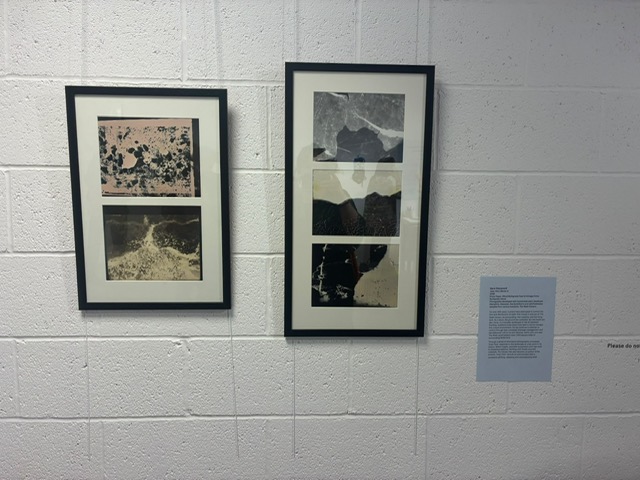
Sara Heywood
Over Flow, 2026
For over 400 years, humans have attempted to control the flow and distribution of water that moves in and out of The Wash Estuary, its surrounding river systems, and low lying land. As a result the ground has subsided. But sea levels are also rising. In a complex landscape at risk of repeated flooding, questions arise about how best to future manage this unique environment. Do we continue to attempt to control through ever increased drainage management and sea defences? Left to its own devices, within only one year The Wash could reclaim over 1,300 square miles of surrounding fertile land.
Through a series of alternative photographic processes, Over Flow responds to this landscape at a key point in its history. Where fragile, intertidal ecosystems and man exist in precarious balance. Working with locally sourced materials, The Estuary has also become co-author of the artwork. Over Flow records an environment that is constantly shifting, releasing and reconstituting itself.
“The act of making in a darkroom or in situ forces me to flood and wash the paper repeatedly, rhythmically, mindfully. It’s also a fragile environment – part control, part letting go and allowing the processes and materials to dictate the outcome.”
Sara Heywood
is a British multidisciplinary artist. Her practice focuses on site responsive, process driven interventions where natural and manmade environments and materials collide. Intrinsic to the work is an urgent dialogue between humans, heritage and environmental land legacy.
Heywood has exhibited in the UK and abroad, undertaken international residencies and commissions including at PADA Studios, Lisbon, & Orford Ness, Suffolk, and was short-listed for 7th John Ruskin Prize (2025) for Camera Obscura – Hertford Union Canal. Her socially engaged commissions include Mulberry Tree of Plenty (UCL Trellis), Greenhouse & Bird Hide (Bow Arts Trust), and Reflections on Home (Artscape Management).
Michal Bernasiak
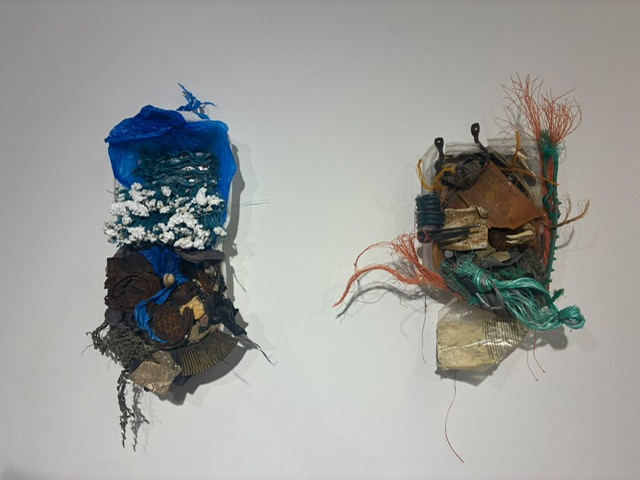
Emerging Icons
The series takes loose inspiration from the form and visual intensity of Orthodox icons while remaining entirely secular. Bernasiak is developing an imagined pantheon of patron saints for The Wash: figures associated with mud, seals, wind, tides, migrating birds, wetlands and other characteristics of the estuary. Made partly from discarded and weathered materials collected around King’s Lynn, the works explore how rubbish can be transformed through time, sunlight, abrasion and artistic intervention.
Humour, beauty and absurdity sit alongside concerns about littering, overfishing, habitat loss, drainage and the increasing pressure humans place on other species. Accompanying texts, conceived as small prayers or spells, invite both reflection and participation. Rather than offering fixed answers, the work asks what we choose to value, protect and perhaps even treat as sacred within an increasingly depleted natural world.
Michal Bernasiak
is an interdisciplinary artist from Poland, now local to King’s Lynn, exploring more sustainable and instinctive relationships between people and the natural world. His work has been exhibited at ms2, Museum of Art in Łódź. Michal Bernasiak’s practice explores the shifting relationship between humans, objects and the natural environment. Working across painting, sculpture, found materials, digital media and installation, he is interested in how art can make ecological questions visible, immediate and difficult to ignore. His practice draws on human evolution, neurodesign, animal behaviour, ecology and humour.
Anna Harding
Woman’s Head 1370–1377 King’s Lynn Minster, originally St Margaret’s Church, was the home parish church of the medieval mystic and pilgrim Margery Kempe, leading scholars and visitors to frequently connect this anonymous 14th-century secular head carving with everyday faces of people from her era.
Women and Children stripping willow for whites near Spalding c.1910. Women and children were required to complete the job within a short season, pulling the soaked withies one by one through hand brakes.
Young Man’s Head Carved stone head wearing a cap or coif, from old Lynn Savings Bank, completed 1858 in Gothic Revival style, an icon designed to project institutional trust after some traumatic decades for banks.
Eel catcher Isaac Garrett, King of the Fenland Fishermen. Isaac Garratt was a well-known historical figure from the Fens in England, notable for his traditional fen-fishing lifestyle and a famous catch of a 112lb, 6’ 7” long sturgeon in the river Ouse on Whit Monday in 1816. He is shown wearing a tall top hat, a loose smock, and high waders suited for navigating the marshy, flooded fenlands of the era. A report of the catch appears in the Norfolk Chronicle, June 1816. (ref. Mike Petty, Fenland History). 19th century engraving transferred to Digital Print on Watercolour Paper, 29 x 21 cm, framed
Bradley from New Vancouvers series & Henrik + Hannah from New Vancouvers series Series of portraits of young professionals made outside Kings Lynn Custom House of people with future visions for The Wash to replace the Vancouver town statue.
Jacqui Jones
Flow
See cover image for a detail of Flow
As the UK’s largest estuarine bay, The Wash has undergone a profound, multi- millennial transformation, shifting from an expansive, deep wetland ecosystem into a landscape dominated by intensively drained, highly productive agricultural land.
The artwork Flow explores this long history of heavily engineered human intervention, considering the physical and ecological traces left behind by centuries of land reclamation, water extraction and infrastructural development. It frames the modern landscape not as a static natural environment but as an area shaped by deliberate manipulation.
Created against the backdrop of the severe drought in the spring and summer of 2026, Flow expands its focus to examine the immediate vulnerabilities of the region. By incorporating themes of acute water scarcity, extreme heat and the rising threat of wildfires, the piece contrasts the historical urge to control and drain the land with the stark, modern realities of climate instability. Through this lens, the artwork probes the fragile balance between human environmental engineering and the unpredictable pressures of a changing climate.
Jacqui Jones
is a Norfolk based interdisciplinary environmental artist whose work focuses on raising awareness about the climate crisis, coastal vulnerability, and single- use plastics. She uses art as a vehicle for public engagement, framing her output around current scientific, political and social discussions.
Carol Wilhide Justin
Carol Wilhide Justin is a printmaker specialising in Japanese woodcut or mokuhanga prints. She trained in Japan at MI-Lab in Fujikawaguchiko and at the RCA.
She exhibits her work widely in the UK and internationally and teaches the technique to adult students at The Slade, Morley College, City Lit and The Art Academy. Since 2023 she has been delivering lectures on the subject around the UK and abroad for The Arts Society. She has also written a book “Japanese Woodcut: Traditional Techniques and Contemporary Practice” published by the Crowood Press in 2024.
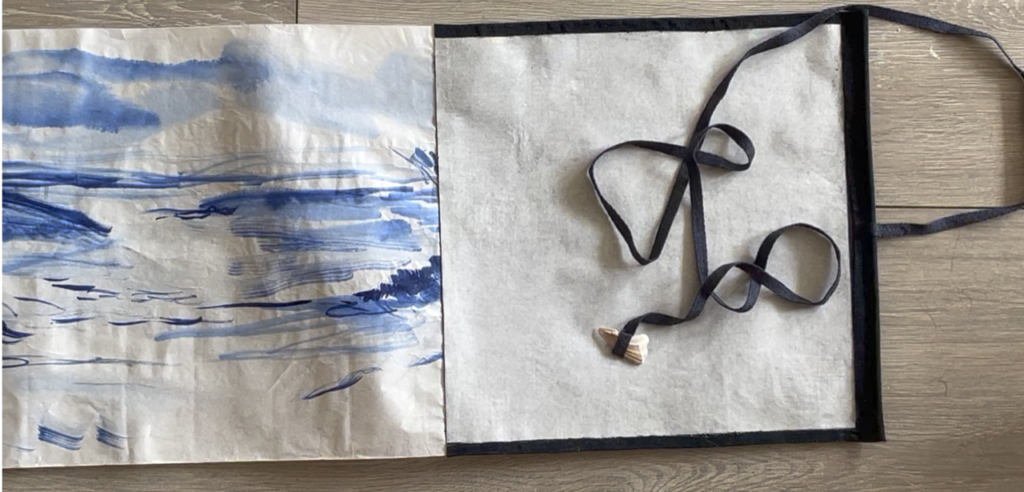
Carol’s work on show at Sleaford has concentrated on showcasing the beauty of the beach at Holme-next-the -sea on the North Norfolk coast near where the 4000 year old timber circle Seahenge was discovered and at the end of the Peddar’s way. On show here is a long ink drawing made into a ‘Japanese’ scroll, and which shows the joyous exhilaration experienced over two days at Holme.
Liz Kelleher
Liz Kellehers’ artistic practice is rooted in the narrative potential of the South Lincolnshire Fens, with a central concern being historical and current threats to the area’s natural ecologies, exploring and reinterpreting both historical and contemporary narratives and objects.
She experiments directly with the ‘material’ of her research such as agricultural paraphernalia, organic objects and matter and mock archaeological remnants which coalesce into large scale, process driven sculptures. Her ongoing body of work ‘A Fenland Archive’ a small part of which will be shown at Sleaford, interweaves large scale metal/mixed media sculptures, casts, prints and an archive of found, salvaged and collected objects from the area, working with communities to question the value and significance of found objects and the current threats we face.
Nicholas Simpson
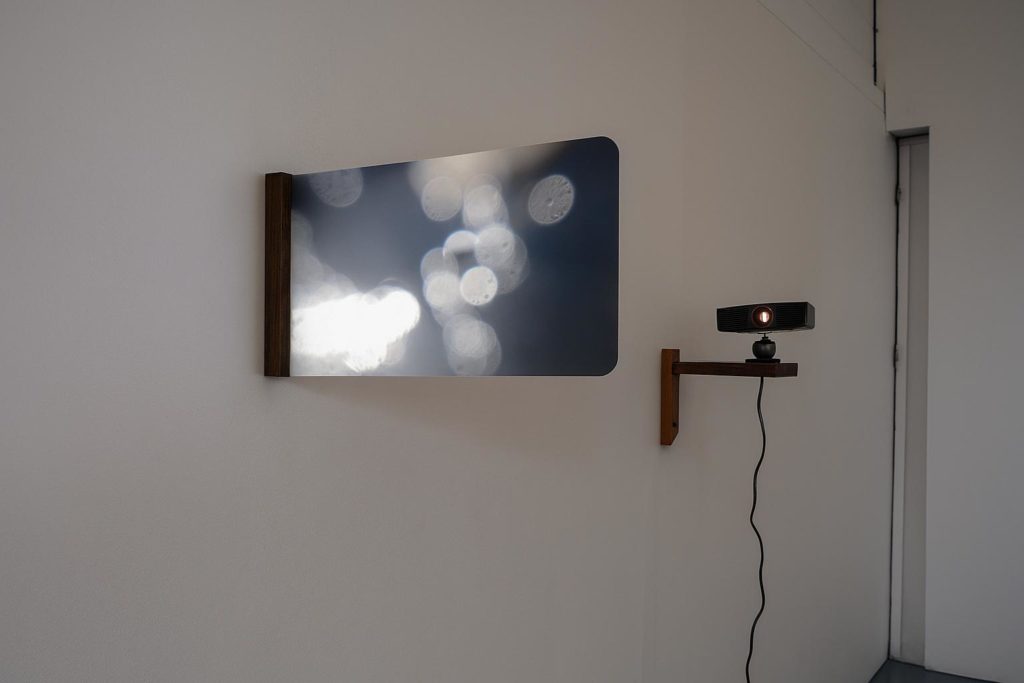
Using video footage gathered during the residency, Nicholas began developing a series of sculptural projection screens that project out from the gallery wall. Small portal-like openings offer concentrated glimpses into particular moments and details within the footage, playing with the relationship between the immense scale of The Wash and the minute processes that continually remake it.
Nicholas Simpson
explores relationships between people, place and the environment through moving images, projection, installation and participatory work. Looking closely at landscapes and the processes, histories and human activities that shape them over time.
Louise Frances Smith
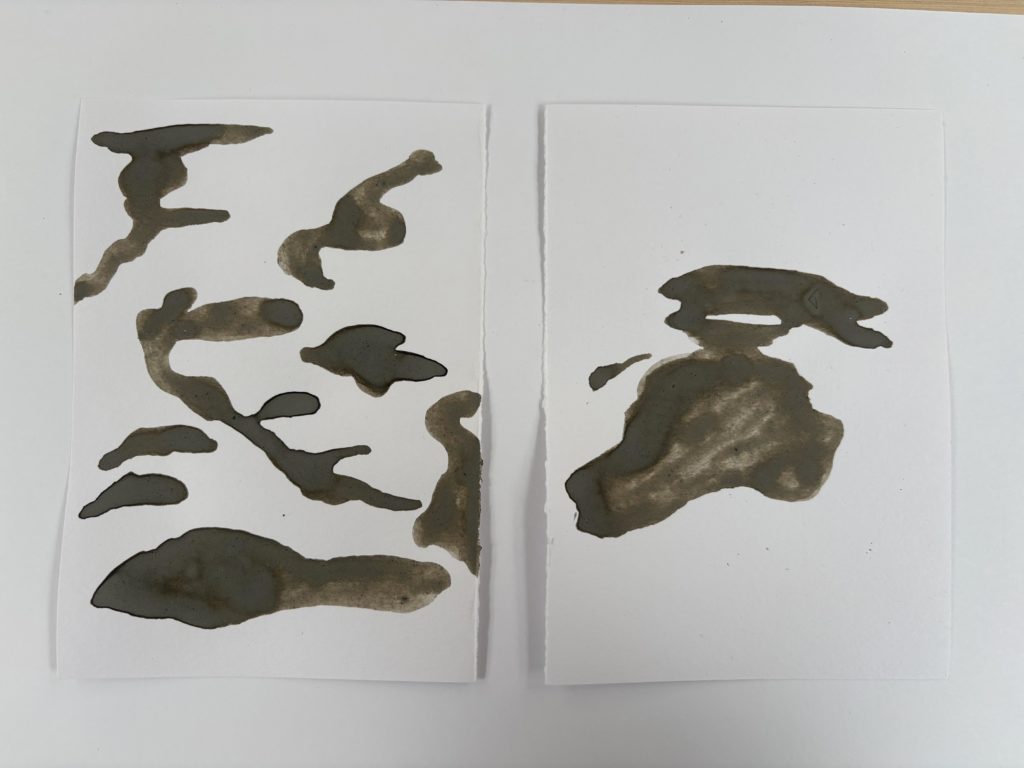
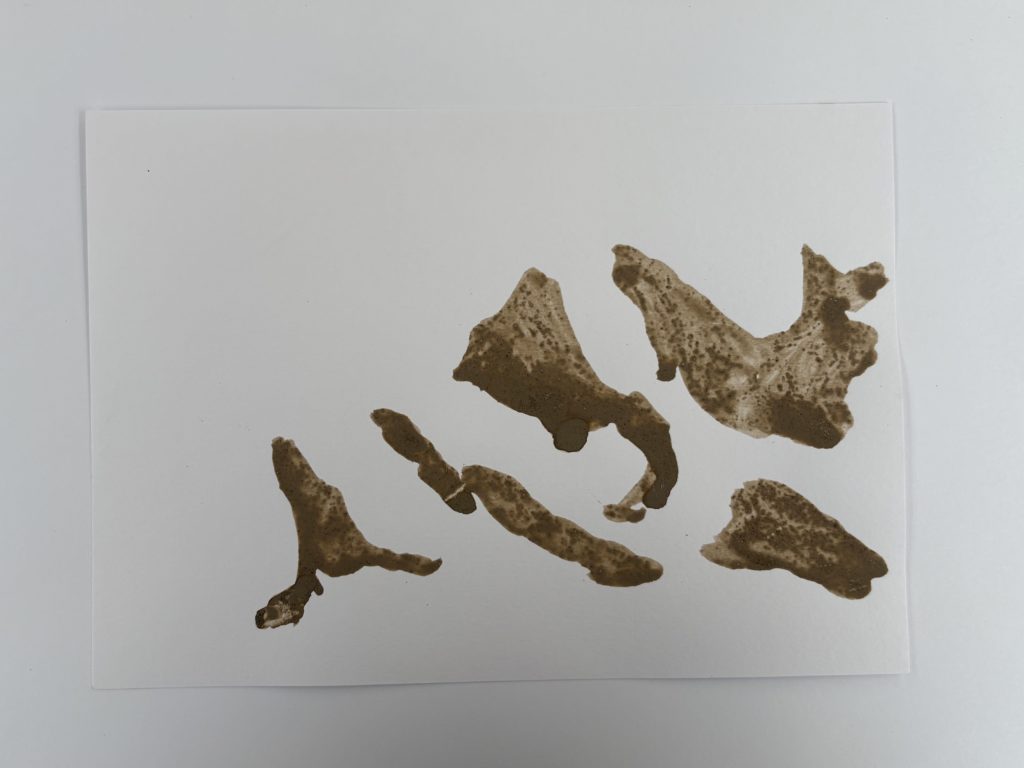
During the GroundWork Residency Louise Frances Smith was drawn to the hidden rivulets, creases and the wondrous vastness of the Wash saltmarshes, the bodily forms shaped in the mud along the soft edges of land and water. In a constant state of change, sediment is moved by the tide from one place to another. This ‘highly productive’ wilderness is mostly out of reach to humans, but a vitally important place of biodiversity for migrating birds and multispecies communities.
Multiple tensions put these wild places at risk as they are squeezed into ever smaller spaces due to the climate crisis and the human need to scrape, dredge, drain, tidy, protect and build hard surfaces to live on. How can we invite softness in? To create more space for this inaccessible land? How can we come to an understanding that we are part of nature and not separate from it?
Louise explores these questions through drawing, using small amounts of mud gathered from the Wash’s edges and through tactile objects – some formed by pressing clay into her own body, imprinting the textures and sense of being in these places. Made to be held / rearranged / interacted with – the objects invite touch as a way of connecting to these wild and inaccessible places.
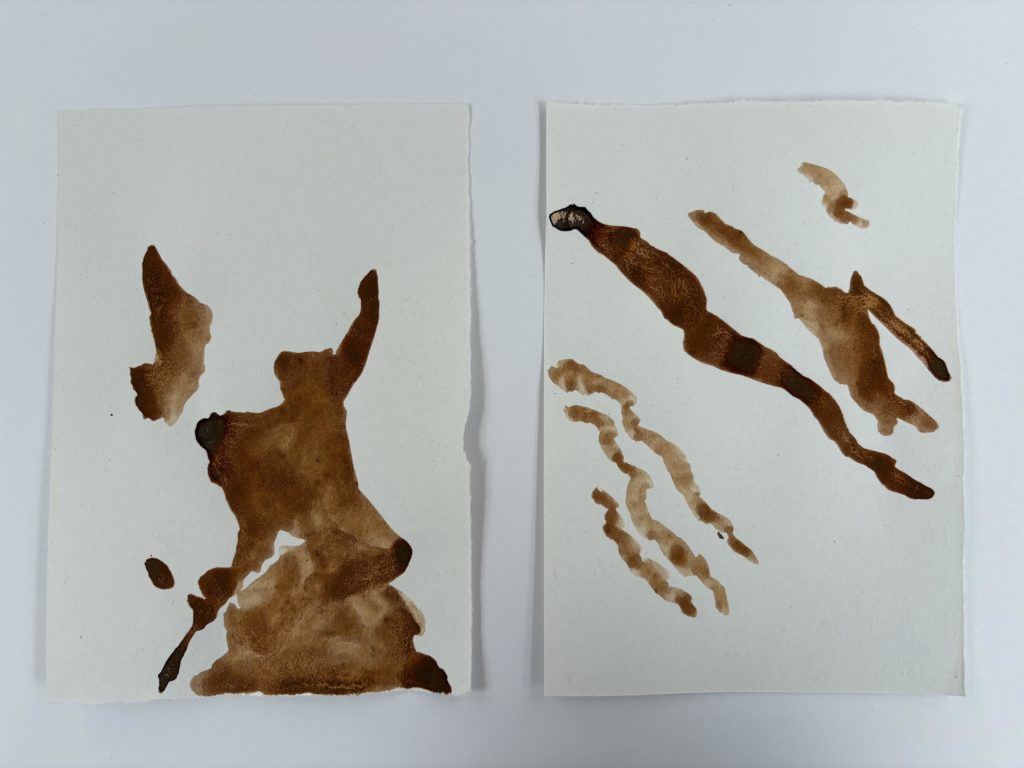
Louise Frances Smith MRSS
lives and works in Ramsgate, Kent (UK). Louise’s practice spans sculpture, installation and works on paper. Working with an array of materials including clay, seaweed bioplastic and oyster shell biomaterial, Louise creates highly textured surfaces to bring attention to the patterns and textures created by nature, magnifying micro details alongside human-made interventions. Louise is a member of the Royal Society of Sculptors and recent exhibitions include – ‘Anchor Points’, Das Schaufenster, Seattle (USA); ‘Entangled’ by Liminal Gallery, Saatchi Gallery, London; ‘Living Materials’, Aspex, Portsmouth; ‘Meant to Fade’, Laneway Gallery, Cork (Ireland); ‘2023 Ingram Prize’, Pavilion Gallery, London & ‘Collect Open 2023’, Somerset House, London.
Adrian Tissier
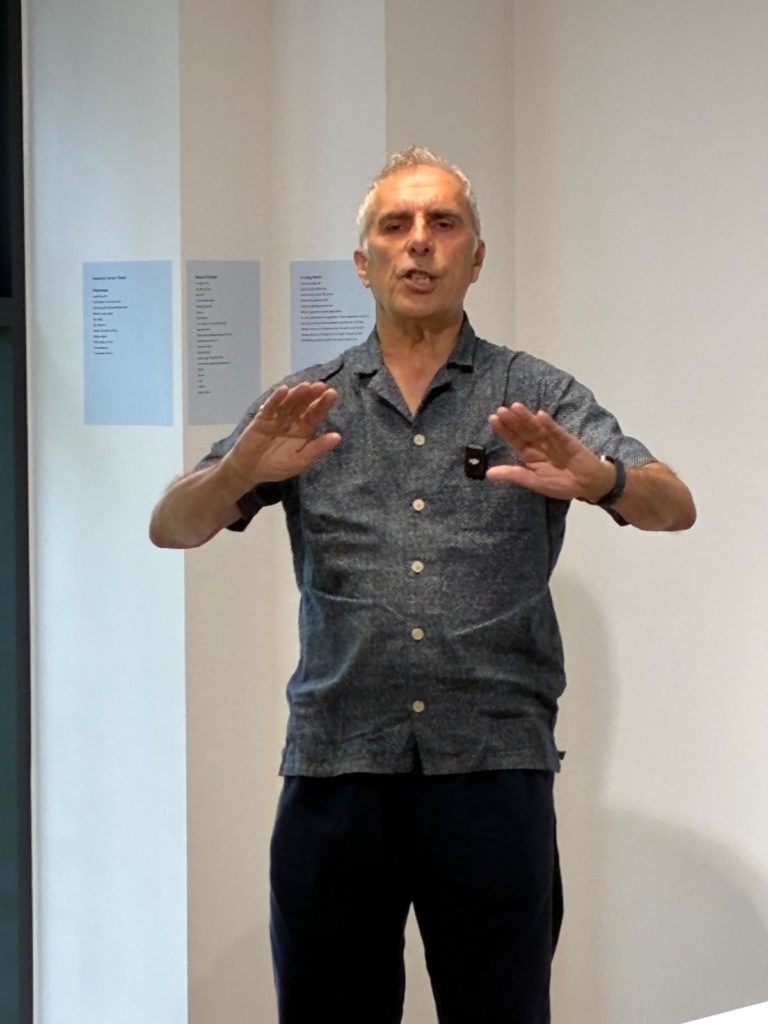
Adrian Tissier performing a selection of his poems at the opening in Sleaford
