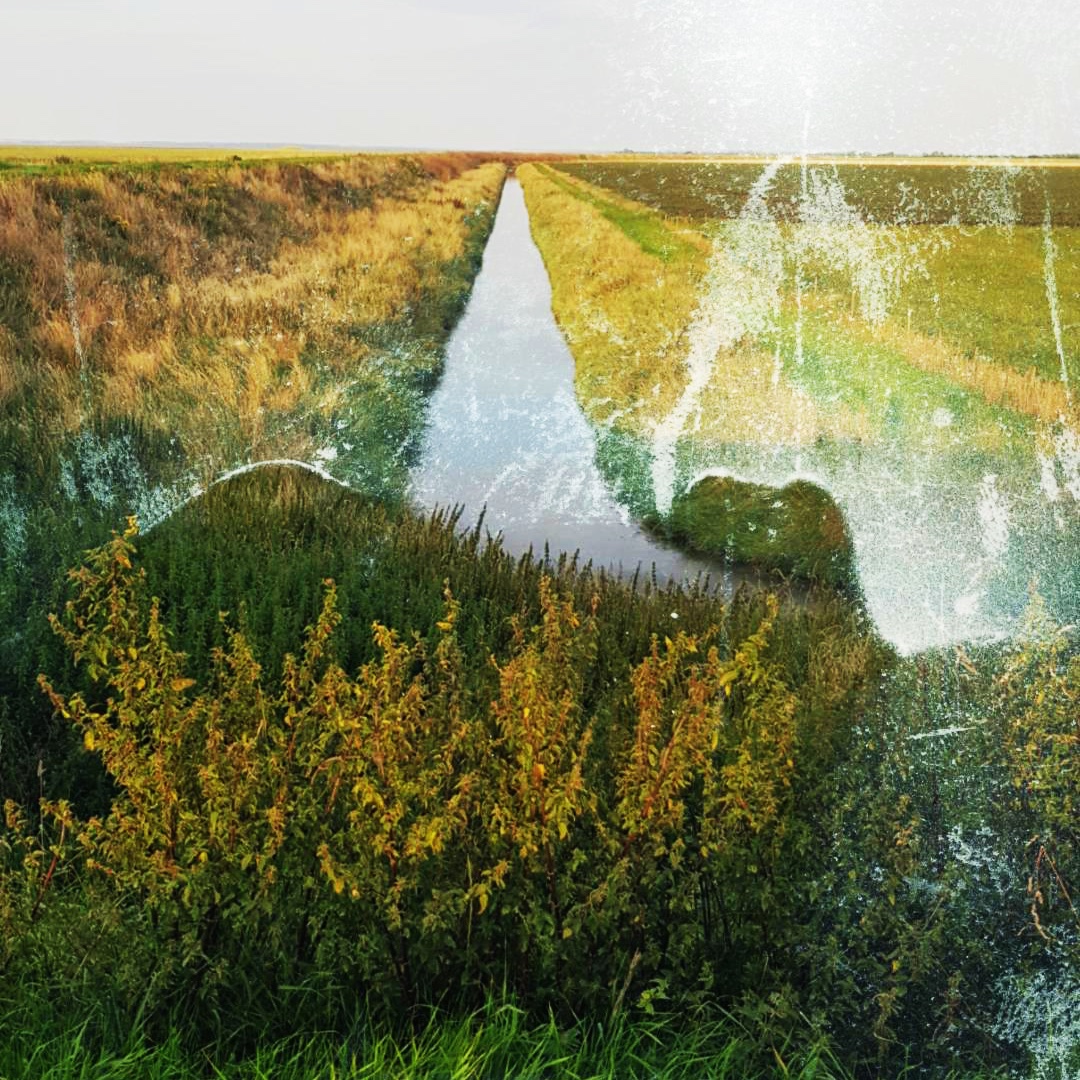
Cover image: The Wash Straight Line, © Helen Kilbride, Artist in residence 2024 and exhibitor in Ground Water, 2025
The Wash Estuary: its environment and culture
The whole point of the GroundWork residency is to connect the arts – in the widest sense – and the environment. This year, it is intended that together we will get to know, appreciate and understand the Wash better in every possible way. We have had applications from artists and creative individuals of all kinds, media, specialisms, nationalities, backgrounds.
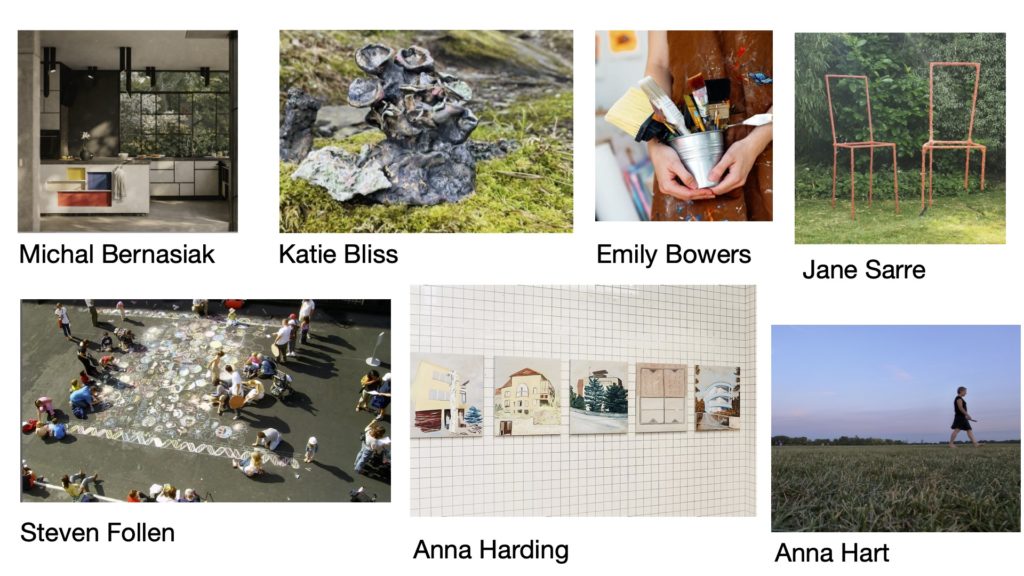
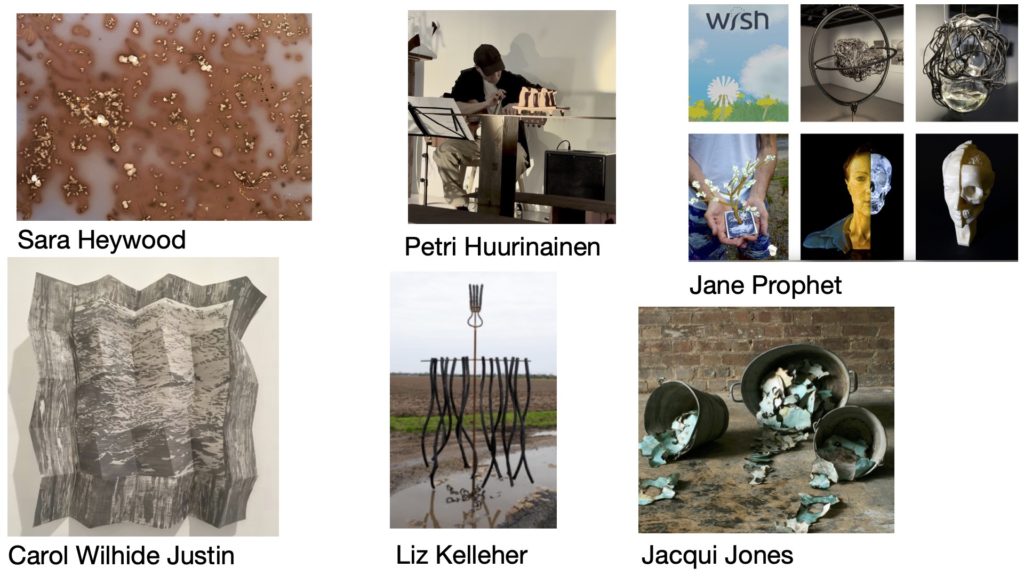
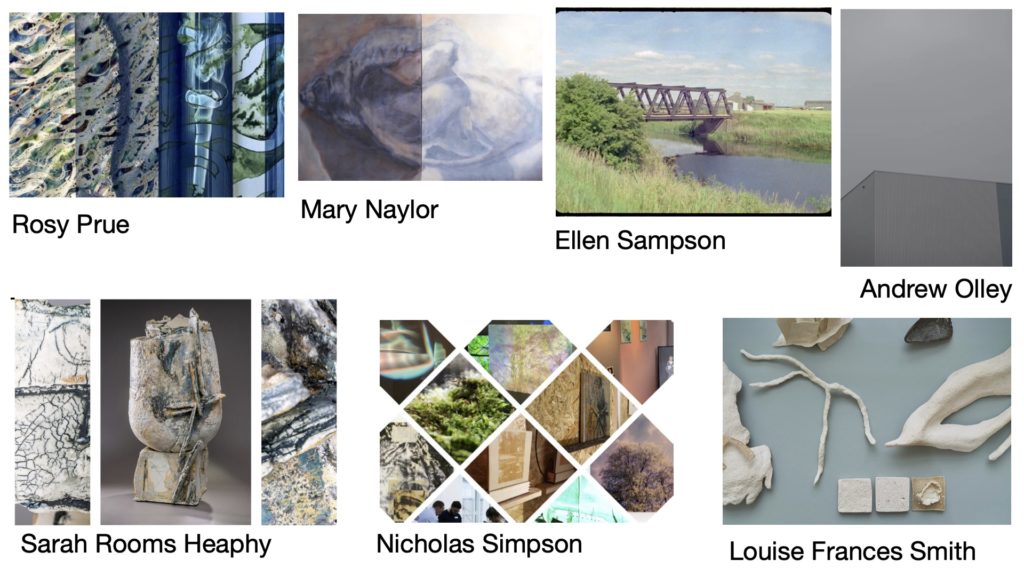
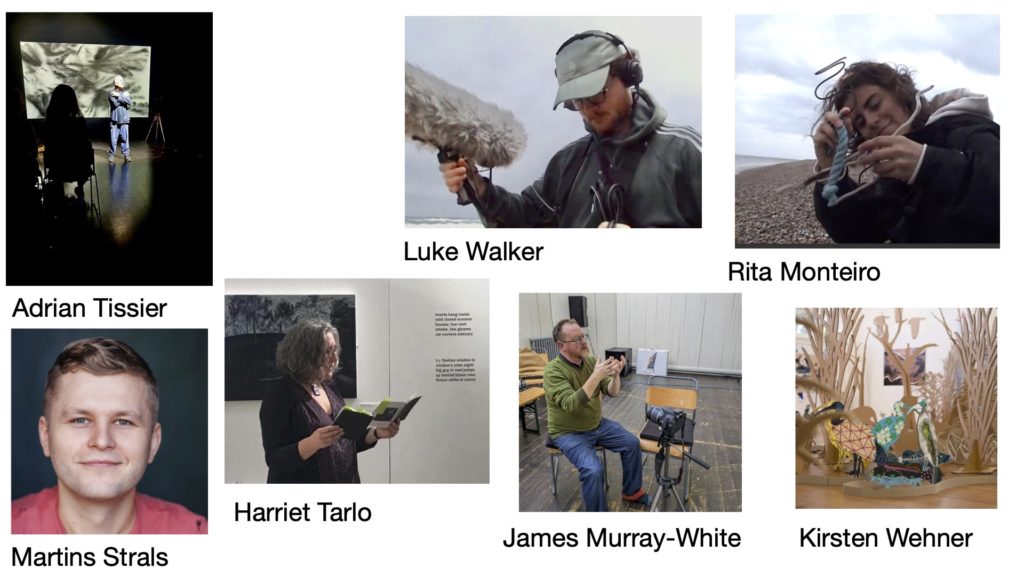
We are pleased to announce the list of selected artists 2026
Michal Bernasiak
Katie Bliss
Emily Bowers
Steven Follen
Anna Harding
Anna Hart
Sara Heywood
Petri Huurinainen
Jane Sarre
Jacqui Jones
Carol Wilhide Justin
Liz Kelleher
Mary Naylor (also host)
Andrew Olley & Ellen Sampson
Jane Prophet
Rosy Prue
Sarah Rooms Heaphy
Nicholas Simpson
Louise Frances Smith
Martins Strals
Harriet Tarlo
Adrian Tissier
Luke Walker & Rita Rosa Monteiro
Kirsten Wehner (contributing remotely from Australia)
James Murray-White
The GroundWork Residency – connecting the arts and the environment
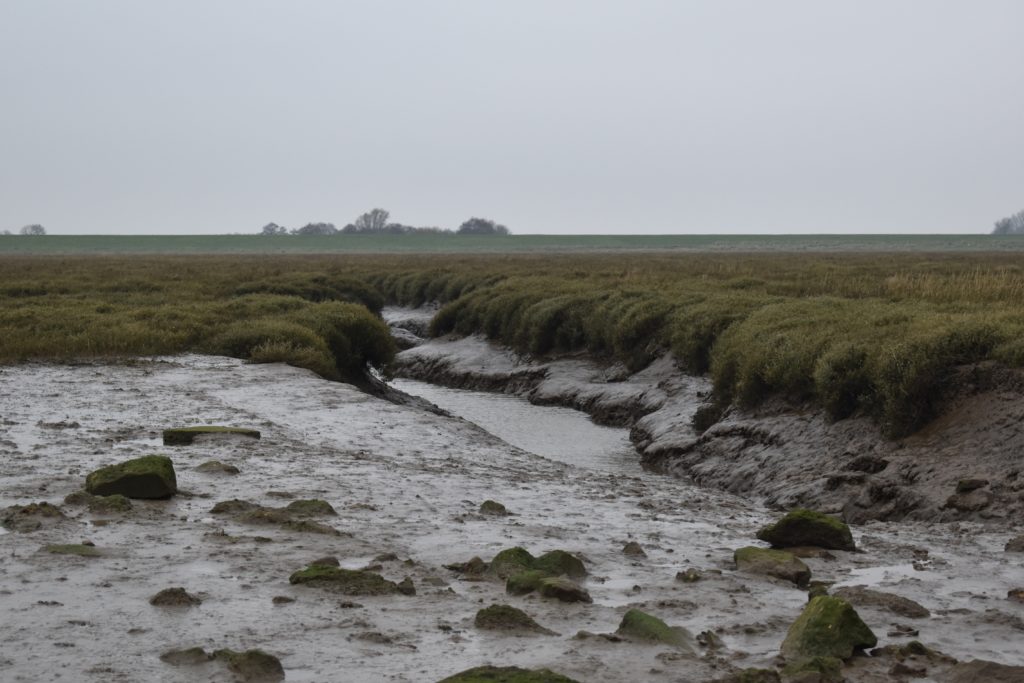
This is a creative engagement project with an ambitious and widening focus on the Wash Estuary, its land-mass, skies and waters stretching across from Lincolnshire to Norfolk. Ultimately, the residency is all about bringing creative skills together to make the under-appreciated Wash Estuary better known and loved among a growing community of residents, neighbours and visitors.
Residency research week: 18 – 25 July
Developing work: 26 July – 8 August
Exhibiting and events: 12 September – 19 December
Involving a large number of partner venues and organisations this year, we will provide many opportunities to develop your new work in an exciting environmental and social context. We organise the residency around a field trip and research programme to enable all participants to be locally informed and ready to a build new community, to share ideas, to experiment with new works. We will provide plenty of opportunities to show and share your work, to display and discuss it, not only at GroundWork Gallery itself, but at one of our six other possible exhibiting and showcase venues.
Summary of residency benefits, 2026
‘I gained so much from the whole experience, especially beng part of the group, able to discuss and develop my work within a supportive community’
- Networking among a peer group of subject specialists, artists, and residency hosts
- Field trips and collaborative research
- Lots of opportunity for skill-sharing and learning
- Develop new ideas and new work in a supportive environment
- Exhibition and events opportunities at GroundWork Gallery and six other venues throughout the Wash
- Find new audiences and build new communities
Also, please see the earlier residency progammes over the last 5 years, and the exhibitions from the last couple of years: Ground Up; Ground Water; Fluid Earth.
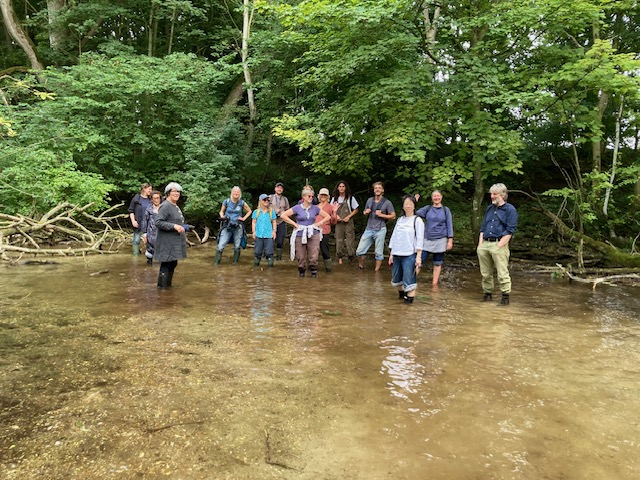
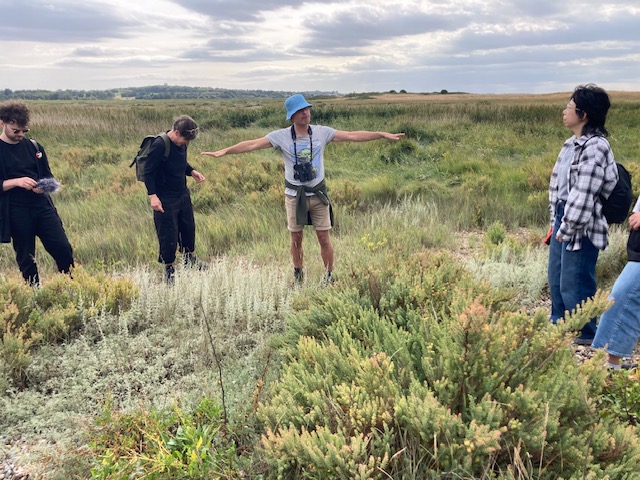
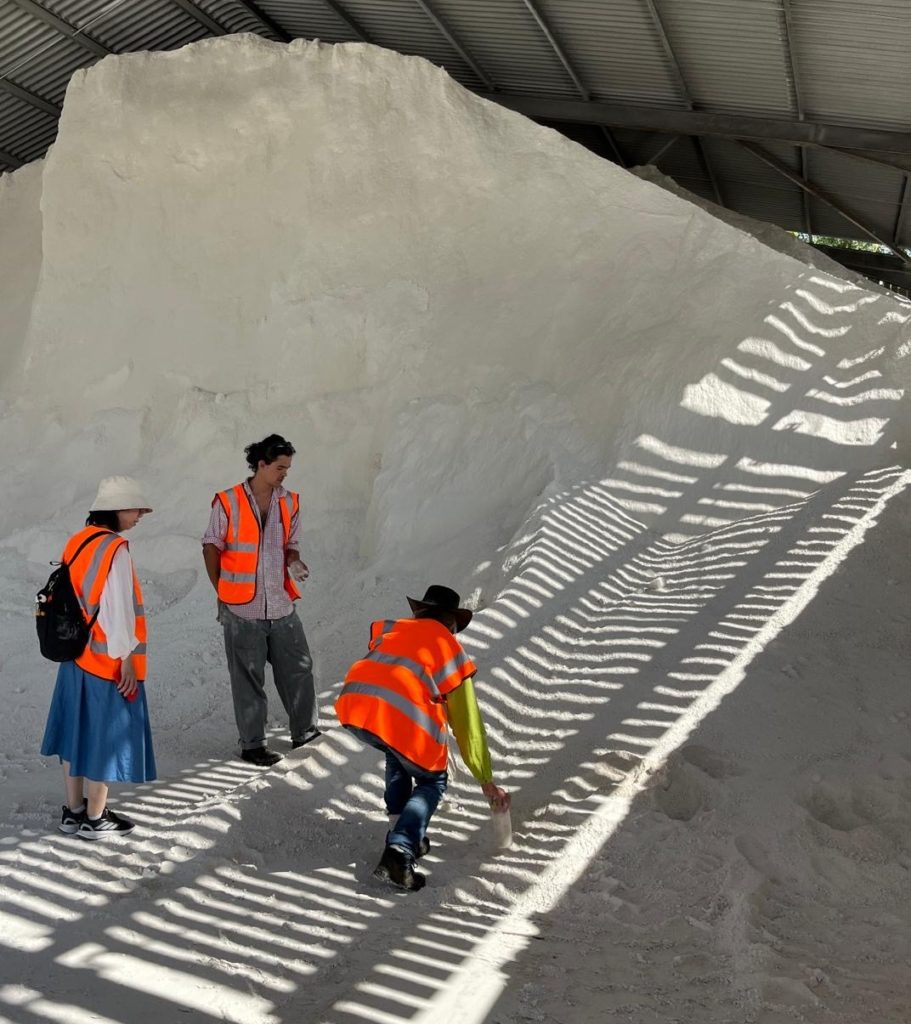
Previous residency research trips
The GroundWork Residency – subjects and methods?
This is all about exploring and representing the Wash through physical, audible, viewable, edible works of art. We encourage interpretation of the Wash environment in the widest possible ways: its vistas, its flora and fauna, insects & birds, its geology, rivers and waterways. Also, its history, heritage, its built environment, the ways in which people navigate from place to place, and did so historically. We want to discover and record stories, value old and new customs, folklore, recipes. Nothing is outside our potential remit – all creative pursuits are relevant, including music, food, gardening, fishing, farming. As long as the results contribute to our greater understanding and appreciation of the Wash environment, its nature, and its relationships with people locally, any activity is welcome.
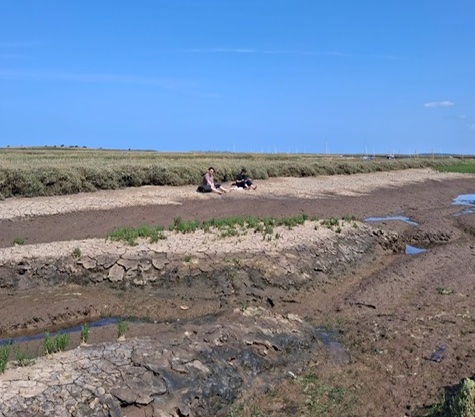
The GroundWork Residency – outline of purposes – questions to ask …..
How can we inspire appreciation of the special qualities of the Wash landscapes, sea-scapes and sky-scapes.?
How can we engage in creative activities which aim to raise awareness of the entire Wash Estuary environments and cultures?
How can we draw from the many forms of inspiration that the Wash offers in terms of its subtle environments and rich histories?
How can we ensure that communications are made between as many Wash-focused creative activities as possible?
How can we find ways to enable people more widely to intensify their relationship with the locality and gain a stronger sense of local identity?
How can we bring a broad and diverse understanding of the Wash, recognising its global importance and making stronger connections nationally and internationally?
Costs involved
As you will discover on the application form, this year we are having to pass on some costs, but we are keeping them as low as possible. All the host organisations are small independent artist-creative-run places and spaces. So we charge £25 a night for the stay, which is a lot cheaper than other options locally. This means that the total rent for a full residency artist will be £350. Non-resident artists can apply as Associates without paying rent but will need to get themselves to our meeting points. The Research week is free. Otherwise we share everything – food, cooking, transport- (ie there will be a need to chip in some costs towards transport). The sharing and conviviality is very much part of the whole experience. However it is also possible if you prefer, to be independent, and some of the accommodation is quite self-contained.
Partner venues for residency stay
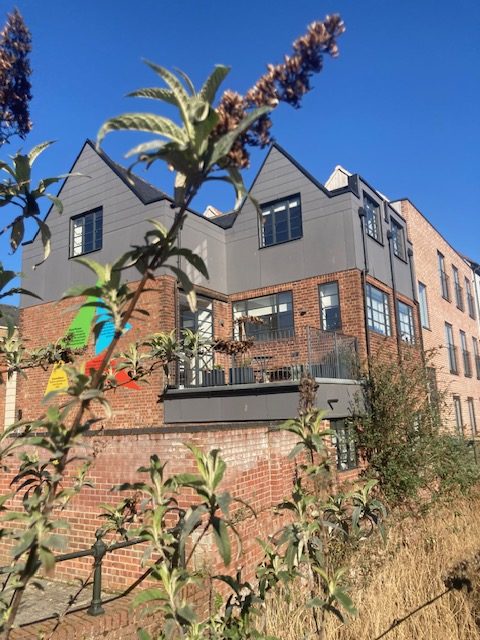
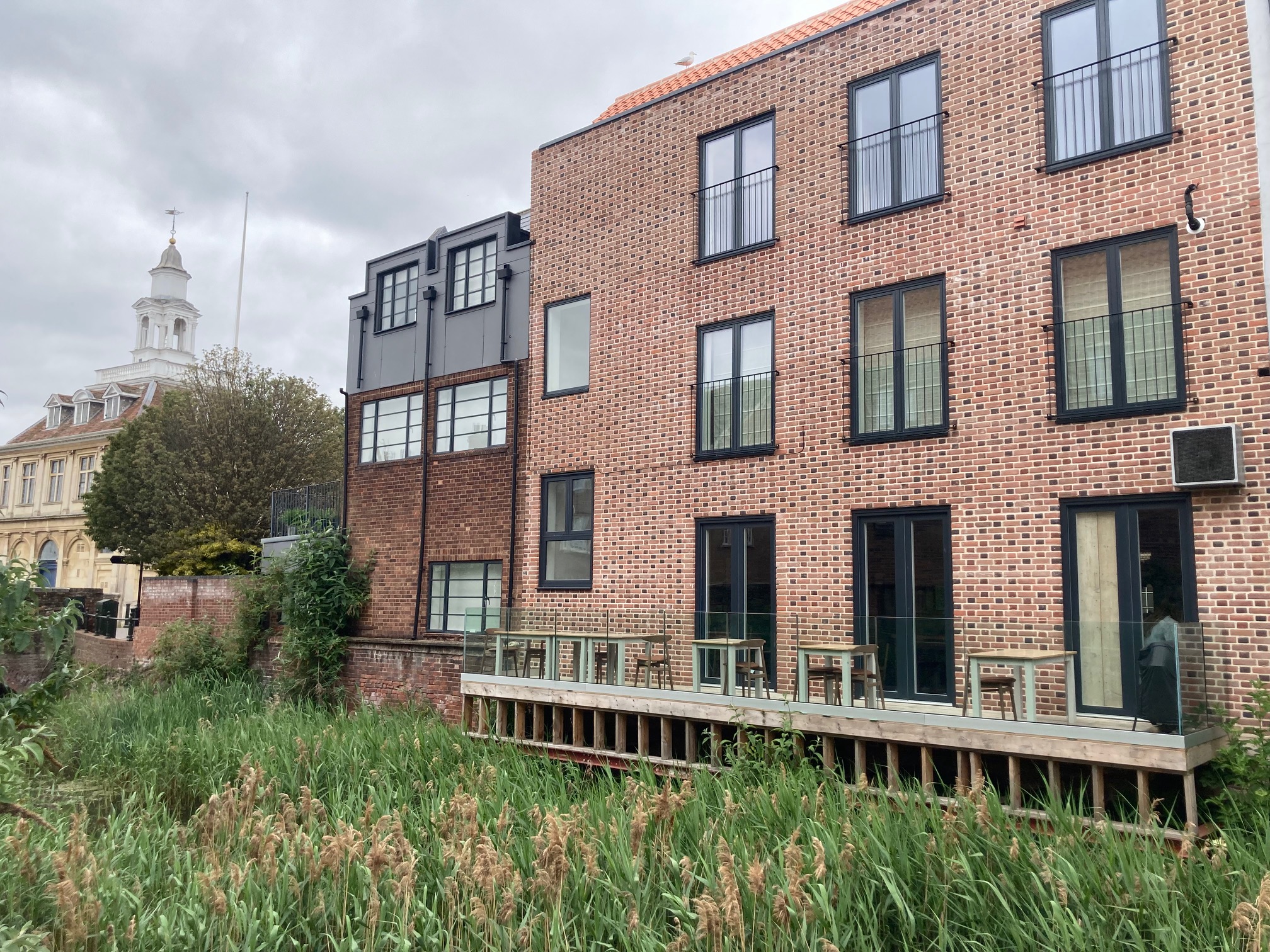
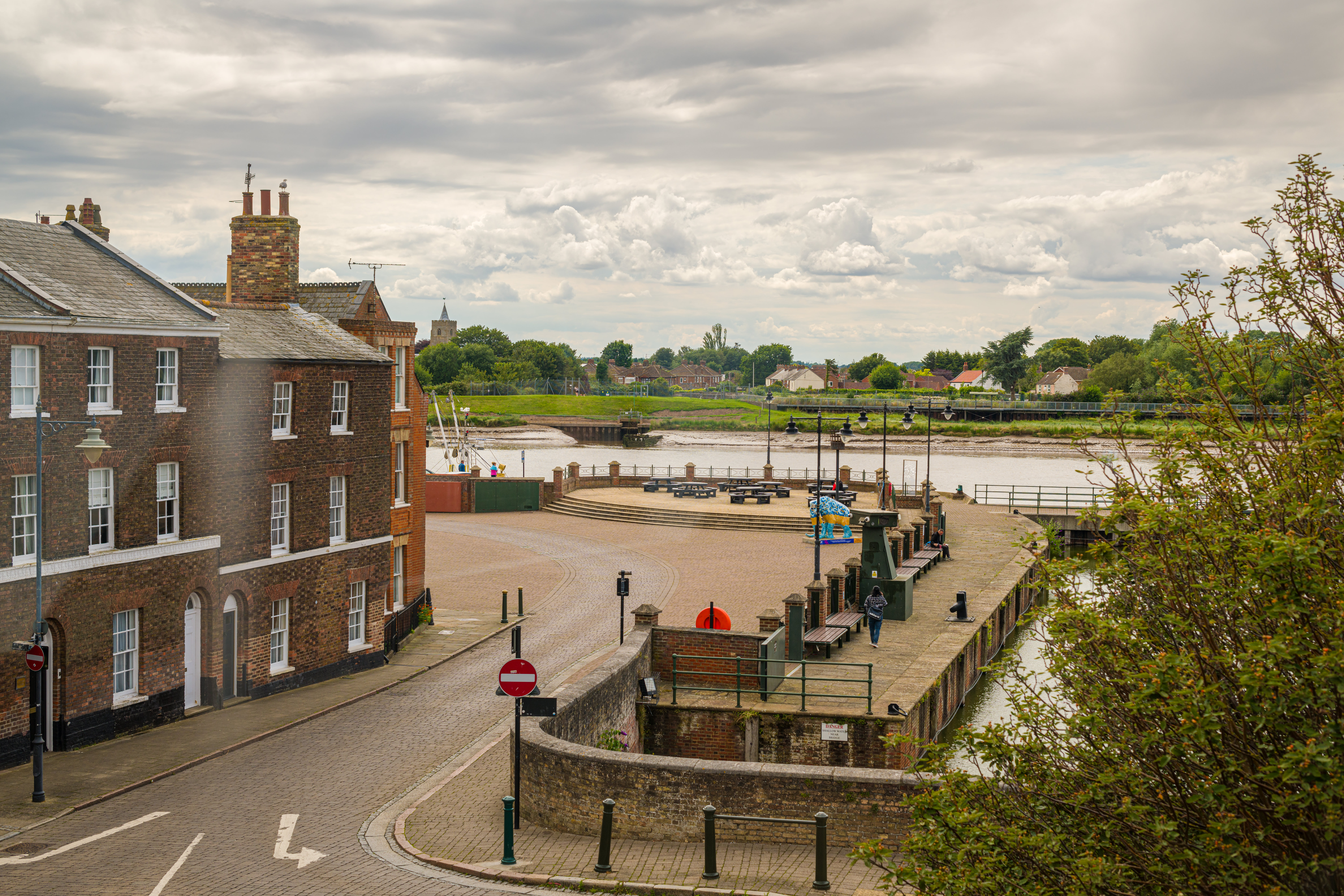
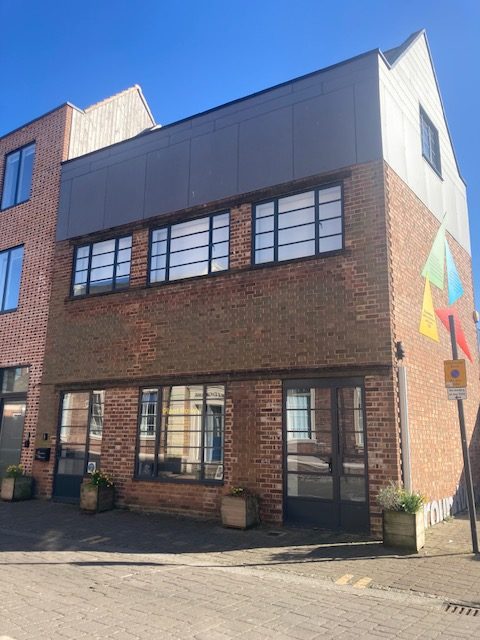
GroundWork Gallery
17 Purfleet St King’s Lynn: studio shared with the gallery.
Illustrated above and below – a live-work space with balcony, shared with the gallery 11-4, Wed to Sat, otherwise, private.
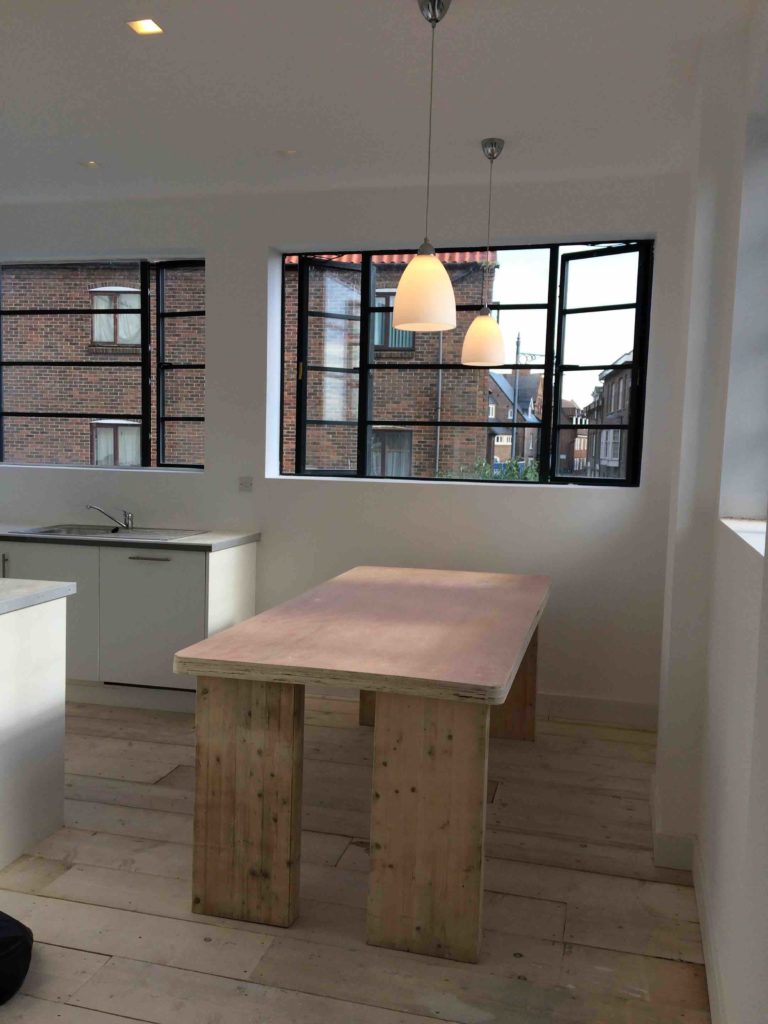
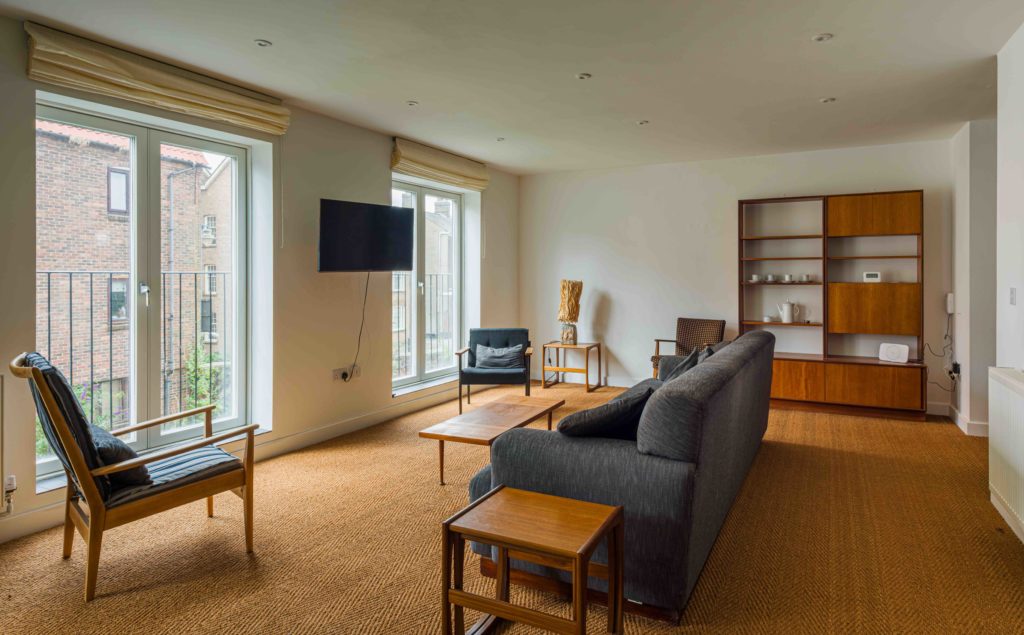
GroundWork Apartment
GroundWork Apartment, 18A Purfleet St, King’s Lynn: independent room in shared apartment, next to the gallery – living room illustrated below.
Studio Baum
Studio Baum, 32-33 Bridge St, King’s Lynn: independent room in house owned by artist, Myka Baum: studio facilities. See Myka Baum’s profile on GroundWork NetWork
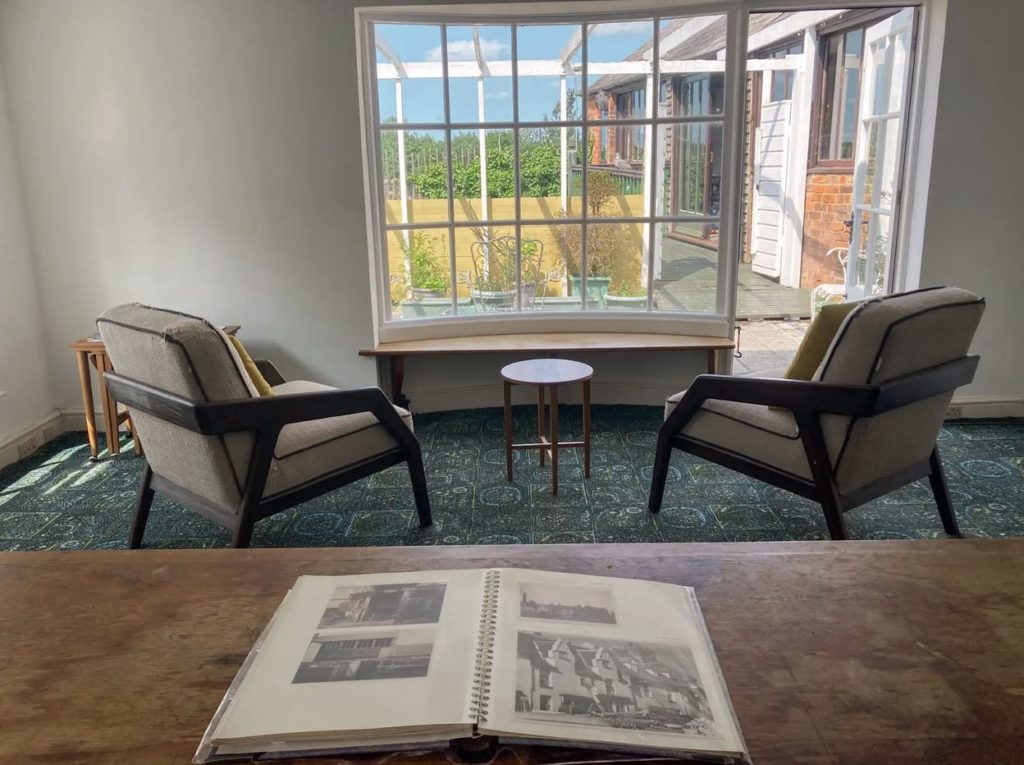
Priory Lane Cottage
Priory Lane Cottage, King’s Lynn: Digital artist residency: independent room in house owned by digital artist-mentor, Karen Eng.
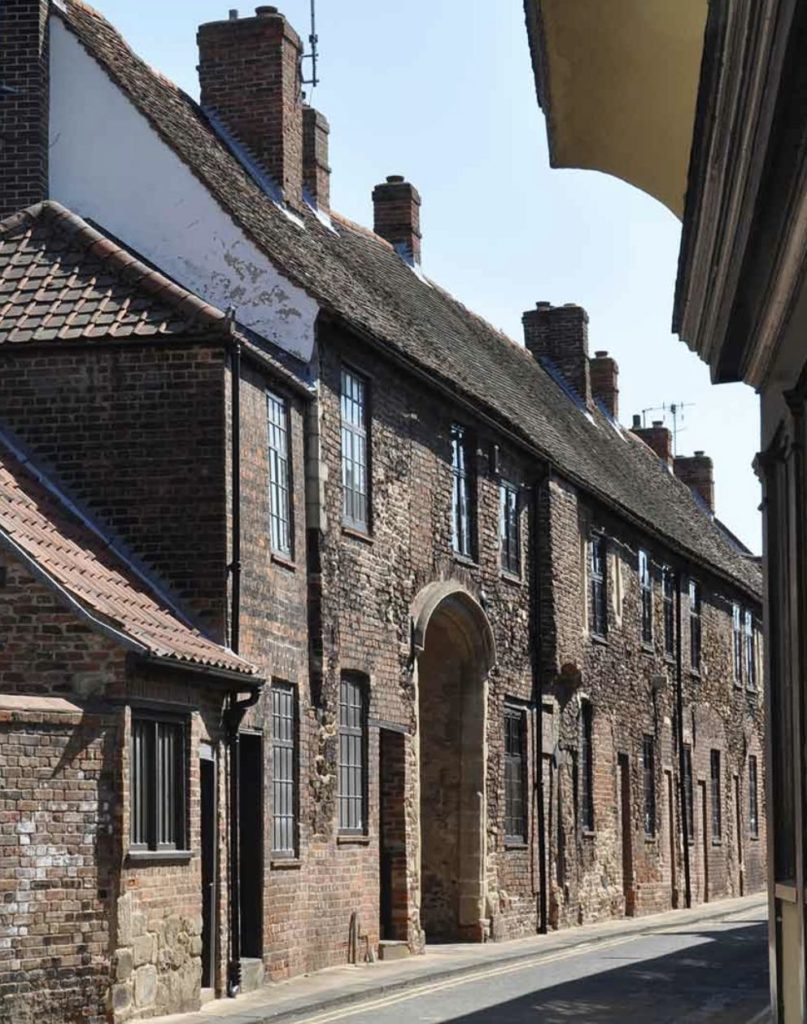
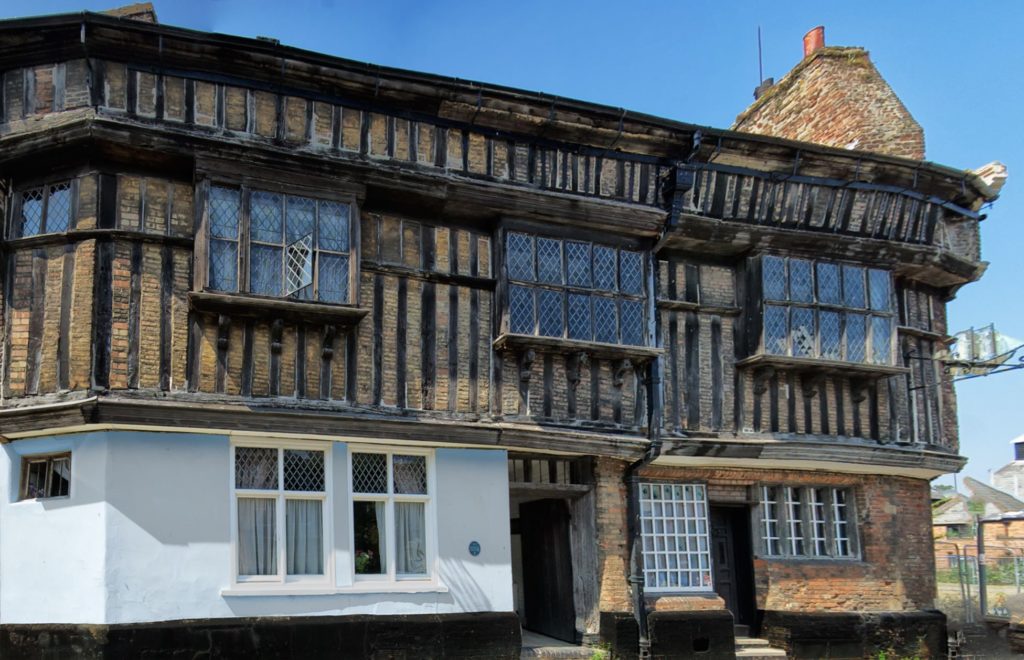
Greenland Fishery
Greenland Fishery, Bridge St, King’s Lynn, Composer / sound artist residency: independent room in historic house owned by music composer, Stevie Wishart. See Stevie’s profile on GroundWork Network
Broomhill, Reepham
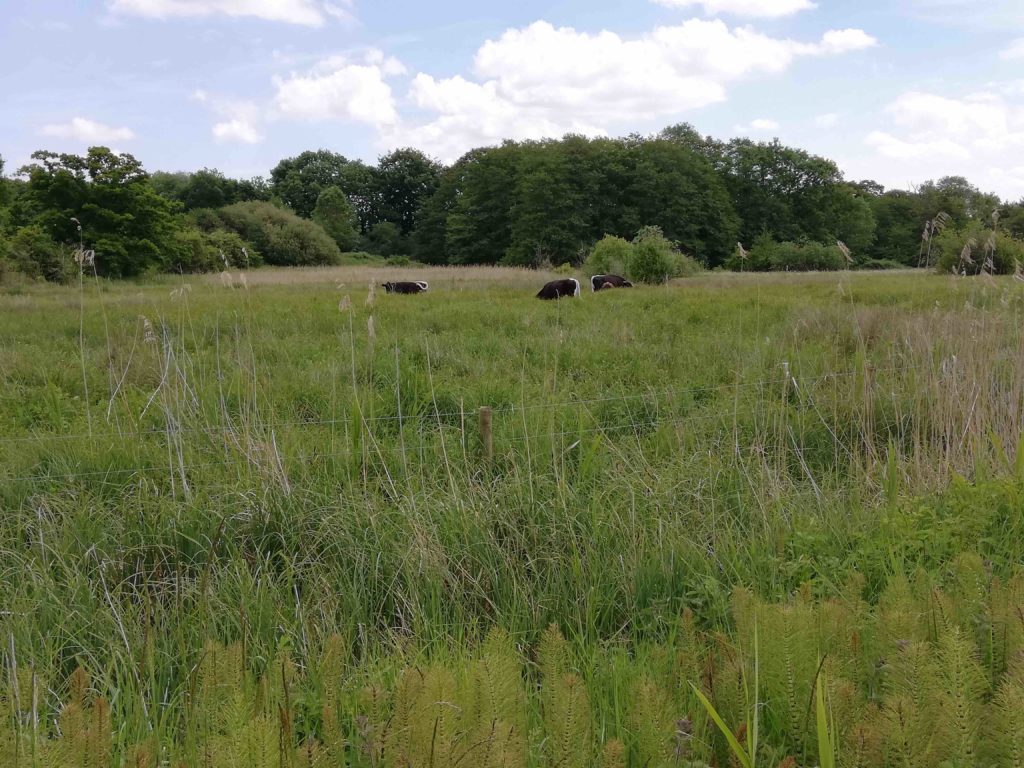
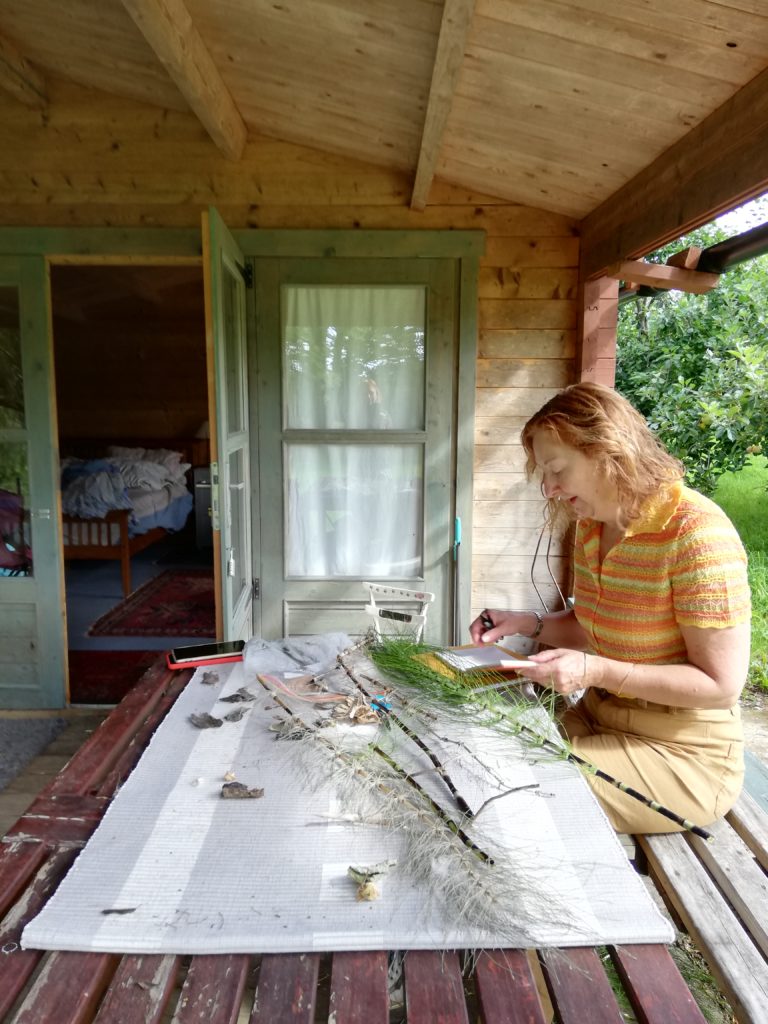
Broomhill, Reepham, independent studio space in wetland environment, outside a mid-Norfolk market town. House owned by aritst-conservator, Helen Lindsay (transport needed). Broomhill has been a residency partner for several years. You can see more images from our 2025 residency pages and also read about Helen Lindsay and her work on her GroundWork NetWork page.
Partner venues for exhibitions
Overall dates 12 Sept – 19 Dec 2026
This year we have so many opportunities for seeing, hearing and experiencing work – as the residency develops it will become clearer whose work is best placed where – we will discuss it among ourselves and together with the venues – each of whom will have the final say.
GroundWork Gallery
GroundWork Gallery, King’s Lynn: 10 October – 19 December
The Hub, Sleaford
The Hub, Sleaford, 12 September – 1 November
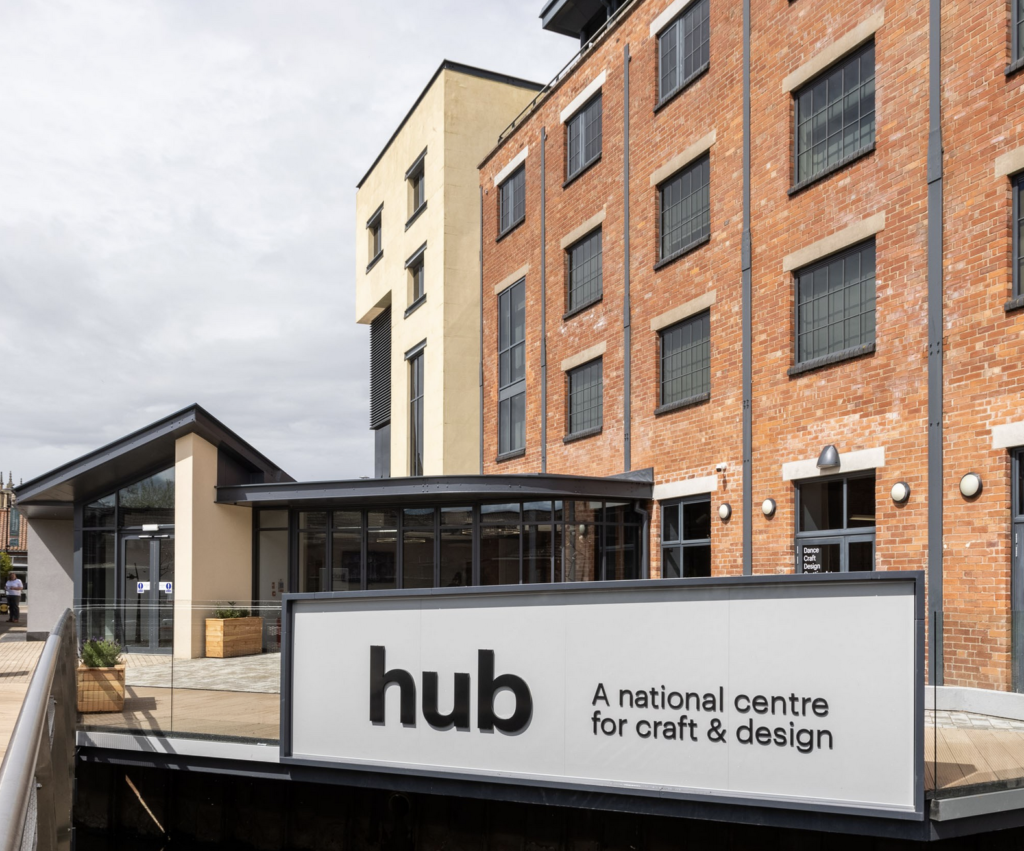
From a recent call for exhibitors: ‘Artists must have a practice that is rooted in material-driven processes and the act of making with physical outcomes. We specifically welcome artists from diverse backgrounds who may use craft techniques or materials in non-traditional ways, pushing the boundaries of the discipline.’

Frampton Marsh, RSPB
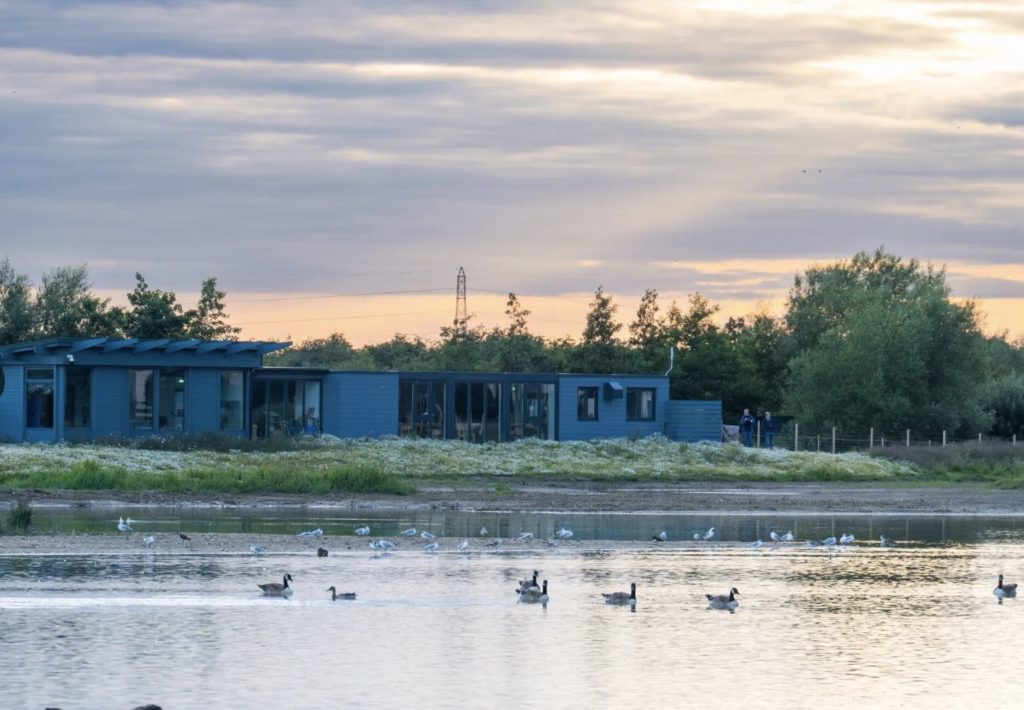
Frampton Marsh, RSPB Reserve Gallery (26 Oct – 8 Nov)
Joseph Banks Society
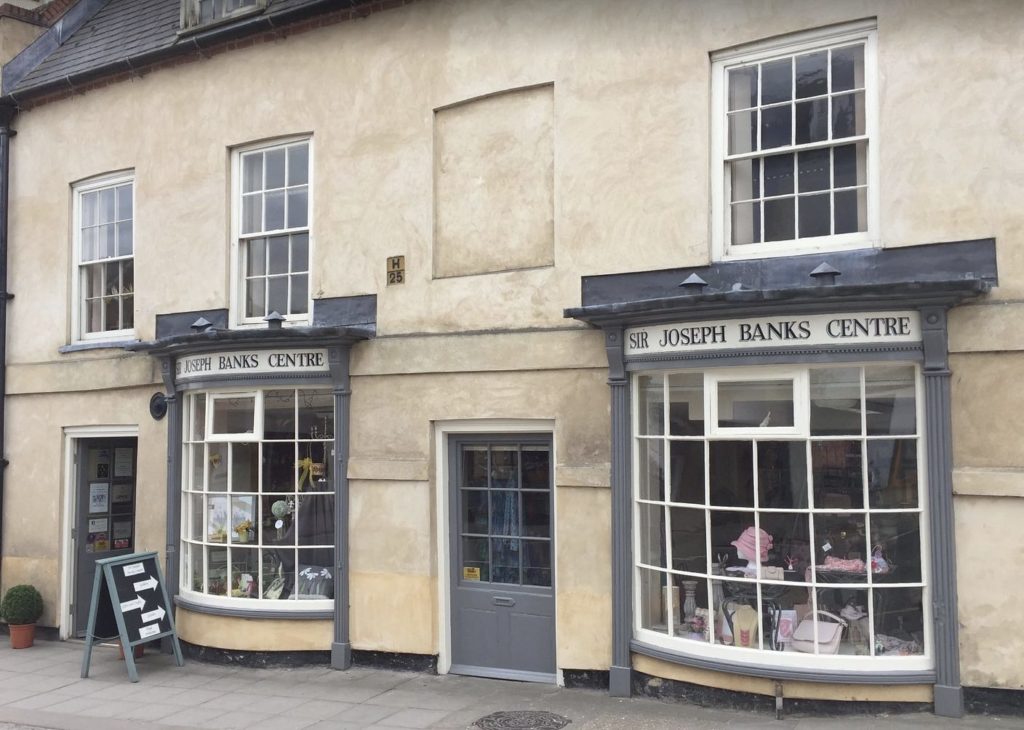
Joseph Banks Society, Horncastle, Lincs. (dates tbc)
This is our main museum partner this year. They have wonderful herbaria and insectaria and a garden overlooked by a glazed walkway around which is a display area.

Old Coastguard Station, Gibraltar Point Nature Reserve
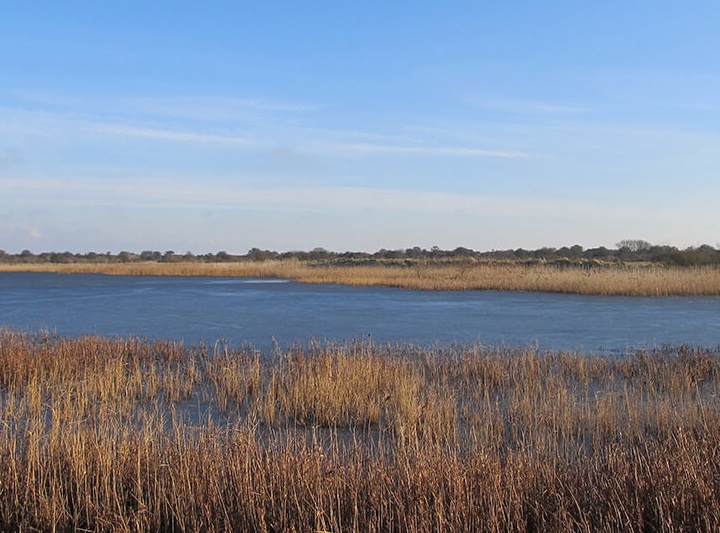
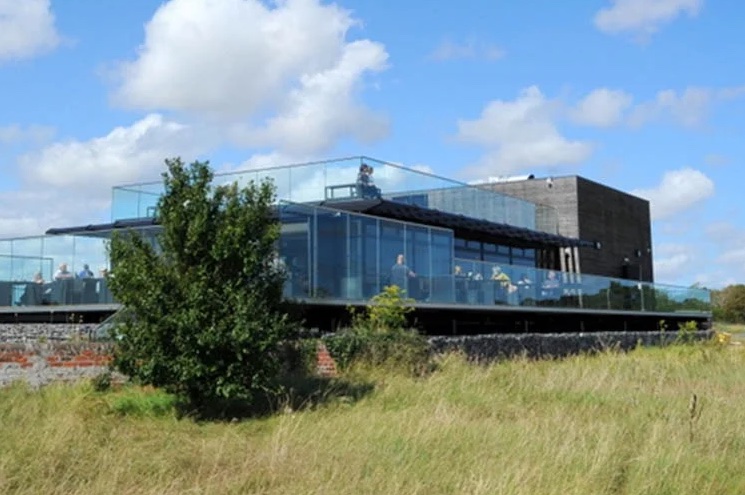
The Old Coastguard Station, Gibraltar Point, Lincolnshire Wildlife Trust, 17 – 25 Oct

The North Sea Observatory
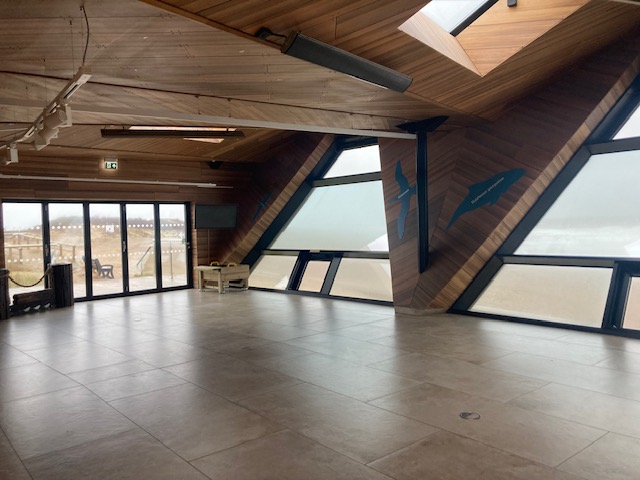
The North Sea Observatory, Chapel St Leonard, Lincs (dates tbc)
Seaview Colonnade
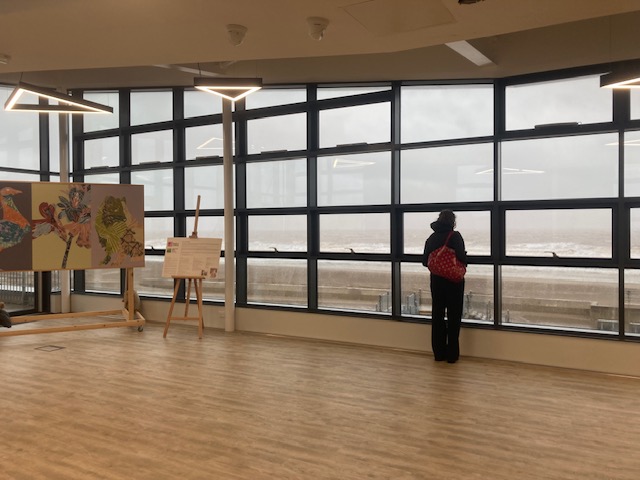
Seaview Colonnades, Sutton on Sea, Lincs (dates tbc). Workshop space primarily.
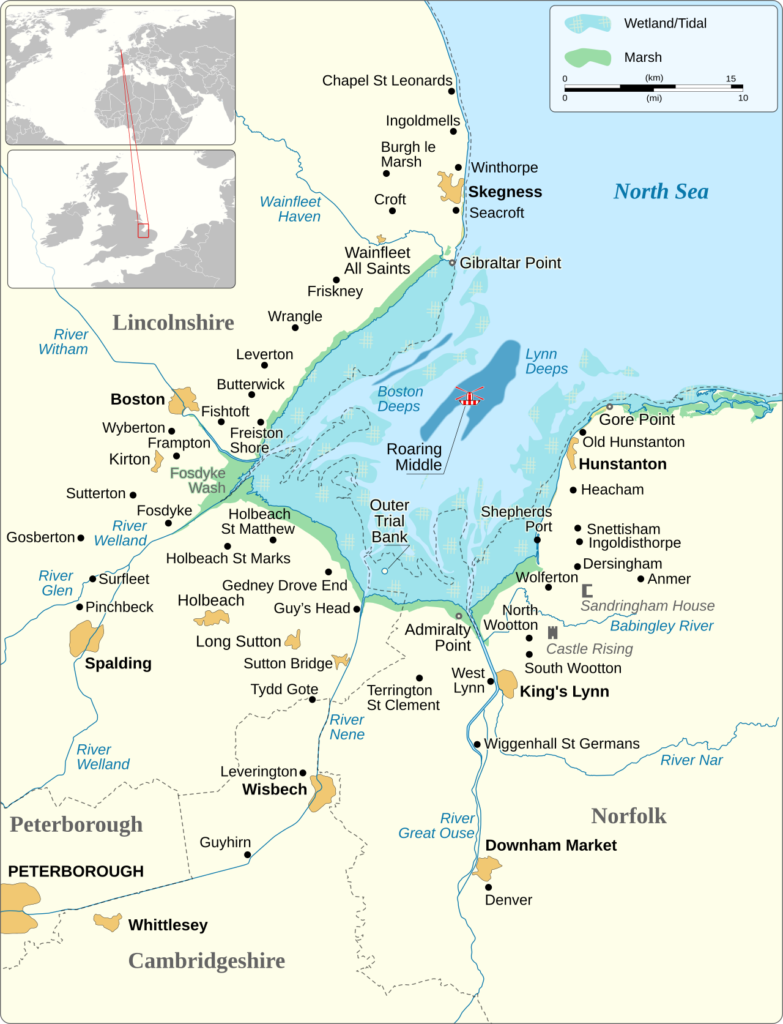
What and Where is The Wash – a very brief outline
‘There is a lot of potential here – the Wash needs more creative recognition.’
The Wash is the largest estuary system in the United Kingdom. It opens out on the East Coast of England and borders the counties of Lincolnshire and Norfolk, extending from just north of Gibraltar Point on the Lincolnshire coast, to Hunstanton, a seaside town on the N W Norfolk coast.
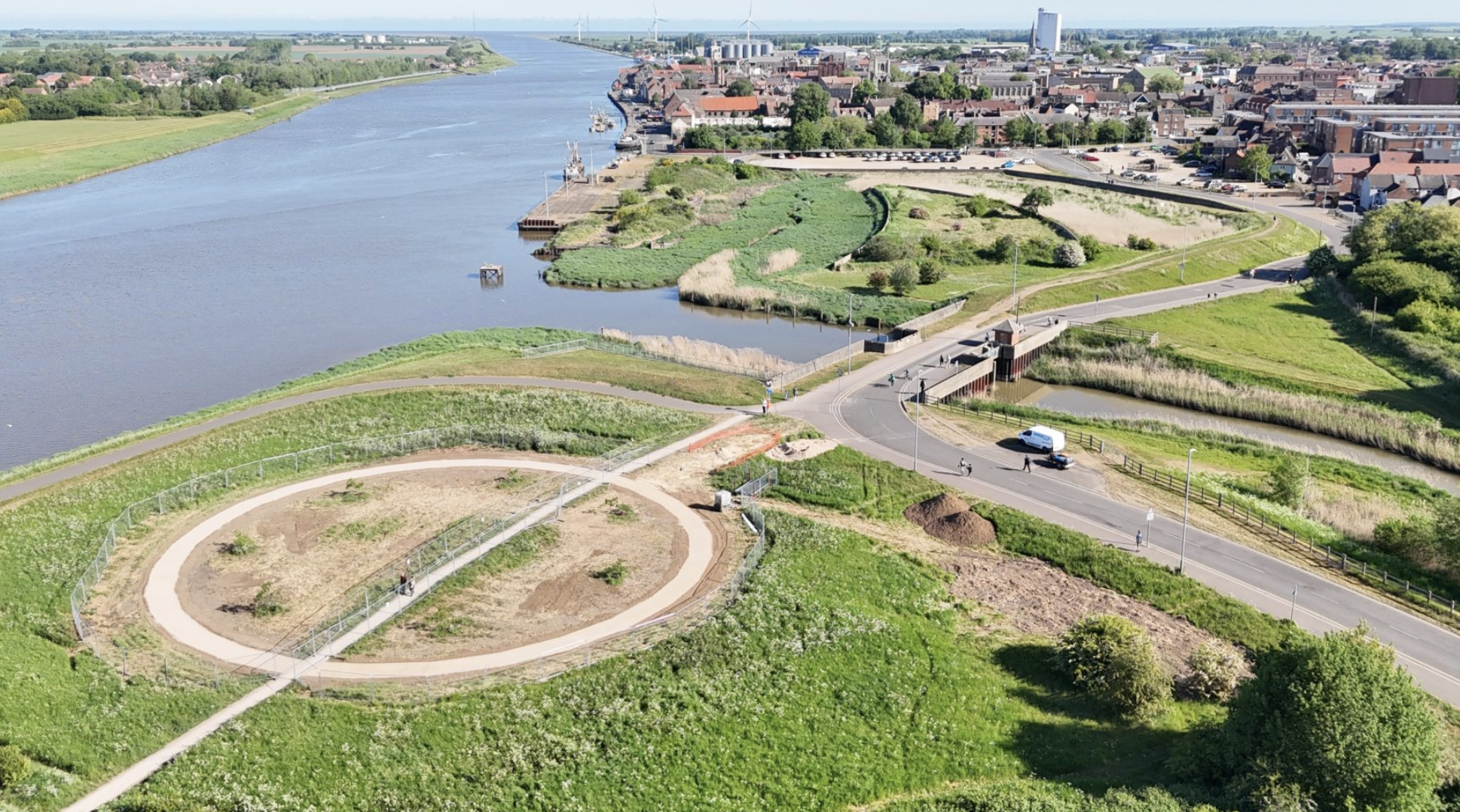
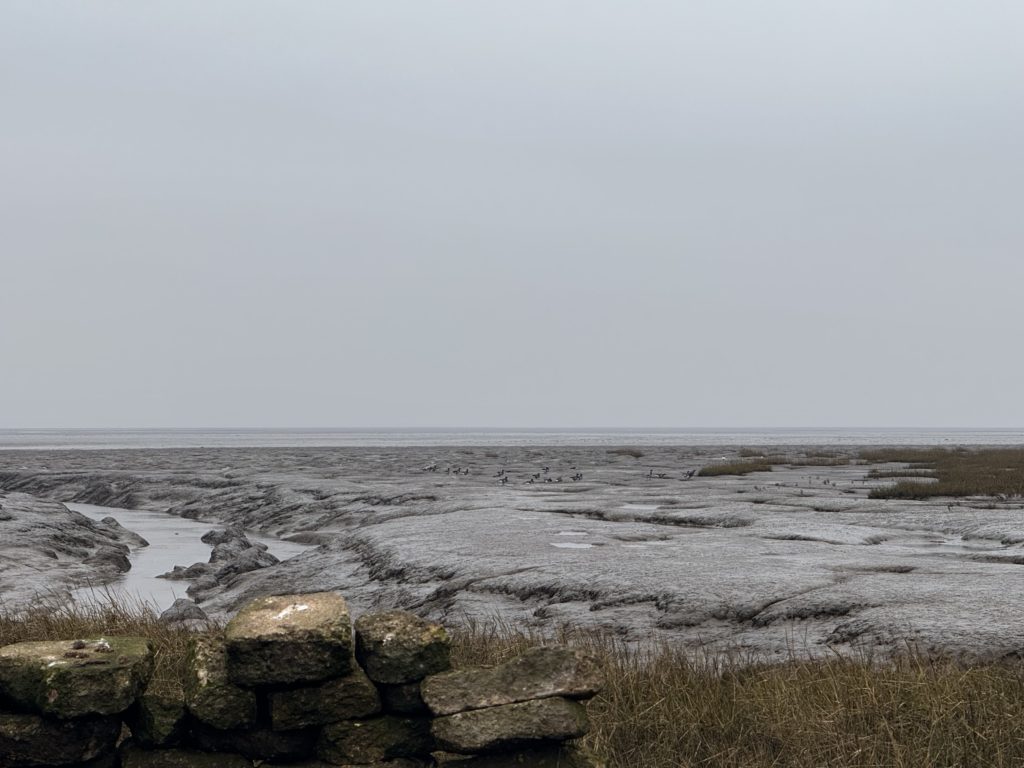
The Wash is remarkable for its globally important extensive edge landscapes ranging from enormous salt-marshes and mudflats (second largest area of intertidal mudlflatas in Britain) , to sandbanks, dunes and wide sandy beaches. Rivers used to be brimming with eels, the sea with herring, flounders and shellfish. The North Sea is ever shifting against and into the land, changing its character from gently lapping to churning currents on huge flat sandy beaches, to wild and turbulent waves breaking against dunes, hard banks and defences.
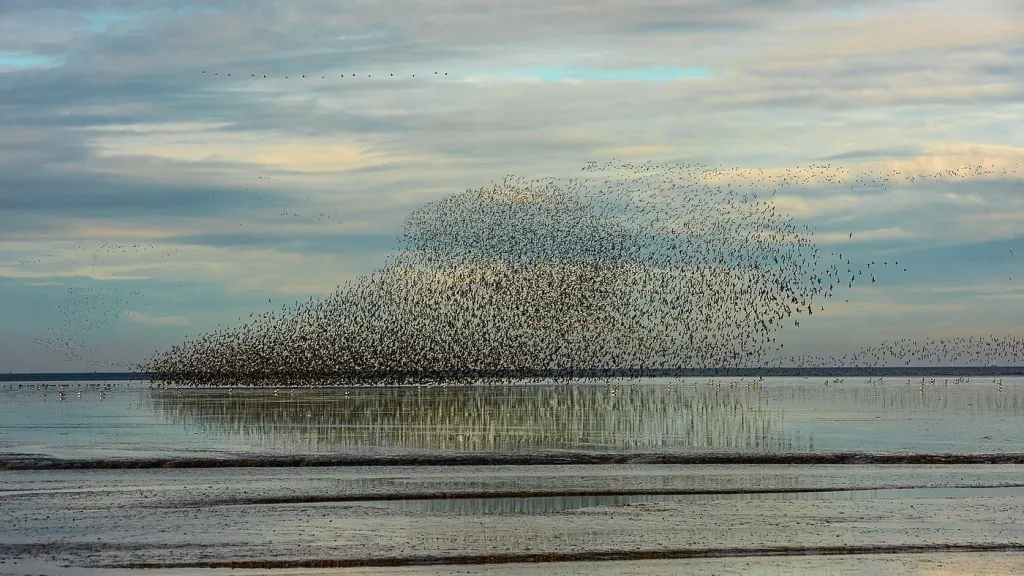
The coastal hinterland is a largely rural, open landscape, famous for its wetland wildness and wide open skies. Looking up, one realises that this is where the largest population lives, as it hosts many, many birds, especially migrating waterbirds, said to number up to 400,000 per year. So significant is this area as a habitat, supporting 17 species of international importance, that it is on track to be designated a United Nations World Heritage site, known as the East Coast Flyway and extending all the way from North Lincolnshire to the Thames estuary.
The open landscape of the Wash is ringed by villages and small towns. Although, on the whole, small scale and relatively undeveloped, almost every place has something of considerable, often world-class interest. There are many important medieval church buildings, often under-rated, often with stunning window tracery and sculpture.
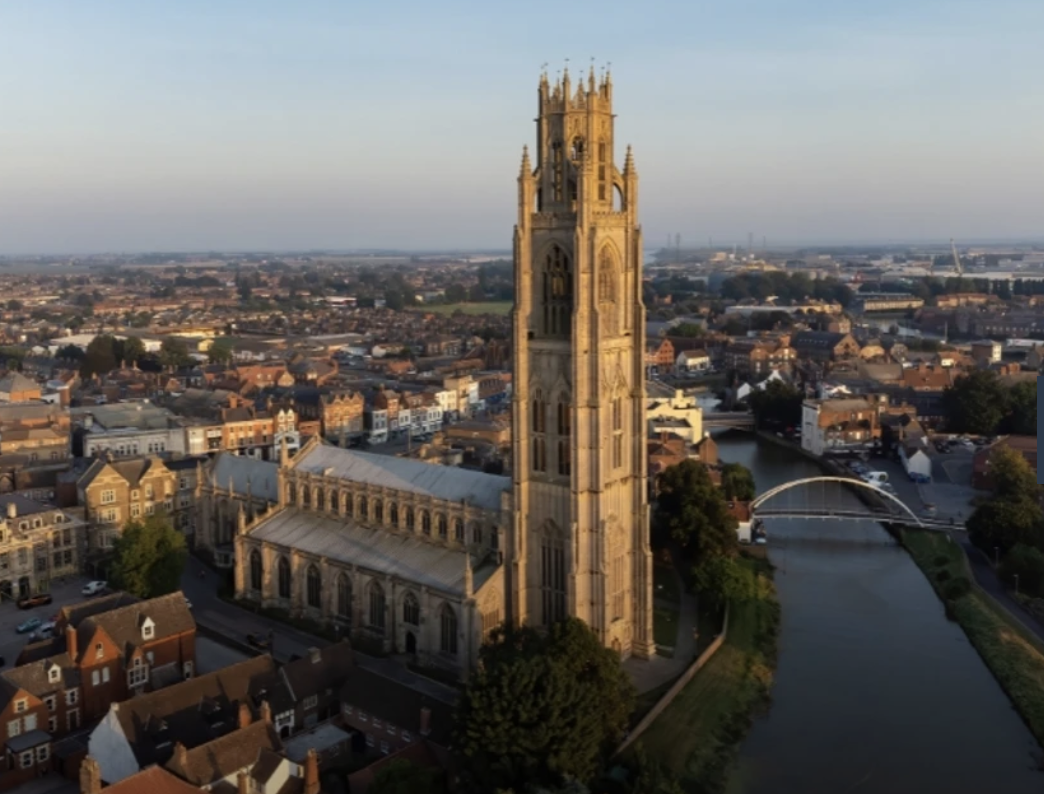
The main towns along or close to the curve of its coast are Boston, Lincolnshire, and King’s Lynn, Norfolk, both having being historically major ports in the Hanseatic League – which had been formed in the middle ages as a cartel of merchants trading in the Baltic. Both towns are steeped in heritage, were once wealthy, both still have active ports. Inland, while the City of Lincoln presides over the county as its capital, there is still a network of thriving market towns, like Horncastle, Louth, Sleaford, Spalding, Holbeach, each one operating as a central focus for its immediate area, as it always did.
While the North-East of Lincolnshire is famous for the Wolds, a hilly landscape stretching up to Yorkshire, whole areas of the flat lands of Lincolnshire further south and bordering the Wash, lie below sea level, having been reclaimed from the sea from the 17th century onwards. Now the water levels and flows through its flat peaty fenland landscape, are kept regulated via networks of dykes, pumping stations and locks.
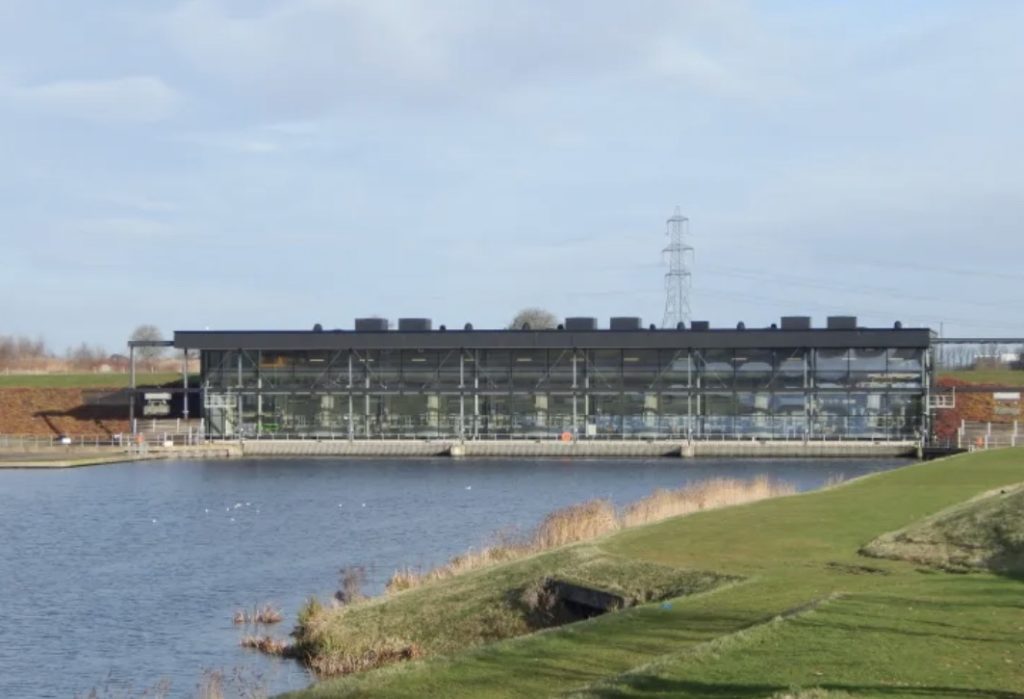
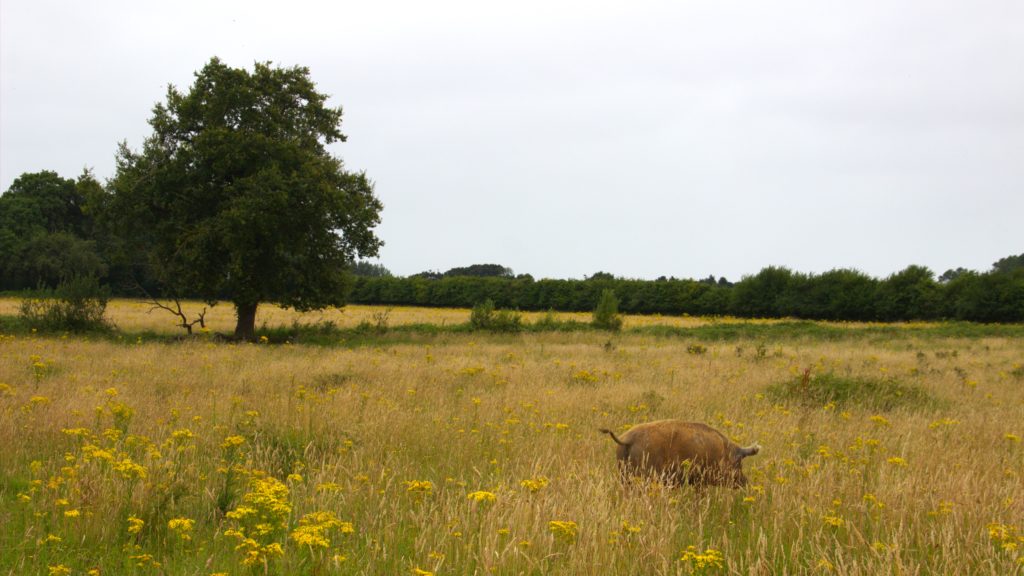
Farming is extensive in the fens – and on drained peat it is controversial because of the carbon lost into the atmosphere. However, there is long-term research ongoing in a number of places, eg the Great Fen project, south of Peterborough, into the future appropriate and innovative land uses here. Closer to the Wash shores, farmers, such as Wild Ken Hill, one of our residency adviser / contributors, are anticipating the changes at the edge of their land from fresh water to salt-marsh, as sea levels rise.
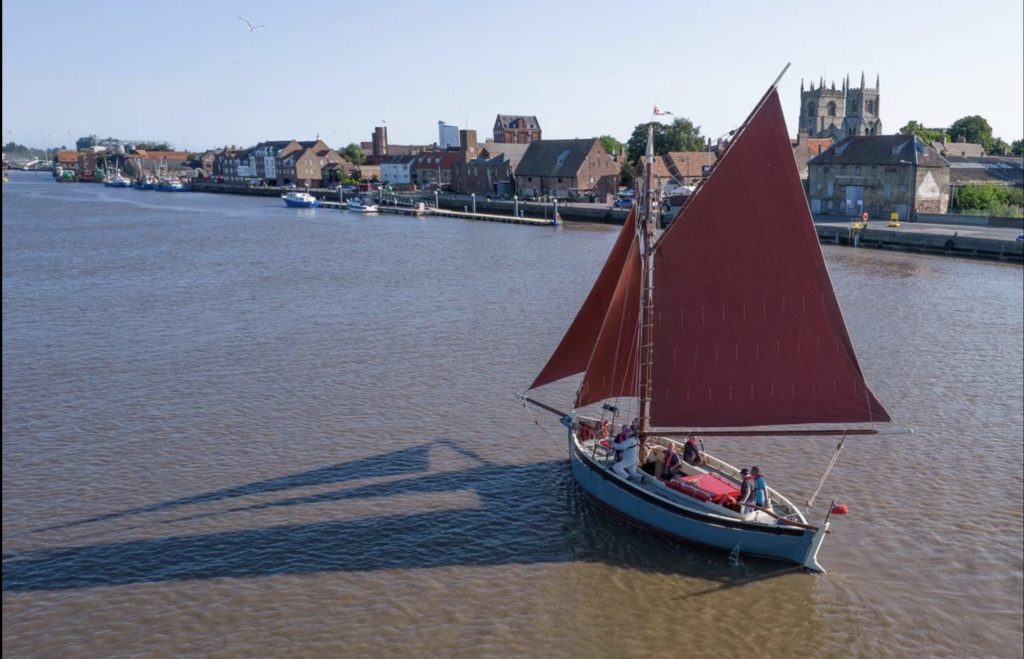
Fishing in the Wash
The Wash still has the residue of a once strong fishing industry, notably shellfish. In the past it has been partly ruined by a now banned practice of dredging, and now it is increasingly affected by the rock armour supporting wind farms which alters habitats and fishing practice for mussels. Ironically however, the latest threat is from environmental protections on predators like ravenous gulls, and against that pressure the shrimping industry, for example, struggles to survive.
The paragraph above was based on very basic internet research. On checking with the Eastern Inshore and Fishing Conservation Authority, it turns out it is full of misconceptions. So please read below what difference is made by discussing with a very knowledgable colleague: Luke Godwin, Assitant Chief Officer, EIFCA, to whom we are very grateful:
“The Wash still has the residue of a once strong fishing industry, notably shellfish……
In the past it has been partly ruined by a now banned practice of dredging,
‘dredging’ – dredging for cockles is currently prohibited and has been since around 2008. However, mussel dredging is still permitted. Hydraulic suction dredging for cockles is very different to mussel dredging, with the later less capable of impacting Wash habitats through their use. In addition, mussel dredging occurs at very low levels, primarily only to take juvenile mussel for the purpose of relaying onto other areas of The Wash called ‘lays’ for the purpose of aquaculture.
…and now it is increasingly affected by the rock armour supporting wind farms which alters habitats and fishing practice for mussels….
‘rock armour’ – I am not aware of much (if any) rock armouring within The Wash however I think some windfarm cables may have scoured so perhaps there is some. This is more of an issue further out to sea and generally I would say that the Race Bank windfarm itself has potentially had the biggest impact on Wash fishermen as the area was well known as grounds for mussel ‘seed’ (juvenile mussel taken for aquaculture) prior to the windfarm being built.
.…Ironically however, the latest threat is from environmental protections on predators like ravenous gulls…..,
‘threat is from environmental protections’ – We often refer to the ‘spatial squeeze on inshore fishmen’ as a key risk factor for the inshore industry. This refers to the combination of the increased use of the marine space for development, with the East coast the ‘busiest’ in the UK through a combination of aggregate dredging areas and windfarms in particular (Crown Estate do helpful maps of offshore wind areas – The Crown Estate publishes ‘new vision for the UK seabed’ | Marine Energy Wales) and the increasing need for restrictions because of Marine Protected Area designations (e.g. our Shrimp Permit Byelaw 2018 and the associated restrictions). A further potential risk comes from windfarms bringing in ‘compensatory measures’ to make up for the damage they cause to the environment and the potential for that to further impact inshore fisheries. Inshore fishmen have over the years, lost access to several fisheries including, for example, the sprat fishery in The Wash and inshore vessels have limited range which requires them to diversity into whatever fisheries are available locally. A common refrain is having to ‘fish whatever swims past them’. This is all compounded by recent shocks to the economy (Covid, war, cost of living crises) making it increasingly difficult to maintain the ‘inshore fishery business model. Essentially, I think that there is a broader story as to why the inshore fleet is ‘struggling’ at the moment which goes beyond the need for environmental protections and is a story worth telling.
.…And against that pressure the shrimping industry, for example, struggles to survive…..”
‘struggles to survive’ – My view would differ regards the shrimp fishery and I would need convincing that any current struggles relate to environmental protections that are currently in place. For context, the management measures we have in place at the moment essentially maintain the status quo in terms of fishing activity that has been seen over the past couple of decades nearly now, and we haven’t had to reduce the amount of fishing so far. That said, as I mention above, the inshore fleet is certainly at greater risk currently compared to other, more resilient offshore business models.
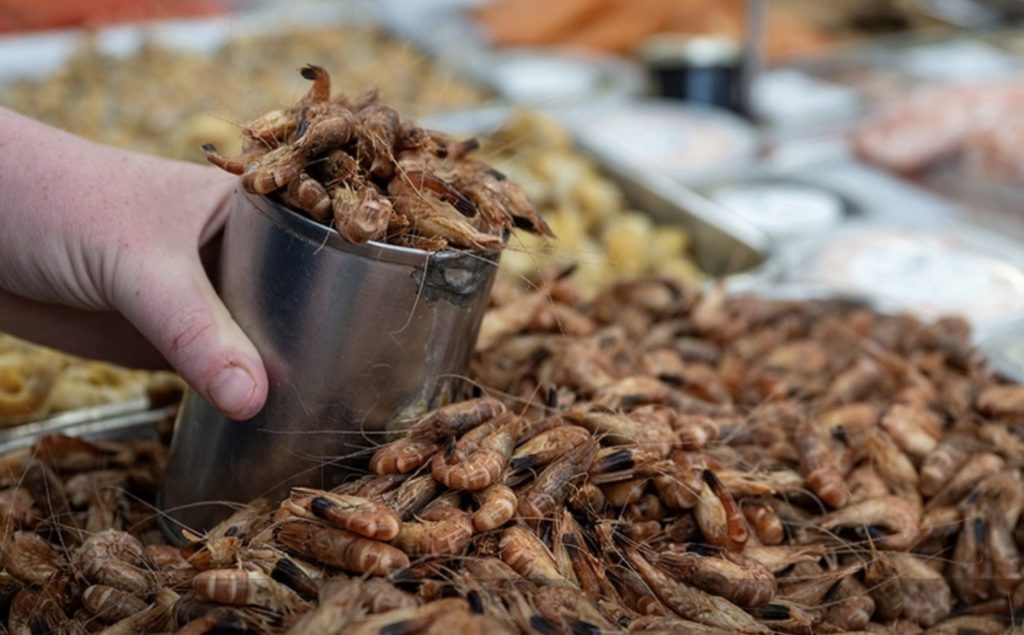
Nevertheless, the shrimp industry is still active and needs more active support. “The Eastern Inshore Fisheries and Conservation Authority manages inshore fisheries across Lincolnshire, Norfolk, and Suffolk, with shrimp as a key fishery, managed through closed areas, annual trip limits, gear restrictions, and close collaboration with fishermen. Stock sustainability is overseen by accreditation, and IFCA’s goal is a long-term sustainable fishery that operates within environmental limits while protecting sensitive habitats.”
Source: https://fishingnews.co.uk
There is much to learn about and to discover in this region, and much to draw inspiration from – and to make more of.
‘There is a lot of potential here – the Wash needs more creative recognition.’