
Made Out of Mud and Sea: How can we live in the soft edges?
Exhibition at North Sea Observatory, Chapel St Leonards, Skegness PE34 5XA
Open Monday to Saturday 10 – 4
An exhibition exploring interdependence, movement and access in the Wash through the sculpture, painting and performance of five artists, Michal Bernasiak, Emily Bowers, Anna Hart, Sarah Rooms Heaphy, Louise Frances Smith.
All the artists were part of the Wash Estuary Residency 2026. Their collaborative installation responds to the gallery as a volume of space, of view, of wonder – highlighting the tiny scale of body – human and more-than-human – within a seemingly infinite expanse of sky, sand, water in endless movement and deep time. The works reveal exquisite interdependencies between creature/material/cycles and highlight a lack of access/visibility to the Wash as a body.
Anna Hart
A Volume of Attention
is a series of performances made in response to the Wash – a gathering of movement: of human and more-than-human body; of material body – sediment, ice, water; of planet as body; of Wash itself as a body. Rebound, tilt, drop, ebb, grind, rise, pause, twizzle… each cycle, each repeat, unique and imperative.
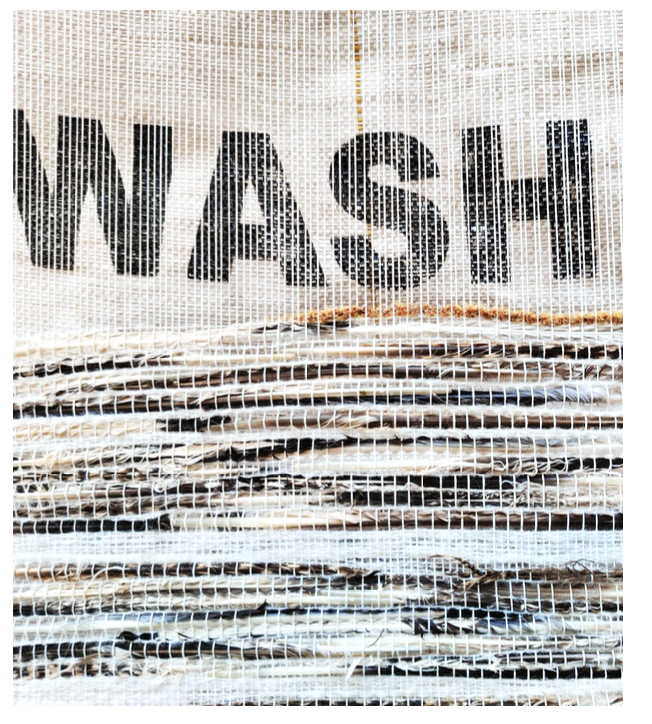
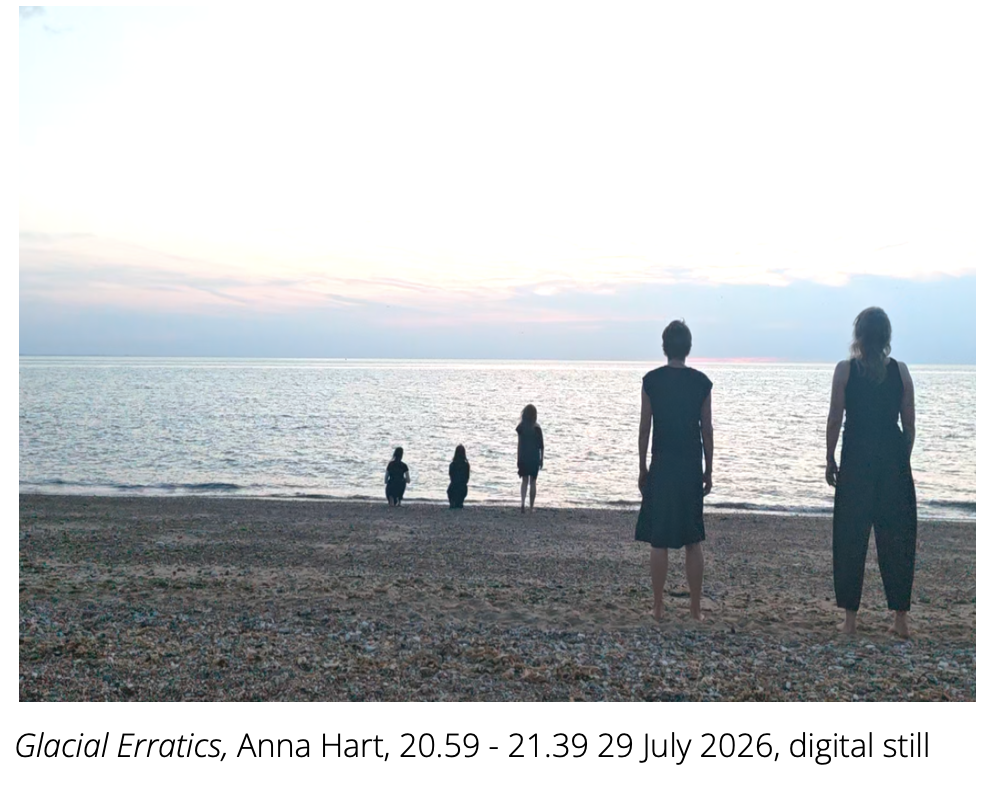
The works decipher the Wash as a shared space across deep time to prompt embodied connection. Performers follow choreographic scores with the rhythm of their own breath – framed in Glacial Erratics by the ebbing tide, in Faltering a patch of mud with sand, in Rebound the cctv field of view; and in Cloudburst, a collaboration with Michał Bernasiak, a fishery cockle bag (cover picture).
Anna Hart videos:
A record of Glacial Erratics, 29 July 2026 20.59 – 21.39, Snettisham Beach
Thank you to Emily Bowers, Mary Naylor, Ellen Sampson, Lou Frances Smith
Anna Hart
A record of Faltering, 2026, Gibraltar Point
Anna Hart
A record of Rebound, 2026, Chapel Point
Thank you to …. don’t know the participants yet!
Michał Bernasiak & Anna Hart
Cloudburst, 2026, North Sea Observatory
Performance with a Wash cockle bag
Michał Bernasiak & Anna Hart
A record of Cloudburst, 2026, North Sea Observatory
(if we get to show video afterwards– ie it will depend on the programme and at what point the performance
takes place)
Anna Hart seeks expansive creatureliness through situated walks, performance, installation and teaching projects made as a consequence of ‘staying’ in a place. She works with breath, silence, repetition, and rearrangement of existent material, to foster ecological attention. Setting out as an architect, she turned to focus on the choreographies of bodies, of community, in shared space. Anna studied at the Bartlett and Architectural Association and teaches at architecture and art schools, currently at Central Saint Martins. She is founder and organiser of AiR, a project studio researching and supporting public practice in the local since 2006 and is an artist coach. www.annahart.info
Emily Bowers,
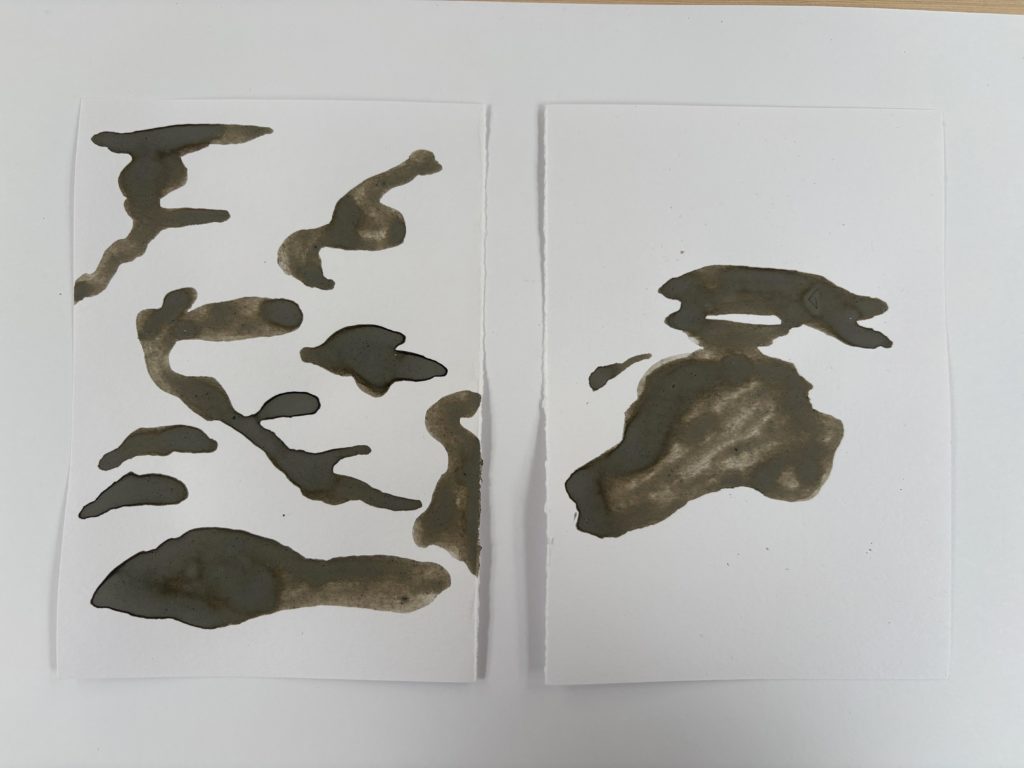
Earthbound, 2026,
Lawyer’s Creek mud and Gedney Drove End mud on paper
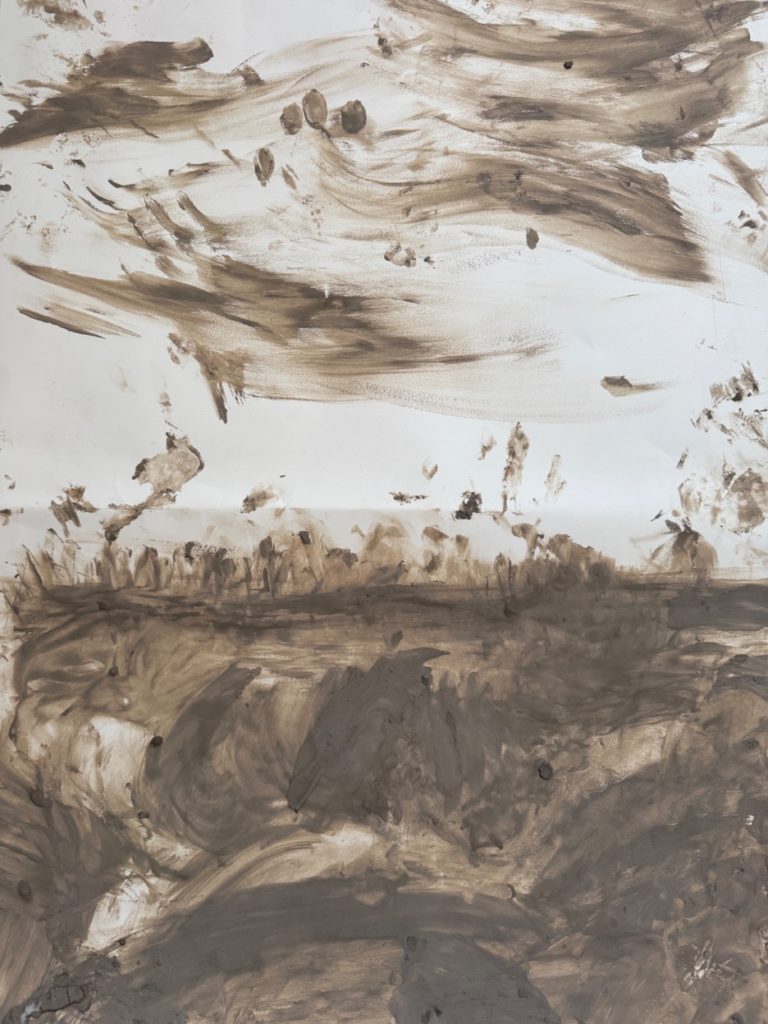
Earthbound is rooted in feeling and the human experience of being tiny and temporary in a place of vast physical space, time and continuous movement. In awe with the intricacies and interconnectedness of the Wash, Emily spent time on the salt marshes near to her home to contemplate her personal connection. She began to walk barefoot in the mud at low tide and started using her hands to paint and shape the mud across paper.
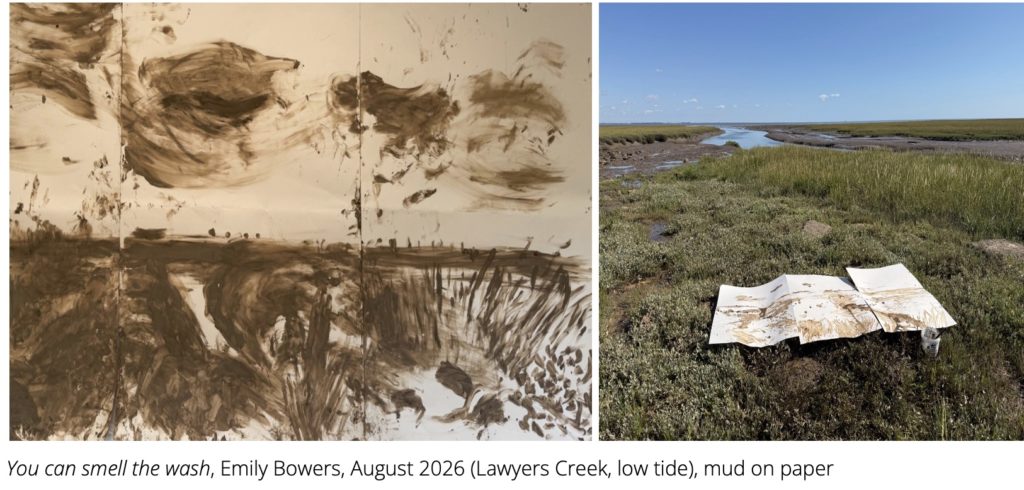
Working with the body, the mud and surface felt very grounding and honest – simple, earthly tools. It captures the feeling of experiencing the Wash as an earth bound, imperfect human being, looking out at birds, clouds and other entities in wonder. Mud is an essential food source and the driving force of what makes the estuary such an important ecological place. The scale of the work reflects the Wash and roots of Marram Grass that hold the sand dunes in place.
Reflected in the act of painting with hands and mud were shared moments with artists on the residency – getting covered in mud, running into waves at Sutton-on-Sea, carrying rocks for identification by a local geologist at Hunstanton. All moments of simple yet huge joy.
Emily Bowers is an artist from the South Lincolnshire Fens drawn to interconnectedness and the relationship human beings have with the natural world – we are part of it, but not at the moment. After receiving somatic coaching earlier this year, she is increasingly exploring a more embodied approach to a practice rooted in drawing and image making. She wants to understand how more-than-human beings experience the world and learn to work with materials that leave little, if any, trace.
Emily was pulled to the 2026 Wash residency through curiosity in the lack of awareness to the Wash locally. During the residency, she was drawn to the vast physical scale, the ecology of the Wash, ecosystem engineers, the history of reclamation of the land and the humbling reality that humans are only a tiny fraction in this place.
Sarah Rooms Heaphy
Connecting with the unseen, inaccessible Wash habitats / fishing cycles / migrating bird flightpaths. Suspended within tidal waters sit eroded coastal sand & mud/ running through rivulets, waterways, marshland / agricultural lowlands, irrigating fenland drainage waterways / home to heritage fishing industry for cockles, mussels, shrimp / migrating bird feeding grounds / constant land-water movement / connections of The Wash water.
Within its intertidal waters Ross worm (Sabelleria Spinulosa), have created rare colonies of biogenic reefs, using resources of sand, mud, mucous and shell to form rigid tube reef habitats, on hard shell substrata, intertwined 30cm tall, covering large areas now protected by Marine Conservation, creating new habitats for intertidal bottom dwellers to feed and live, breaking down and recreated within the Wash embayment.
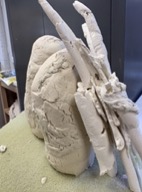
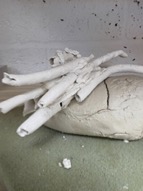
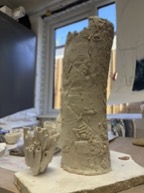
Sarah Rooms Heaphy works in progress
Nettles of the North Sea
is an interpretation of the regenerative biogenic reef ross worms, including its fragility and balance, a precarious interdependency of industry, nature and conservation – to ensure sustainability for birds on their migration routes, heritage fishing industry, and maintaining its wild beauty.
Ground Truthing-visibility
low is tubular sculpture using the Ross worm habitat and references to Fenland irrigational water management, whilst viewing from afar, wetland barriers, elements of inaccessibility and visibility.
Sarah Rooms Heaphy has always loved the inter-tidal coastline, an area of part land / part sea, with ever changing tides that ebbing & flowing, with nature’s weather patterns revealing ‘“treasure’” on every walk. Whilst spending time in the Jurassic coast, North Devon, Cornwall and Scottish Highlands, she has gathered a chaotic muddle of images, found forms, and distressed surfaces. Her ceramics, mark making paintings draws on these memories, reimagining, layering distressing to form new structures evoking coastal remnants lost at sea, weathered, fused & recreated.
Increasingly influenced by historical land defences, sea salt corrosion, wild weather dereliction, extremities, from the wilds of Scotland to her nearest coastal trips of soft sands and chalky clayscapes on the Eastern coast, Sarah’s sculpture draws on the constant battle between nature and our manmade environment. The works reference balance through interlocking structure, with textures fused with fragility, strength and power found through longevity and survival. www.sarahroomsheaphyceramics.com
Michal Bernasiak,
Michal Bernasiak’s practice explores the shifting relationship between humans, objects and the natural environment. Working across painting, sculpture, found materials, digital media and installation, he is interested in how art can make ecological questions visible, immediate and difficult to ignore.
Developed following the GroundWork Artist Residency around The Wash Estuary, Icons imagines a fictional pantheon of patron saints belonging to this distinctive landscape. Drawing loosely on the visual language of Orthodox icons, these semi-abstract figures are entirely secular: saints of mud, seals, wind, tides, marshes and other forces that shape the estuary. Their accompanying prayers combine humour, reverence and unease, giving voices to habitats and species that cannot advocate for themselves.
The work emerges from Bernasiak’s wider concern with the depletion and fragmentation of natural habitats through littering, overfishing, hunting, intensive land use and increasing human pressure. Alongside critique, his practice considers possibilities for repair through rewilding, wetland restoration and the rewetting of drained landscapes.
Educational, provocative and visually direct, Bernasiak’s work uses beauty and absurdity as tools for attention, inviting viewers to reconsider humanity’s place within ecological systems rather than above them.
Michal Bernasiak is an interdisciplinary artist from Poland, now local to King’s Lynn, exploring more sustainable and instinctive relationships between people and the natural world. His work has been exhibited at ms², Museum of Art in Łódź. His practice draws on human evolution, neurodesign, animal behaviour, ecology and humour.
Louise Frances Smith
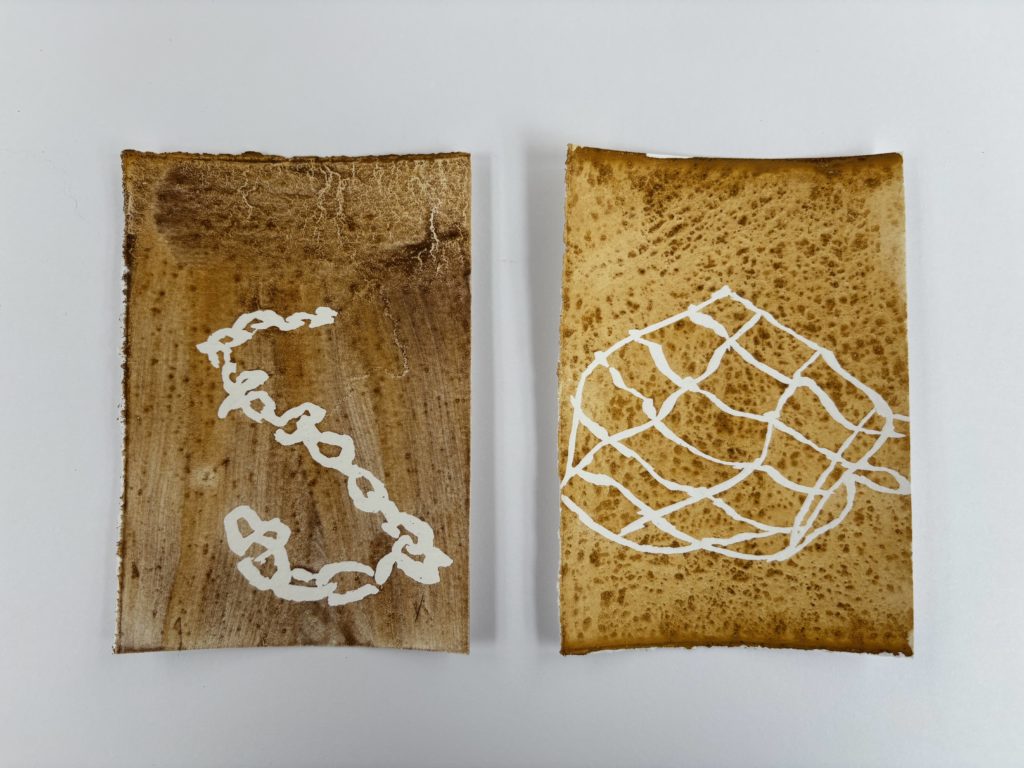
During the GroundWork Residency Louise Frances Smith was drawn to the hidden rivulets, creases and the wondrous vastness of the Wash saltmarshes, the bodily forms shaped in the mud along the soft edges of land and water. In a constant state of change, sediment is moved by the tide from one place to another. This ‘highly productive’ wilderness is mostly out of reach to humans, but a vitally important place of biodiversity for migrating birds and multispecies communities.
Multiple tensions put these wild places at risk as they are squeezed into ever smaller spaces due to the climate crisis and the human need to scrape, dredge, drain, tidy, protect and build hard surfaces to live on. How can we invite softness in? To create more space for this inaccessible land? How can we come to an understanding that we are part of nature and not separate from it?
Louise explores these questions through drawing, using small amounts of mud gathered from the Wash’s edges and through tactile objects – some formed by pressing clay into her own body, imprinting the textures and sense of being in these places. Made to be held / rearranged / interacted with – the objects invite touch as a way of connecting to these wild and inaccessible places.
Louise Frances Smith MRSS lives and works in Ramsgate, Kent (UK). Louise’s practice spans sculpture, installation and works on paper. Working with an array of materials including clay, seaweed bioplastic and oyster shell biomaterial, Louise creates highly textured surfaces to bring attention to the patterns and textures created by nature, magnifying micro details alongside human-made interventions. Louise is a member of the Royal Society of Sculptors and recent exhibitions include – ‘Anchor Points’, Das Schaufenster, Seattle (USA); ‘Entangled’ by Liminal Gallery, Saatchi Gallery, London; ‘Living Materials’, Aspex, Portsmouth; ‘Meant to Fade’, Laneway Gallery, Cork (Ireland); ‘2023 Ingram Prize’, Pavilion Gallery, London & ‘Collect Open 2023’, Somerset House, London.
